
A capping machine needs a separate induction sealer when the closure specification calls for a bonded foil inner seal.
Breaking-ring caps can provide tamper evidence from the capper alone, while induction sealing adds a hermetic barrier beneath the cap for leak guarding, contamination control, and visible evidence of opening.
Capper-Only Versus Capper Plus Induction Sealer
A continuous-thread cap with a breakable ring can provide tamper evidence without special sealing equipment, because opening the closure breaks the ring and leaves visible evidence of prior access [S1]. This arrangement suits beverages, milk jugs, bottled water, and other products where visible closure tampering is the principal requirement [S1].
Induction sealing adds a different protection layer. The closure contains a heat-sealable foil laminate, and an electromagnetic field heats the foil after the bottle has been filled and capped, bonding the inner seal to the container lip [S2][S3]. The resulting hermetic, airtight barrier provides tamper evidence, leak prevention, and protection from external contaminants, with shelf-life extension possible in selected applications [S3].
How Induction Sealing Works on a Packaging Line
An induction sealer normally follows the capping station because the cap must be secured before the liner can be bonded to the container [S1][S3]. For a closure supplied with a foil lining, tightening the cap positions the liner over the bottle opening, and the container then passes through the electromagnetic field of the sealing coil [S1].
Induction sealing is a non-contact heating process in which an electromagnetic field heats a foil laminate, melting its polymer coating to create a hermetic, air-tight seal between the seal and the lip of a capped jar or bottle [S3].
The two principal machine elements are the power supply and the sealing coil [S3]. The power supply converts electrical input into the power and frequency needed for sealing, while the coil directs and concentrates the electromagnetic field around the closure [S3]. This sequence makes the capper and induction sealer complementary rather than interchangeable equipment.
Decision Criteria for Adding Induction Sealing
Induction sealing is warranted when product integrity depends on an airtight barrier rather than visible cap damage alone. Suitable applications include tablets and capsules in bottles, as well as liquids and powders requiring protection from leakage, moisture, oxygen, or external contamination [S2][S3].
The principal decision criteria are barrier performance, opening method, closure compatibility, line output, and packaging cost. Induction sealing offers hermetic closure and visible evidence of opening, but it requires a compatible laminated liner, induction heating equipment, controlled capping before sealing, and process tuning to the container and closure [S2][S4].
Comparison of Tamper-Evidence Methods
Breakable cap rings, induction inner seals, and neck bands each provide visible tamper evidence, but they protect different package areas and solve different risks. The correct choice depends on whether the requirement is closure-opening evidence, a hermetic product barrier, or a cosmetic neck seal [S1].
Direct-contact heat sealing requires a heated element to contact the sealing surface, whereas induction sealing transfers energy to the foil without physical contact [S3].
Where Induction Sealing Is Not the Best Choice
An induction sealer is not required when the selected closure already has an accepted tamper-indicating ring and the product does not need an internal barrier. Adding induction sealing in that situation increases equipment scope without replacing a missing closure feature [S1].
It is also unsuitable where the container or closure lacks a validated sealing configuration. The liner must include a heat-seal layer compatible with the underlying container, and the liner must be positioned correctly by the cap before induction energy is applied [S4].
Accessibility must be included in the specification. Proper liner selection and controlled sealing can create a secure bond that still permits easy removal, including designs with grip tabs, but the result depends on the liner construction and process control rather than on induction heating alone [S4].
Equipment and Operating Considerations
The sealer must be matched to cap geometry, bottle opening, liner construction, and line speed [S2][S3]. A coding machine can identify the sealed pack, while a case-packing-machine may be downstream, but neither creates the inner seal. The detailed relationship between cap handling and induction equipment is covered in Capping and Sealing Machines vs Induction Sealers.
Validation should include leak testing, seal-bond evaluation, opening-force review, and confirmation that visible evidence remains after cap removal. Pharmaceutical use also requires attention to regulatory tamper-evidence expectations, and induction sealing is recognized by the FDA as an effective means of providing tamper evidence [S2].
Closure Materials and Process Controls
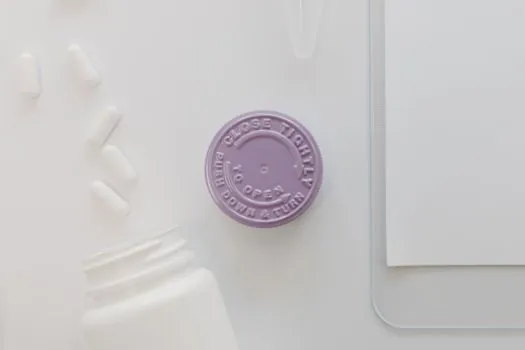
The sealing system is a composite of closure, liner, container, cap torque, induction energy, and transfer timing. In pharmaceutical packaging, aluminum foil in the liner is heated by electromagnetic induction, causing the heat-seal material to bond securely to the container rim [S4]. A seal failure can therefore originate outside the sealer if the cap is loose, mispositioned, or incompatible with the liner.
One-piece and two-piece liner designs are available, and each layer serves a defined function [S4]. The heat-seal layer must match the container material, while the foil layer provides the induction-responsive element [S4].
For a new line, the practical sequence is to define the required barrier first, select the closure and liner second, validate the capping result third, and size the induction sealer only after the first three steps are controlled. This sequence avoids treating an induction sealer as a universal replacement for tamper-evident closures.
The first trackable decision is the closure specification: a break ring alone means no induction sealer is required, while a specified foil-lined closure means the line needs a capper, an induction sealer, compatible liners, and a validated sequence before production release.