
Yes, a filling machine generally needs an inline checkweigher when finished packages must be verified against declared-weight limits, because the checkweigher provides 100% inspection and feeds weight results back to the filling process [S1].
The checkweigher applies upper and lower limits, rejects nonconforming packs, and records results; it is not a substitute for filling-machine weight feedback, but it is the independent production-speed verification stage [S3][S7].
When the Checkweigher Becomes Required
A checkweigher can verify package weights against a target weight or accepted weight range while helping manufacturers meet declared-weight, legal, customer, and process requirements. A checkweigher weighs a product or package as it passes through the production line, classifies it by preset weight zones, and accepts or rejects the weight according to those standards [S3][S5][S7].
The normal installation point is after filling or packaging, although the position depends on what must be measured [S6]. For final packed-product compliance, placing the checkweigher downstream of the filling machine creates a clear control sequence: fill, stabilize and measure, classify, reject if required, then log the result.
A filling machine can control fill volume through valves, plungers, augers, or dosing feedback, but that process control does not itself prove the weight of every completed pack. A checkweigher closes that gap by inspecting 100% of packages at line speed and identifying filling-system malfunctions before rejected product reaches distribution [S1].
The answer is therefore conditional rather than universal: add a checkweigher when legal net-quantity verification, retailer specifications, or 100% finished-pack inspection is required. A standard scale may be sufficient for periodic sampling where the applicable rules and customer specifications do not require continuous verification.
Compliance Verification and Process Control
Final-pack checkweighing verifies the consumer unit, including the selected measurement basis for net quantity, while upstream checkweighing can inspect incoming portions, ingredient kits, dough pieces, meat cuts, or prepared components [S3]. Those checks solve different problems and should not be substituted for one another.
Two distinct control functions are involved. First, the filler attempts to control quantity during dosing. Second, the checkweigher measures the finished result and applies pass/fail logic. The latter also supports product-giveaway reduction, underfill detection, retailer acceptance, and compliance documentation [S1][S4].
For upstream ingredient control, the sequence can be specified inside a filling weighing scale. For finished goods, the checkweigher provides the stronger assurance because it tests the assembled package as it will be shipped.
Accuracy, Speed, and Product Range
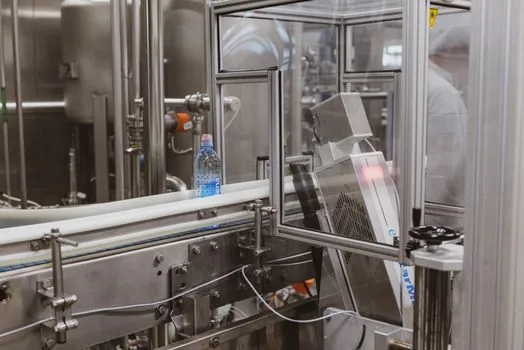
These figures show why checkweigher selection cannot be separated from the target package weight and line rate.
Commercial model data illustrates the selection tradeoff. These are product-specific examples, not universal performance guarantees.
A short comparison makes the decision concrete: low-resolution, lower-cost systems suit light or wider-tolerance packs; high-resolution systems suit small packs and narrow limits;
Reject Mechanism and Packaging Format
The checkweigher must remove nonconforming packages without stopping acceptable production.
The detailed engineering comparison in Checkweigher Pusher vs Air Blast Reject covers that choice in more detail.
Food formats include pouches, trays, cans, jars, bags, cartons, multipacks, cases, and pallets, and the inspection principle remains the same even though the mechanical handling changes [S3]. Placement before a case-packing machine is relevant when case-level verification is required, while final consumer-pack inspection belongs closer to the filling and closure operation.
Calibration, Records, and Failure Modes
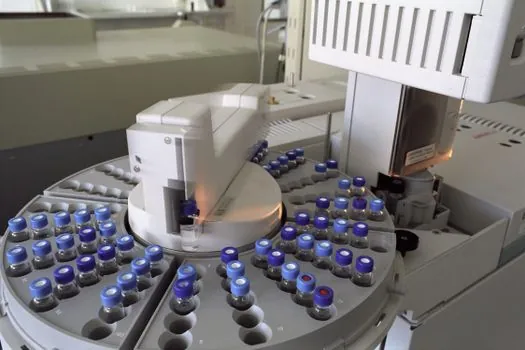
A checkweigher becomes useful for compliance only when its measurement state is controlled. Scales and checkweighers require regular calibration and verification to support product consistency and FSMA, SQF, and ISO 9001 requirements [S2]. Typical production-scale calibration intervals are 6 to 12 months, while critical checkweighers may be checked monthly or quarterly [S2].
Each device record should include make, model, serial number, installed location, minimum-to-maximum measurement range, division size or readability, and application as pre-pack scale, inline checkweigher, or platform scale [S2]. Test weights need traceable certification, documented tolerance, calibration date, expiration date, and a traceability statement; one cited certificate example uses a tolerance of ±0.05 g [S2].
Installation defects create false results even when electronics and load cells are sound. Checkweighers require stable mounting and clearance, while vibration, conveyor impact, temperature extremes, humidity, and washdown conditions can affect accuracy [S2]. Product residues, condensation, corrosion from salts or sugars, and poor belt alignment are practical failure modes to include in preventive maintenance [S5].
Rejection without a reliable correction loop creates waste rather than control. The checkweigher should identify underweight or overweight zones and provide feedback that can be traced to the filler, while operators investigate valve drift, dosing changes, supply-material variation, and packaging defects [S1][S3].
Who Should Specify the Checkweigher
The checkweigher is for manufacturers that need continuous finished-pack weight verification, documented results, retailer acceptance, or legal net-quantity evidence [S1][S3]. It is also appropriate for operations where a downstream error would affect thousands of units before sampling can detect it.
It is not the right choice for every installation. A laboratory or low-volume operation may use a bench scale, a periodic control plan may use sampled inspection, and an upstream portion check may be required instead of a final-pack check. These alternatives do not provide the same 100% inspection capability [S1][S3].
The specification package should define minimum and maximum acceptable weight, package range, line speed, required accuracy, reject mechanism, data-retention period, washdown needs, hazardous-area classification if applicable, and calibration frequency [S1][S2][S5]. A filling weighing scale can support dosing control, but a dedicated checkweigher remains the equipment that verifies each finished pack against pass/fail limits.
The trackable decision signal is the line’s compliance basis: declared net quantity, retailer tolerances, legal-for-trade verification, or a customer quality requirement. If one of these requires evidence for every finished unit, specify an inline checkweigher with proven accuracy at the actual package weight and line speed, then connect rejection and recorded data to the filling process [S1][S6][S7].