
Double-strand chain costs more per foot, but its higher power-handling capability without a proportional increase in pitch or sprocket diameter can justify the premium in demanding applications.
Single-strand chain is the economical choice for light or moderate duty, while double-strand chain is intended for heavier products, larger loads, and more demanding drive conditions.
Cost per foot and purchasing comparison
Single-strand roller chain has the lower purchase price because it contains one strand of rollers, pins, and plates, while double-strand chain adds a second parallel row joined by common pins, increasing both the chain material and the number of components.
These figures represent a specific listing rather than a universal market rate, but they provide a useful structure for a purchasing comparison: calculate installed cost from chain price per foot, then add sprockets, drives, shafts, maintenance, and expected service life.
That difference is not the total premium because duplex systems can require different sprockets, shafts, guarding, alignment procedures, and replacement parts. The relevant comparison is cost per delivered ton, case, pallet, or operating hour, not chain price per foot in isolation.
Capacity and selection criteria
Double-strand chain should be selected when the calculated power or tensile requirement exceeds the single-strand rating, or when a larger sprocket is unacceptable because of height restrictions. The duplex configuration handles higher power requirements without a proportional increase in the chain's pitch or the sprocket's diameter [S1].
Use four checks before accepting the extra cost. First, compare the required operating power with the selected chain and sprocket ratings. Second, verify peak tension, impact loading, and frequent start-stop duty. Third, confirm the available shaft center, headroom, sprocket width, and maintenance access. Fourth, estimate chain pull, service life, lubrication consumption, and labor for inspections and replacement.
One ANSI B29.1 double-strand roller chain product listing describes a chain with two rows of single-strand roller chains manufactured together and states that it exceeds ANSI B29.1 standards [S2]. Size, material, construction, sprocket combination, and operating conditions still determine the usable rating for a specific conveyor, so a catalog tensile figure is not a substitute for the system design calculation.
Where double strand earns its premium
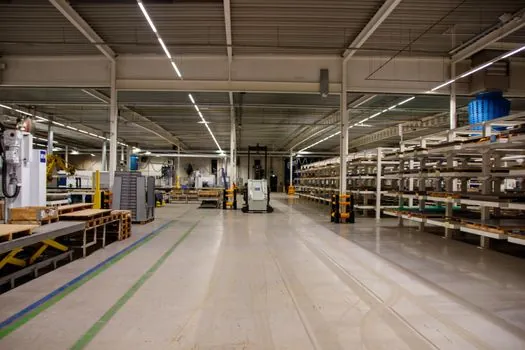
Double-strand drag conveyors are used for larger and heavier products than single-strand systems, including pallet-based movements. A published two-strand heavy-duty conveyor listing shows a fixed-speed price of $5,148 and a stated maximum capacity of 500 lb per foot [S5][S6].
For pallet or carrier handling, the two chains support the load near its outer edges, which is useful when the center of the product cannot be supported. Twin-strand conveyors use two parallel chains to pick up loads at their outer edges, allowing pallets, mesh boxes, and workpiece carriers to be moved without supporting the contact surface in the middle [S4].
Use double strand when any of these conditions apply: the calculated load is above the simplex capacity; impact or shock loading is significant; start-stop duty is frequent; product weight is large; chain pull must remain high; or the installation lacks vertical clearance for a larger sprocket. Twin-strand conveyors are used to move pallets, mesh boxes, and workpiece carriers without supporting the contact surface in the middle [S4].
Where single strand remains the better value
Single strand is normally the lower-cost selection for general conveyor duty, narrow parts, and light loads, especially where shaft space and maintenance access are unrestricted. Its narrower construction requires less sprocket width, simplifies alignment, and reduces the risk of uneven load distribution between strands [S1].
A single-strand system is usually easier to inspect and replace. Double-strand maintenance is more complex because the drive must keep both rows aligned and within the sprocket engagement relationship. In abrasive or corrosive service, double-strand replacement cost can erase the benefit of higher initial capacity; if simplex chain can carry the load, it may remain more economical over the service life [S1].
For bulk-material drag conveying, the number of working strands does not automatically mean double the product capacity. Flight design, housing cross-section, chain speed, material characteristics, and flow direction determine capacity. Full-height scraper flights reduce usable trough area to around 50% of the physical conveyor area and add chain weight, so more chain does not translate directly into proportional bulk throughput [S3].
Installed cost and operating economics
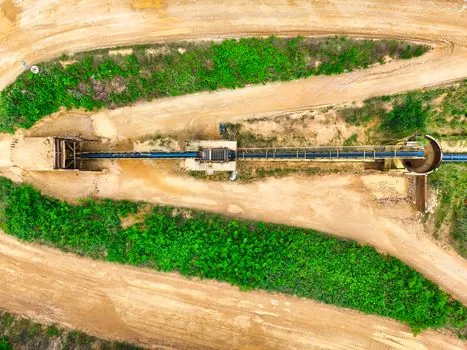
The purchase decision should include chain, sprockets, shafts, bearings, drive power, take-up, rails, attachments, lubrication, inspection, and downtime. A double-strand arrangement adds weight and can increase required drive power; for drag conveyors, that penalty partially offsets the higher chain pull available from the dual strands [S3].
Maintenance exposure also changes with the chain layout. Single-strand chain is easier to align, while duplex chain needs consistent engagement across both rows. Preloading can reduce initial elongation, heat treatment can improve wear resistance, and hot-dipped lubrication can protect chain components, but these manufacturing and maintenance choices affect total cost independently of strand count [S2].
A practical cost model is chain cost per foot multiplied by conveyor length, then divided by verified throughput and service hours. Compare that result with the added power consumption, replacement frequency, labor, and production loss associated with duplex equipment. This approach makes a $1.35-per-foot chain difference visible without pretending that catalog chain price represents the complete conveyor cost [S2].
Standards, geometry, and failure controls
Duplex roller chain in the cited product range is manufactured to ANSI B29.1, and heat-treated components, preloading, and lubrication are identified as controls for strength, initial stretch, and wear [S2]. The chain itself does not establish conveyor capacity. The design must still coordinate chain pitch, sprocket tooth count, sprocket width, shaft loading, attachment spacing, and the calculated service factor.
The smallest practical pitch generally produces the most economical drive for a single-strand chain, while smaller pitches can be less efficient with double- or triple-strand constructions [S7]. Flights also constrain the layout: their spacing sets the discharge cycle and therefore the number of parts presented per minute [S4].
Common failure modes are chain elongation, sprocket jumping caused by inadequate tension, uneven strand load distribution, lubrication failure, rail and trough wear, and attachment misalignment. Tensioning compensation, lubrication, sprocket inspection, and wear-strip checks are recurring maintenance items [S4].
Decision recommendation by application

Choose single strand when the load calculation fits the simplex rating, the conveyor handles light or moderate loads, and low purchase cost and simple maintenance dominate. Choose double strand when the load exceeds the simplex rating, high torque or shock loading is present, pallets or heavy carriers require support at two edges, or vertical space prevents a larger simplex sprocket. [S1]
For a direct cost check, use $8.17 per foot for the listed single-strand ANSI chain and $9.52 per foot for the listed double-strand chain only as benchmark inputs, then replace them with project quotations for the selected pitch, material, attachments, quantity, and delivery terms [S2]. Confirm the calculation with chain pull, motor power, peak loading, expected service life, and maintenance labor before awarding the system.
The next trackable procurement signal is the quoted difference in installed chain, sprocket, shaft, and drive cost for the same pitch and conveyor length. A second signal is guaranteed replacement interval under the specified load and duty cycle, because that value determines whether the double-strand premium reduces production downtime.