
Dry block temperature calibrators in 2026 are specified across four practical operating bands — ultra-low (-100 °C to -90 °C floor), low-temp portable (-35 °C to 165 °C), mid-range laboratory (0 °C to 600 °C), and high-temperature (up to 660 °C) — with selection driven by range, stated accuracy, immersion depth, and sensor-under-test count [S1][S2][S5][S6].
For instrument engineers and procurement teams, the buying decision turns on five gates: minimum and maximum block temperature, accuracy at the calibration setpoint, thermal well geometry (diameter × immersion), controller/automation features, and field-portability weight class — and the catalog SKUs below show how each band differs on those gates [S1][S2][S3].
Range Tiers: How the 2026 Catalog Splits Into Four Operating Bands
Manufacturer listings cluster into four clean temperature bands that map directly to the sensor-under-test. At the top end, the Labfacility Jupiter series covers 30 °C to 660 °C (86 °F to 1,220 °F) and is built around a standard insert accepting up to six thermometers, with Basic, Site, and ADVANCED controller variants [S1]. The Eurotron PTB 600 covers ambient to 600 °C with a 35 mm × 185 mm block and is offered in PTB600-TS and PTB600-TC variants, the latter adding an input for an external reference sensor [S2].
The mid band is dominated by purpose-built 0 °C references and general-purpose units. The WIKA CTD9100-ZERO is a dedicated 14 °F to 212 °F (≈ -10 °C to 100 °C) calibrator with 0.05 K accuracy at 32 °F (0 °C), 0.1 °C resolution, 150 mm immersion depth, and an aluminum block [S3]. The DwyerOmega CL-700A series adds RS-232 bi-directional communication and a rugged metal housing for field use [S4]. At the cold end, the Dearto DTG-series covers -100 °C to 150 °C using a high-thermal-conductivity alloy block, while the Kaye LTR-90 covers -90 °C to +140 °C and targets cold rooms, incubators, autoclaves, freeze dryers, freezers, and cryo units [S5][S6]. Buyers looking to compare general industrial calibration hardware against adjacent test-and-measurement categories can review the broader dry block temperature calibrator reference before shortlisting.
Accuracy, Immersion, and Stability: The Three Hard Specs
Accuracy is the gate that eliminates most candidates. The WIKA CTD9100-ZERO is published at 0.05 K accuracy at the 0 °C setpoint with 0.1 °C display resolution, which is the tightest spec in the comparison set [S3]. The Eurotron PTB 600 is published at better than ±0.15 °C with an external reference sensor, and ships with a dual read-out for the reference and the unit under test (UUT) [S2]. Manufacturer descriptions on the Jupiter series emphasise "fast response" and the ability to "calibrate whole measurement loop," but stop short of a single published accuracy figure on the catalog page [S1].
Immersion depth drives probe-fit. The CTD9100-ZERO is specified at 5.91 in (150 mm) immersion depth, and the PTB 600 lists a 35 mm diameter × 185 mm deep block [S3][S2]. Settling time is a secondary but procurement-visible metric: the CTD9100-ZERO reaches 212 °F from 14 °F in 15 minutes, cools back in 10 minutes, and runs 73 °F to 14 °F in 5 minutes [S3]. For a low-temperature field unit, the LTR-90 is described as delivering "fast response, high stability and automated sensor calibration" in the -90 °C to +140 °C window [S6]. Buyers should match stated accuracy to their sensor class — a 0.05 K figure is appropriate for Pt100 reference probes, while a ±0.15 °C figure is fine for industrial thermocouple loops.
Controller & Automation Features: Basic, Site, and ADVANCED Tiers
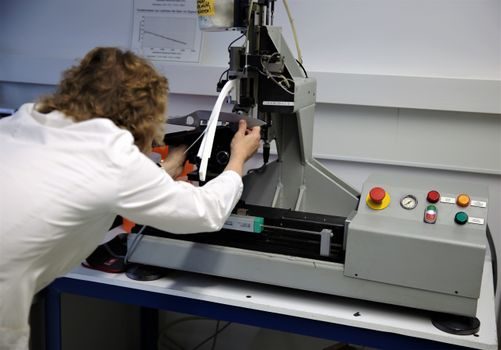
Controller tier is where catalog price ladders out. The Jupiter series is published in three controller grades: Basic (digital display of set and nominal temperature), Site (adds an inbuilt independent temperature indicator for a reference probe), and ADVANCED (adds reference and test thermometer inputs, automatic temperature cycling, secure data logging, and a full-colour high-resolution display) [S1]. The PTB 600 is fully programmable with a ramp function and an automatic switch test, and can be used as a dry block, black body source, or surface temperature calibrator with the right accessories [S2].
Communications differ at the entry tier. The CL-700A series adds RS-232 with bi-directional software, supporting data transfer, program transfer, and real-time control, and is CE-marked for European conformity [S4]. The WIKA CTD9100-ZERO is positioned as a deliberately simple 0 °C heat source — no fieldbus, no cycling, no logging — which is precisely why it is sold as a 32 °F (0 °C) cold-junction reference rather than a general-purpose unit [S3]. For buyers standardising a fleet, controller consistency across SKUs is a real procurement variable.
Portable vs Bench vs Ultra-Low: Matching the Form Factor to the Job
Form factor is not a marketing line — it sets where the unit can be used. The Jupiter series is described as "easy to use portable package" with accessories for surface sensors and infrared thermometers, and the standard insert holds up to six probes [S1]. The PTB 600 is dual-rated field and laboratory, with a 35 mm × 185 mm block suited to both [S2]. The LTR-90 is explicitly "lightweight and rugged" for ultra-cool field and cold-chain work [S6].
Ultra-low is its own segment. The Dearto DTG-series is portable and laboratory-capable from -100 °C to 150 °C using a high-thermal-conductivity alloy block [S5]. The Kaye LTR-90 covers the same band one degree narrower at the floor (-90 °C) and is targeted at pharmaceutical and life-science applications: cold rooms, incubators, autoclaves, freeze dryers, freezers, and cryo units [S6]. Both are far slower to heat and cool than the Jupiter-class high-temperature units, and the procurement team should expect 10–30 minute settling times depending on setpoint delta. Engineers who already maintain bench instruments like linear guide metrology rigs will recognise the same trade-off — high accuracy forces a heavier, slower platform.
Selection Criteria: A Direct Comparison of Four 2026 Models
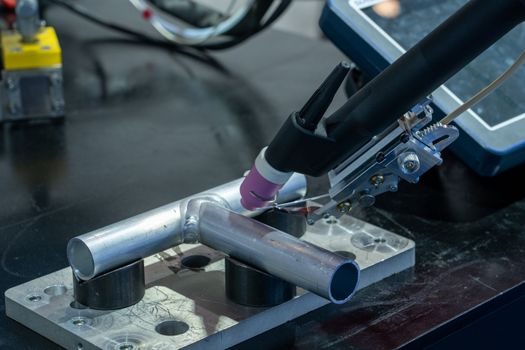
Against four buyer-facing criteria — range, accuracy, immersion, and controller class — the four anchor SKUs line up as follows. The Jupiter series (30 °C to 660 °C, three controller grades, six-probe insert) is the wide-range, high-throughput choice [S1]. The Eurotron PTB 600 (ambient to 600 °C, ±0.15 °C with external reference, 35 × 185 mm block, programmable ramp) is the programmable lab-and-field pick [S2]. The WIKA CTD9100-ZERO (14 °F to 212 °F, 0.05 K at 0 °C, 150 mm immersion, aluminum block, no automation) is the dedicated 0 °C cold-junction reference [S3]. The Kaye LTR-90 (-90 °C to +140 °C, automated sensor calibration, portable/rugged) is the cold-chain and pharmaceutical pick [S6].
If the buyer does not need wide range, a single-purpose reference like the CTD9100-ZERO is often a better value than a general-purpose unit. Conversely, if the buyer is calibrating multiple sensor types on a shop floor, the Jupiter ADVANCED or PTB 600 with dual read-out is the right tier — and the additional cost is recovered through cycle automation rather than accuracy alone. Decision logic: range first, accuracy second, immersion third, controller fourth, communications fifth.
Failure Modes and What Catalog Specs Don't Tell You
Three failure modes recur in dry block calibration. First, axial temperature gradient inside the well: a calibrator with 150 mm immersion depth (CTD9100-ZERO) and 185 mm block depth (PTB 600) can still show a measurable gradient if the probe is not fully immersed, and only a few datasheets publish a gradient curve [S2][S3]. Second, thermal contact resistance between the probe sheath and the well bore; the Jupiter standard insert addresses this by holding up to six probes, but the catalog does not publish bore tolerances [S1]. Third, drift of the unit's own reference sensor over time — for which the only published mitigation is the use of an external reference probe in the PTB 600TC variant and the LTR-90's automated sensor calibration flow [S2][S6].
Buyers who want a lab-grade 0 °C reference but cannot justify a CTD9100-ZERO should treat any "≈0 °C" specification on a general-purpose unit with caution: a 0.05 K accuracy at 0 °C is a published number, and a "±0.5 °C" accuracy on a general-purpose unit is not equivalent. Engineers who also work with mechanical motion systems like crossed-roller guide stages will recognise the same principle — published accuracy at a single setpoint, and a much larger number when extrapolated across range.
Procurement Signals and Where the 2026 Catalog Is Heading

Three procurement signals are visible in the 2026 catalog set. First, the high-temperature ceiling has settled at 660 °C, with the Jupiter series at the top of the published range and no manufacturer in this dataset pushing past it [S1]. Second, ultra-low coverage is becoming standard: the Dearto DTG-series and Kaye LTR-90 both publish -90 °C or -100 °C floors with portable form factors, indicating that cold-chain and pharmaceutical work is no longer a specialty niche [S5][S6]. Third, automation is migrating down-market: programmable ramps and automatic switch tests are now published on mid-range units like the PTB 600, not only on ADVANCED-tier controllers [S1][S2].
Adjacent instrumentation categories that share the same sourcing logic — test-and-measurement hardware with explicit accuracy, range, and protocol gates — are documented across the SourceBySpec catalog, including protocol gateways, control cables, and safety PLCs. Buyers standardising on a calibration fleet in 2026 should expect lead times of 6–8 weeks on built-to-order units such as the WIKA CTD9100-ZERO, and shorter cycles on portable field units from the Dearto, Kaye, and DwyerOmega lines [S3][S4][S5][S6]. Trackable next nodes to watch: a second 2026 SKU cycle at 660 °C from a second European vendor, and a published accuracy figure on the Jupiter ADVANCED datasheet to match the PTB 600's ±0.15 °C claim.