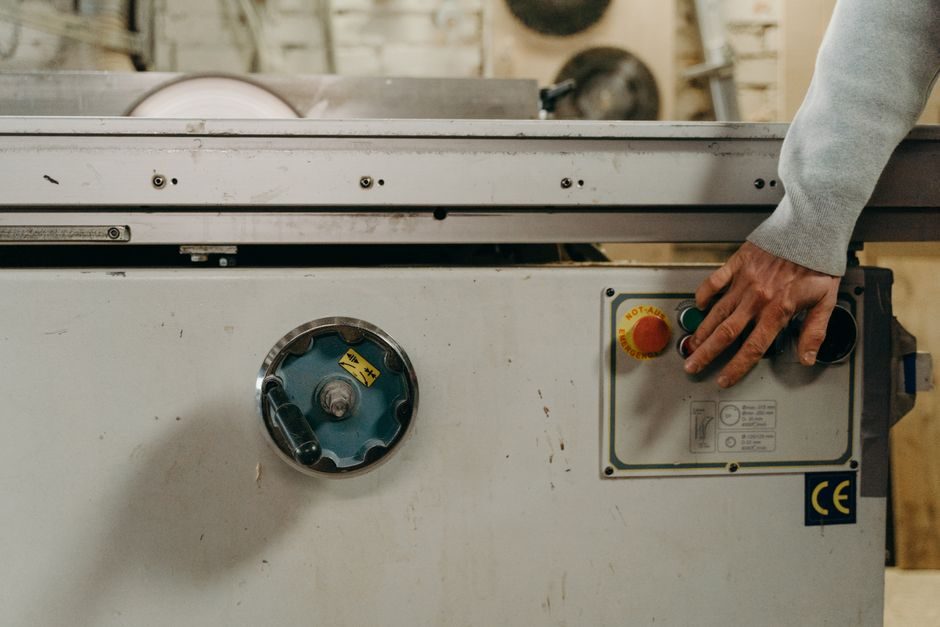
Across published 2024–2026 references, safety PLC controller list price typically ranges from $500 to $5,000 per unit, with high-end modular platforms and large I/O counts pushing project totals well above that band [S3].
The figure that actually matters on a real machine build is lifecycle cost, not catalog price: redundant processors, certified function-block libraries, network protocol licensing, and mandatory proof-test intervals all sit on top of the controller's box price [S1][S6]. For a related industrial sourcing breakdown, see the gear motor cost analysis which uses the same driver-and-tier logic.
What a Safety PLC Is, and Why It Costs More Than a Standard PLC
A safety PLC is a controller built to IEC 61508 / ISO 13849 with dual redundant processors, redundant communication channels, and continuous self-test hardware, so a single internal fault cannot disable the safety function [S3].
That architecture is the price floor: dual-channel I/O, certified firmware, and traceable component selection all raise BoM cost versus a standard PLC that has none of those obligations [S3]. The functional gain is that a safety PLC can implement SIL 2/3 or PLe functions (e.g., guard-door interlock, e-stop, SafeMotion) in software, replacing hard-wired safety relays and shortening the safety validation loop when paired with PLCopen Safety function blocks [S1]. A standard PLC lacks the redundancy and self-test mechanisms, so it is not a substitute for any function that must meet a SIL/PL target [S3].
Unit Price Range and the Real Cost Drivers
Published 2024 pricing data places a safety PLC controller itself at roughly $500–$5,000, with the spread driven by configuration, model, brand, and I/O capacity [S3]. Compact safety modules such as the PILZ PNOZ M1P sit at the entry of that band on distribution channels, while modular SIL 3 / PLe platforms from Allen-Bradley (CompactLogix GuardLogix), Siemens, and Omron sit at the upper end once safety I/O and motion modules are added [S2][S4].
Cost drivers ranked by typical impact on a 2026 build:
1. SIL / PL target. SIL 2 / PLe builds need dual-channel architectures and certified firmware; SIL 3 / PLe Cat 4 adds more redundancy and tighter proof-test intervals, and that lifts both hardware and engineering hours [S3][S6]. 2. I/O count and type. Safety digital inputs are the cheapest, safety analog and safety relay outputs push per-channel cost up, and SafeMotion modules add a step-change in price because they also cover encoder feedback and STO/SS1/SLS functions [S1]. 3. Network protocol. CIP Safety, PROFIsafe, Safety over EtherCAT, OpenSafety, CC-Link IE Safety, and Mechatrolink each carry their own licensing, cabling, and configuration overhead; mixing protocols on one line drives integration cost up faster than hardware cost [S1]. 4. Software and function-block libraries. PLCopen Safety function blocks (Part 1, Part 3, Part 4, SafeMotion) reduce certification time and therefore engineering cost when the application fits the library, but custom blocks require additional TÜV / DGUV-style review [S1]. 5. Brand and ecosystem. Pilz, Allen-Bradley / Rockwell, Siemens, Omron, and ABB each price the controller, software licence, and support contract differently; Pilz is generally the deepest safety specialist, Omron fits best inside Sysmac / CIP Safety, Siemens and Rockwell dominate the very-large plant segment [S5].
Platform Comparison: Pilz vs Allen-Bradley vs Siemens vs Omron
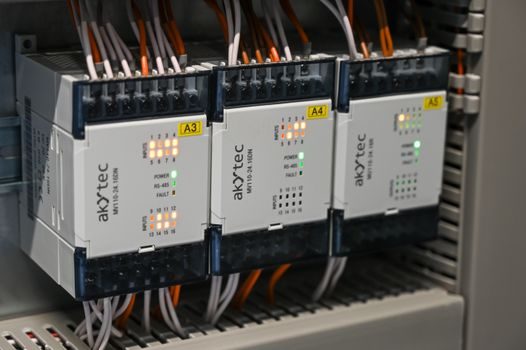
On a like-for-like safety function, the four mainstream ecosystems price and integrate very differently, and the cheapest box is rarely the cheapest system [S5].
- Pilz (PNOZmulti, PSS 4000). Strongest safety specialisation, broad certified function-block library, premium price per module; PNOZmulti-class units such as the PNOZ M1P are widely distributed and easy to drop into mid-size machines [S2][S5]. - Allen-Bradley CompactLogix GuardLogix. Integrates standard and safety control in one platform, rated SIL 2/3 and PLe with high-speed safety processing; strongest fit for plants already on Logix and CIP Safety, mid-to-upper hardware price but lower integration overhead [S4][S5]. - Siemens (SIMATIC S7 F-CPU, S7-1500F). Dominant on PROFIsafe and very large plant networks; highest software-licence cost in this group, but the lowest integration penalty on greenfield Siemens plants [S5]. - Omron (NX/NJ safety). Most competitive inside its own Sysmac platform, especially on CIP Safety; lower list price than Pilz in many channels, but limited value outside a Sysmac / NX-I/O architecture [S5].
Decision rule from a cost standpoint: pick the ecosystem that matches the network already on the plant floor, then compare controllers inside that ecosystem. Mixing ecosystems to chase a $200 controller saving usually loses the saving in integration and proof-test labour [S5][S6].
Lifecycle Cost: Proof Test, Engineering, and Downtime
Safety PLCs are specified and priced for a 20-year installed life, but the recurring cost is the proof-test interval dictated by IEC 61508 / ISO 13849, which can run from once per year to once per three months depending on SIL and demand rate [S6].
Each proof test is a planned stop and a documented functional check of every safety function (e.g., guard-door protective stop: open interlock, observe response, verify energy removal, deliberate restart) [S6]. On a machine with 30 safety functions and a quarterly proof test, that is 120 functional checks per year of technician time, and it is the line item most under-estimated at quotation stage [S6]. Two architectural levers cut that burden: (a) using PLCopen Safety function blocks instead of custom logic, because certified blocks reduce re-validation work, and (b) integrating safety into the same controller as standard logic, because one proof test covers the whole machine rather than separate relay panels [S1][S6]. For a comparable power-side cost breakdown, the power monitoring system price guide applies the same lifecycle logic to instrumentation.
Who Should and Should Not Specify a Safety PLC
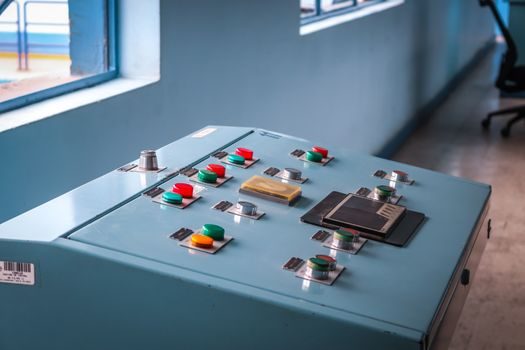
Specify a safety PLC when any safety function on the machine must achieve SIL 2/3 under IEC 61508 or PLe / Cat 3-4 under ISO 13849, when multiple safety functions share a common I/O bus, when SafeMotion (STO, SS1, SLS, SLP) is required, or when audit history (TÜV, DGUV) demands certified function blocks [S1][S3][S4].
Do not specify a safety PLC for non-safety sequencing, for simple single-function e-stops that a safety relay covers for under $200, or for pilot or lab rigs where the standard PLC plus a hard-wired e-stop is acceptable and cheaper [S3][S6]. Also avoid forcing a safety PLC into a line where the network protocol (e.g., a non-safety fieldbus) cannot carry the safety messages, because the controller then has to fall back to hard-wired safety I/O and the integration saving disappears [S1].
Sourcing Specs to Lock at Quote Stage
Quotation-stage specifications that drive both compliance and price, in the order they should be fixed: (1) target SIL and PL with the relevant subsystem standard, (2) list of safety functions with demanded response time, (3) I/O count split by safety DI / DO / analog / SafeMotion, (4) network protocol and gateway requirements, (5) software licence and function-block library scope, (6) proof-test interval assumed in the commercial offer, (7) environmental and certification requirements (e.g., ATEX, IEC 61800-5-2 for drive-integrated safety) [S1][S3][S4].
For the relevant spec sheets and selection criteria, see safety plc, plc, and linear guide.
