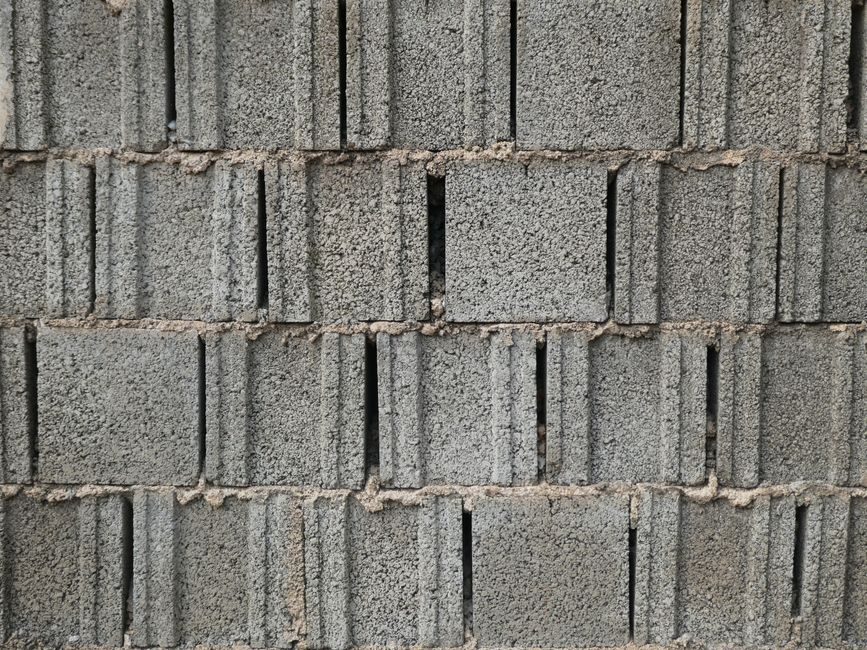
School construction programmes in 2026 specify dry-mix mortar as a thin-bed cementitious adhesive because batch-to-batch consistency, dust control on site, and a 9-12 month shelf life outperform site-mixed cement-sand mortar for occupied-campus renovation [S1].
Selection pivots on substrate (concrete block, calcium-silicate brick, cement board, existing tile), exposure (dry classroom vs wet zone), traffic (corridor/stair tread vs wall), and the standards landscape — EN 12004 / ISO 13007-1 for tile adhesive classes (C1, C2, D, R, T, E, S1, S2) and EN 998-1 for render and plaster mortars [S1].
Matching Mortar Class to School Substrate and Room
C1 (normal cementitious, ≥0.5 N/mm² tensile adhesion after standard cure) fits dry classroom walls on plaster or concrete block, and is the cost floor for school buildouts [S1]. C1T adds thixotropy (slip ≤0.5 mm) so tiles do not sag on vertical runs in stairwells and lobby walls. C2 (≥1.0 N/mm²) is required where adhesion is safety-critical — toilet wet zones, drinking-fountain splash walls, and laboratory benches where tiles carry chemical exposure and repeated cleaning.
C2TE S1 (improved, thixotropic, extended open time ≥30 min, plus deformable ≥2.5 mm and <5 mm per EN 12002) is the right call for corridor walls on lightweight partitions and any suspended slab subject to foot-fall vibration. C2TE S2 (highly deformable ≥5 mm) is overkill for most school interiors — reserve for steel-frame structures or external façade tiling where differential thermal movement exceeds 5 mm. D1 / D2 (dispersion pastes) and R1 (reaction-resin, typically polyurethane or epoxy) are niche for school projects: R1 only where chemical or thermal shock is constant, e.g. secondary-school chemistry prep rooms with floor drains.
Substrate Preparation and Application Thickness
Application thickness for thin-bed adhesive on school walls sits in the 3-6 mm band after notch-trowel compression, against a substrate tolerance of ≤3 mm over a 2 m straightedge; thicker beds beyond 6 mm push the spec into EN 998-1 medium-bed / render territory, where bed depth drives shrinkage cracking risk on long classroom walls [S1]. A 10 mm notched trowel on a flat substrate delivers ≈4 mm compressed bed — the working point for most C1T work in primary-school classrooms and administration blocks.
Substrate moisture and suction matter: highly absorbent autoclaved aerated concrete and calcium-silicate brick need pre-wetting or a primer; polymer-modified C2TE levels out variable suction across mixed-masonry classroom partitions. Water dosage is fixed by the bagged formulation — typical 4-5 L per 25 kg bag for C1T, 5-6 L per 25 kg for C2TE S1.
Wet Zones, Stair Treads, and Acoustic Floors
Toilets, staff kitchens, and science-prep rooms demand C2TE S1 with documented adhesion ≥1.0 N/mm² after water immersion and ≥1.0 N/mm² after heat ageing (both per EN 12004 / ISO 13007-1 test sequences) [S1]. Where sheet vinyl or rubber stair nosing is used, the adhesive under the nosing is a contact / PU system, not a cementitious thin-bed — do not substitute C2TE in that interface.
For acoustic underlay in classrooms (rubber crumb, cork, or foam-backed vinyl), adhesive choice is rubber- or acrylic-based and sits outside the EN 12004 thin-bed regime; here the school specifier should treat the dry-mix mortar selection for cold-storage facilities reference as the closest analogue for hygrothermal stress, even though classroom temperatures are not sub-zero. For exterior pavement and the school entrance mat-well, the comparable commercial-building spec map is detailed in dry-mix mortar selection for commercial buildings (2026) — that page covers the C2TE S2 / frost-resistance boundary that public-school entrance aprons share with retail and office builds.
Production, Storage, and Site Logistics
Plant capacity of 3-20 t/h is the typical band for automated dry-mortar lines serving school-construction volumes; a single BHR2000-class 3 t/h line covers the mortar demand of one to two primary-school blocks per academic-year buildout cycle, with 10-15 t/h semi-automatic lines supplying secondary-school campuses or multi-school framework lots [S3].
Bagged dry-mix has a 9-12 month shelf life when stored ≤30 °C and ≤75 % RH on pallet — schools that schedule renovation during the summer holiday need delivery within the last 60 days of manufacture to keep the full 9-12 month envelope for handover and defects-liability period. Bulk silo delivery is rare on K-12 sites because the project's daily draw rarely justifies a 30 t silo; bagged 25 kg sacks remain the standard format, and pallet wrap plus stretch hood is the default weather protection. For more detail on related equipment and additive dosing see the dry-mix mortar base reference.
Standards, QA, and the Class Comparison
EN 12004 (implemented globally as ISO 13007-1) sets the C1/C2/D/R class framework and the T/E/S1/S2 performance suffixes; EN 998-1 covers render and plaster mortars; school-construction tender documents commonly cross-reference ETAG 004 / EAD 040083-00-1104 for external thermal-insulation composite systems with render, which is the route for school façade upgrades funded under energy-renovation programmes [S1]. The class-to-room comparison collapses to four decision columns: substrate suction, exposure, deformability, and cost.
For a school project, the C1T column covers 70-80 % of wall-tile area (corridors, classrooms, offices); C2TE S1 covers 15-25 % (toilets, kitchens, labs); C2TE S2 and R1 cover the remaining 1-5 % (movement joints, chemical-exposure benches, exterior apron). Quality control on site is by pull-off test — calibrated hydraulic adhesion tester at ≥1.0 N/mm² for C2 and ≥0.5 N/mm² for C1, on a 50 × 50 mm test coupon, sampled at one coupon per 100 m² — the minimum QA cadence that most European education-sector specifications now require. See the ready-mix concrete reference for the related cast-in-place QA cadence used for structural slabs under the same school-building quality plan.
For a typical 8-classroom primary-school block (≈1,200 m² floor area, ≈2,800 m² tiled surface, 60 % wall / 40 % floor), the dry-mix mortar material draw lands at 18-22 t of C1T for dry zones and 6-8 t of C2TE S1 for wet zones, a 3:1 ratio that is the rule-of-thumb check a specifier can apply at the bill-of-quantities stage. Bagged 25 kg units, water dosed per bag, and 9-12 month shelf life remain the operational anchor for any K-12 school project in 2026.
The underlying component specifications are covered under dry type transformer.