
Stocked ductile iron pipe in 2026 is delivering on a 4 to 8 week window, while non-stock diameters, restrained joint runs, and fabricated assemblies extend to 12 weeks or more [S4].
The 4 to 12 week spread cited by industry sources in 2026 is not a logistics artifact; it is a function of which diameters, pressure classes, joint types, linings, and coatings the spec actually calls out [S4][S5].
What the 4 to 12 Week Range Actually Covers
Public-facing industry guidance from June 2026 puts ductile iron pipe order delivery at 4 to 12 weeks, with order size, supplier location, current market demand, production capacity, and existing production schedules acting as the named drivers [S4]. Pipe-fabrication shops and mills in the U.S. had previously signalled in 2023 that lead times had normalized off the COVID-era peak, when raw-material, labor, and Gulf-Coast weather disruption had stretched deliveries well past routine windows [S1][S3]. The current 4 to 12 week envelope is closer to a pre-2020 planning baseline for stocked product, not a sign of stress [S3][S4]. For context, the broader ductile iron pipe market is projected by Fortune Business Insights to grow from $8.95 billion in 2026 to $14.03 billion by 2034 at a 5.8% CAGR, with a separate forecast from Market Growth Reports citing a $5.53 billion to $9.02 billion path at 5.02% CAGR through 2035 [S6][S8]. Both forecasts imply steady, not surge, demand, which is consistent with the normalized lead-time range. For reference on how these pipes connect in a buried system, see the pipe fitting and pipe clamp reference pages.
Which Specifications Move the Window the Most
Five specification areas have a larger effect on lead time than nominal diameter alone: applicable standard and edition, diameter and pressure or wall class, joint type, internal lining, and external coating [S5]. Common diameters in the AWWA C151 size band, with standard cement-mortar lining and a push-on joint such as TYTON, are typically the fastest to ship because they are continuously produced; less common combinations force dedicated production runs [S3][S5]. Restrained joint systems such as TR FLEX, HP LOK, and BOLT-LOK, or seismic-rated ERDIP pipe, draw on different accessory and fitting inventories and can shift schedules depending on the gasket and restraint hardware needed [S3]. Specialty linings and coatings, including Protecto 401 ceramic epoxy, fusion-bonded epoxy (FBE 704G and 134), glass (porcelain-enamel) lining, and V-Bio polyethylene encasement, add curing, inspection, or handling steps that the bare pipe barrel does not require [S3][S5]. A more detailed comparison of how spec choices map to delivery risk is laid out in this 2026 piece on Ductile Iron Pipe Specs to Compare When Lead Times Matter.
Comparison: Stocked vs Non-Stock vs Fabricated Delivery
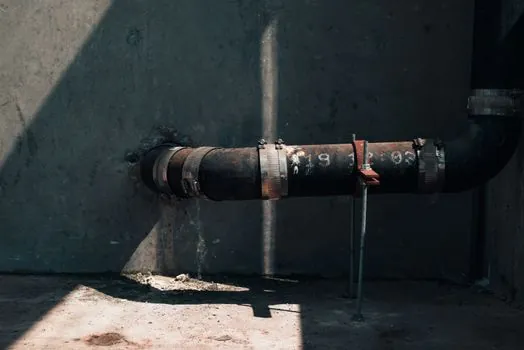
Three ordering profiles cover the bulk of municipal and utility work, and they sit at different points in the window: [S5]
1) Stocked commodity pipe (4 to 6 weeks): common diameters, push-on TYTON joint, standard cement-mortar lining, no special external coating, no welded outlets. Fits most gravity water and standard pressure-class applications.
2) Restrained or special-coating pipe (6 to 10 weeks): TR FLEX, HP LOK, BOLT-LOK, MECH-LOK, FIELD LOK 350 gaskets, metallic zinc coating, FBE linings, or V-Bio encasement. The pipe barrel may be ready, but joint accessories, special gaskets, or coating cure windows push the date.
3) Fabricated assemblies (10 to 12+ weeks): welded outlets, anchor pipe, wall pipe, thrust collars, grooved ductile iron, or HDD pull-head configurations built by a fabrication shop. These are scheduled against shop capacity, not mill capacity, and confirmations should be requested in writing against the production calendar [S2][S3].
Real Use Cases and the Lead-Time Decision
Municipal replacement work is the dominant use case, and it is the segment most exposed to schedule compression: capital approval delays, combined roadwork and valve programs, and shared trench closures with other utilities [S5]. For these projects, the practical question is not "can this pipe meet the design" but "which spec set gives the best chance of arriving on time without creating installation, inspection, or lifecycle problems later" [S5]. For horizontal directional drilling (HDD) pulls and seismic-zone work, restrained-joint pipe such as TR FLEX, HP LOK, or ERDIP is the right technical choice; the planning move is to size the order and confirm pull-head availability with the mill or fabrication shop at the design stage, not at the purchase-order stage [S3]. Pipe-with-welded-outlets and fabricated fittings route through a separate shop schedule, so they should be confirmed against the fabricator's capacity calendar rather than a generic 4 to 12 week range [S2][S3]. For a material-level view of how ductile iron fits against competing options, the PVC vs Ductile Iron Installed Cost Comparison Calculator is a useful third-party reference, and the cast iron page covers the metallurgical baseline.
What Procurement Teams Should Verify Before Issuing a PO
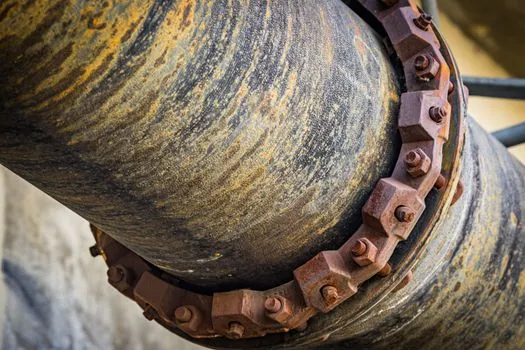
Five checks reduce the chance of a 12-week surprise: (1) confirm the exact standard edition and regional acceptance, since different editions may force different production routing and documentation [S5]; (2) avoid over-specifying pressure or wall class where system conditions do not require it, because less common class combinations force dedicated runs [S5]; (3) review the full joint and accessory system, including gaskets, restraints, and compatible fittings, not just the pipe barrel [S3][S5]; (4) match internal lining to the conveyed fluid and local water-quality specs, so a lining change does not arrive mid-project [S5]; (5) request a written production-date estimate from the mill or fabricator using a tool such as the American Piping Products lead-time calculator rather than a verbal quote window [S2]. Regulatory approvals for special configurations can also add time, so any item requiring non-standard paperwork should be flagged at the spec stage, not at the delivery stage [S4].
Limitations of the Public Lead-Time Range
The 4 to 12 week range is a planning baseline for stocked and near-stock configurations; it does not cover mill outages, force majeure events, or the post-2020 disruption pattern of COVID demand spikes combined with Gulf-Coast weather and labor shortages [S1][S4]. A 2023 U.S. Pipe post directly stated that "lead times are back to normal" once those disruptions cleared, which is the condition the 2026 baseline assumes [S3]. The 4 to 12 week figure also does not separate domestic mill output from imported ductile iron, where shipping, customs, and inspection windows add their own variability. Two independently published market forecasts differ in size, $8.95 billion versus $5.53 billion for 2026, but both point to steady mid-single-digit growth, not a step-change in demand that would stretch lead times on its own [S6][S8]. The 4 to 12 week range is also a single overall figure; it does not tell a buyer whether a specific 36 in restrained-joint run with Protecto 401 lining will land in week 6 or week 14, which is why the comparison criteria in the previous sections matter more than the headline number.
Trackable signals to watch into late 2026: (1) whether the 4 to 12 week band holds through the U.S. and EU winter construction slowdown, when inventories are typically rebuilt; (2) any revision to the Fortune Business Insights or Market Growth Reports 2026 baselines if either publisher updates its forecast before year-end [S6][S8]; (3) AWWA C151 / C111 / C116 standard-edison updates that change lining, joint, or wall-class documentation on mill cut-sheets. Cross-reference the Ductile Iron Hub Castings: Supply, Grades, and Sizing for Wind Turbines piece to see how the same metallurgical base behaves under a different demand cycle.