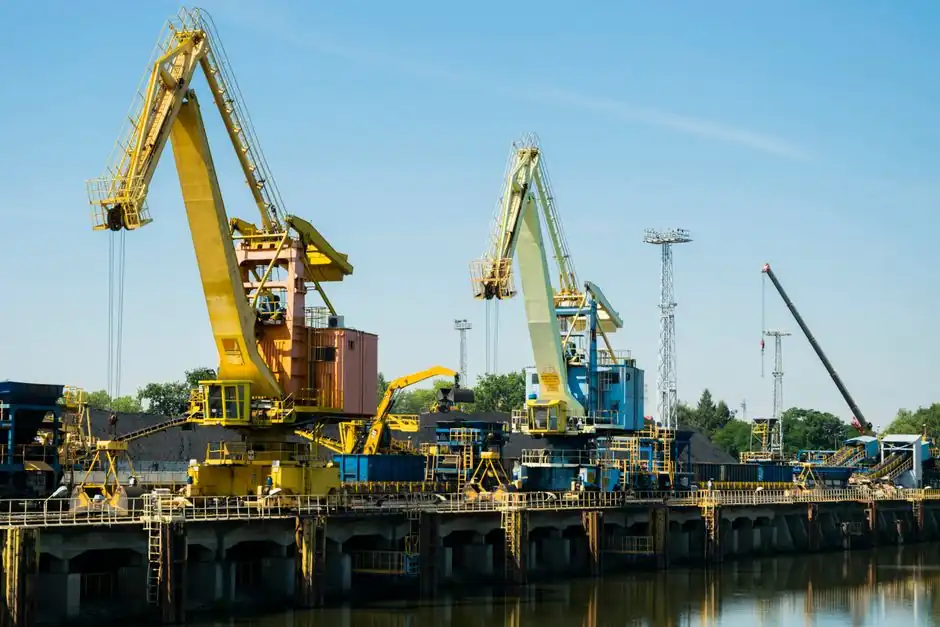
Direct Reduced Iron (DRI) and its compacted derivative Hot Briquetted Iron (HBI) now sit at the centre of the steel sector's decarbonisation roadmap, with the CRU framing new DRI/HBI supply as "key enabler of steel decarbonisation" [S4]. GravitHy quotes a 50-120 kg CO2 per tonne HBI footprint on hydrogen-based routes, targeting 50 kg CO2/t at full renewable electricity, which is roughly a 90% cut versus the conventional blast furnace path [S3].
The quality case is now as concrete as the carbon case. DRI/HBI can reach up to 50% lower CO2 emissions than coal-based reduction on natural gas, with hydrogen-ready designs enabling near-zero direct emissions when paired with renewable electrolysis [S5][S1]. That dual value proposition is why merchant capacity, not just integrated use, is the bottleneck the industry is racing to remove.
What DRI and HBI Actually Are, and Why Compaction Matters
DRI is metallic iron produced by stripping chemically bound oxygen from iron oxide pellets or lump ore in a shaft furnace, using a hot reducing gas of H2 and CO, with no melting step [S1]. The output is a high-purity, porous solid that feeds either an Electric Arc Furnace or a Basic Oxygen Furnace, or charges directly into a blast furnace [S1]. Compaction is the small but decisive step that turns it into a tradable commodity.
HBI is DRI briquetted at temperatures above 650 degrees C, producing a dense pillow shape that is approximately 100 times more resistant to reoxidation than standard DRI and absorbs about 75% less water during handling [S7][S1]. The Midrex process supplies the reduction technology while Koppern supplies the briquetting equipment that defines the HBI product class [S1]. For trading and storage, that resistance profile is the difference between a domestic byproduct and a long-haul feedstock.
CO2 Reduction Bands Across Reduction Routes
The route dictates the carbon math. Coal-based blast furnace plus BOF remains the carbon-intensive baseline, while natural gas-based DRI typically delivers up to 50% lower direct CO2 emissions than coal-based reduction [S5]. Hydrogen-based DRI, where H2 displaces CO as the reductant, takes the next step down, with GravitHy reporting a 50-120 kg CO2/t HBI footprint on green hydrogen, targeted to 50 kg CO2/t at full renewable supply, equating to roughly 90% reduction versus the coal route [S3].
For plant-level decisions, the relevant comparison is furnace-specific CO2 per tonne of crude steel. EAFs charged with HBI also let operators dilute metallic impurity build-up from scrap, which is critical for high-grade flat products that the integrated BF-BOF route has historically dominated [S2]. The same HBI can also be charged into a blast furnace to cut coke rate and CO2 intensity without a full fleet conversion, giving integrated mills a transitional lever [S1].
Market Direction: DRI Output, Trade Flows, and the Merchant Gap

Trade flows are accelerating because HBI reoxidises slowly enough to ship on long ocean routes, while conventional DRI is essentially a captive or short-haul product [S1][S4]. That physical shift is what makes the CBAM landscape workable: natural-gas-based HBI sits well below blast-furnace hot metal on carbon intensity, so carbon pricing is more an accelerant than a barrier [S2].
The supply gap is the binding constraint. CRU's December 2024 thesis is explicit: "the increase in use of DRI/HBI will be one of the key enablers of carbon emissions reduction by the steel industry," but the merchant supply build has lagged the announced demand from EAFs and from CBAM-exposed buyers [S4]. GravitHy's first Fos-sur-Mer site, rated at 2 million tonnes of HBI per year, illustrates the unit scale needed to feed a regional EAF cluster with low-carbon feedstock [S3].
Selection Criteria for Specifying DRI and HBI
Specifying DRI/HBI is a five-parameter exercise. Metallisation degree, carbon content, gangue composition, physical integrity, and reactivity collectively drive EAF energy consumption, yield, and final steel properties, so a single spec sheet must lock all five before the first shipment [S5]. For a hydrogen-route product, residual gangue chemistry and the carbon level set the tap-to-tap time and electrode consumption downstream; the briquette density and shape tolerance then govern whether the material survives the barge-to-EAF transfer without fines build-up [S5][S7].
For a procurement team choosing between merchant sources, the relevant decision matrix is:
Decision criterion 1: Reduction route. Natural gas DRI/HBI cuts direct CO2 by up to 50% versus coal; hydrogen-based DRI/HBI targets 50-120 kg CO2/t, with near-zero on a 100% H2 feed and renewable electricity [S5][S3].
Decision criterion 2: Transportability. HBI is ~100x more reoxidation-resistant than standard DRI and absorbs ~75% less water, so long-distance ocean shipping is viable only for the briquetted form [S1][S7].
Decision criterion 3: Furnace fit. EAF charging takes both DRI and HBI; blast furnace charging uses HBI as a partial reductant to cut coke rate, while BOF benefits from HBI's high metallisation in the scrap/dilution mix [S1][S2].
Decision criterion 4: Quality consistency. HBI's defined chemical and physical properties give more predictable EAF performance than scrap lots of variable metallic impurity, which matters for flat-product mills that need dilution control [S1][S2].
Who Should Buy HBI, and Who Should Not
Buyers that benefit most are EAF operators targeting flat products, integrated mills looking to cut BF coke rate without a full conversion, and any steelmaker with Scope 3 reporting exposure to automotive, construction, energy, or transport buyers [S3][S2]. HBI is also the practical answer for steelmakers short on high-grade scrap, since it dilutes tramp elements and stabilises EAF chemistry [S2][S3].
Buyers that should not anchor their plan on HBI are pure scrap-based mini-mills with no access to long-term merchant supply contracts, and integrated mills that have already committed capital to a full hydrogen DRI plant of their own, since for them HBI is a transition feedstock, not a destination. Operations without rail or deepwater port access, or those unable to handle briquette receiving infrastructure, also face a logistics ceiling that favours standard DRI or scrap over HBI.
Production Methods, Standards, and Quality Levers
Direct reduction today runs on three industrial patterns: shaft furnace processes such as MIDREX and ENERGIRON-ZR, fluidised bed processes suited to fine ores, and emerging hydrogen-only configurations [S1][S2]. HBI is the densified output of the shaft route, with the briquetting step at >650 degrees C defining the product category [S7]. The metallurgical parameters that govern downstream EAF performance are metallisation degree, residual carbon, gangue (especially silica and alumina), bulk density, and fines generation under handling, and these are the five numbers to lock into any incoming-material acceptance protocol [S5].
Real-time, non-destructive testing integrated into the briquetting line is the next control step, replacing batch laboratory assays and enabling adaptive process control [S5]. For more on the EAF-side process window where HBI dissolves, see the aluminum die casting machine selection for motor housing castings analysis, which covers the same EAF-or-induction decision pattern that HBI buyers face when sizing their feed mix.
Limitations and Failure Modes to Plan Around
Reoxidation is the headline safety and yield risk for standard DRI; HBI mitigates but does not eliminate it, and any stockpiling protocol must still control moisture ingress and temperature run-up [S1]. Variable gangue levels shift slag volume and electrode consumption in the EAF, and lower-density briquettes generate fines that upset continuous charging [S5]. Scrap dilution, an HBI strength, becomes a constraint when the metallic mix needs tighter control for high-strength or high-formability flat grades [S2].
Hydrogen-route economics are gated by electrolyser power cost and renewable supply, so the 50-120 kg CO2/t range is a contract- and grid-dependent band, not a guaranteed footprint, and any green-attribute claim has to be tied to a specific electricity supply [S3]. CBAM exposure makes the carbon number a balance-sheet item, so buyers need auditable chain-of-custody documentation on the CO2 figure, not just the product spec [S2].
Supply-Side Signals to Watch Through 2026
Trackable signals over the next two quarters: first, nameplate updates from the Fos-sur-Mer and other announced 2 Mt/y-class HBI hubs, since each unit equals roughly the daily output equivalent of one Eiffel Tower of metallic iron [S3]. Second, the spread between natural-gas-based HBI delivered price and the CBAM-adjusted BF-BOF hot metal reference, which CRU's DRI/HBI supply thesis flags as the key trade signal [S4]. Third, merchant HBI cargo movements out of low-cost-gas regions to European EAFs, which is the first physical proof that the new supply chain is functioning. For related coverage of how the broader aluminum die casting machine selection decision interacts with scrap versus primary metal mix economics, that piece walks through the same furnace-versus-charge trade-off for a different alloy system.
Spec-level background on the components involved: carbon steel, low pressure die casting machine, and carbon fiber.