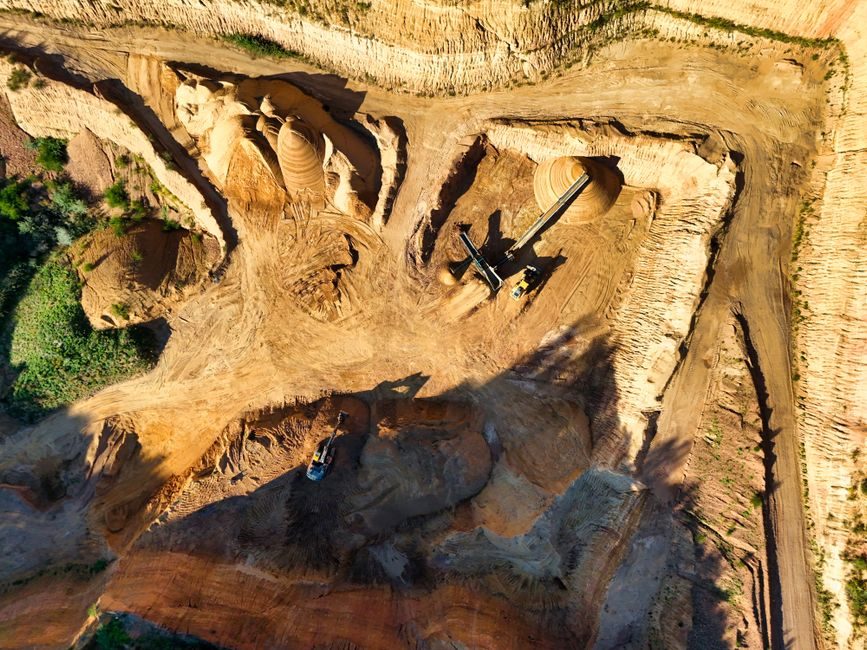
Three sensing technologies dominate mining dust monitoring: optical (light scattering/extinction), beta attenuation, and gravimetric filter sampling, with each mapped to a distinct duty in underground and surface operations [S3].
Selection hinges on four variables: mine type (underground coal, hard rock, open-pit), particle size distribution, regulatory threshold, and whether the device feeds a real-time alarm or compliance log [S3]. For respirable silica and coal dust, North American regulators typically reference exposure limits in the 1.5-5 mg/m³ band, and integrated water-spray plus chemical plus mechanical collector trains are documented at cumulative suppression efficiency above 99% [S6].
Optical Scattering Sensors: Real-Time Hazard Alarms
Optical dust detectors using light scattering or light extinction principles respond in seconds to concentration changes, which is why they are the default for process control loops and trip alarms in crushing, transfer, and tipping stations [S3]. Laser-diode units resolve fine particles below 10 microns, the size fraction that drives respirable silica and coal dust exposure limits [S3]. For sites where the detector is the only layer between a dust event and a worker exposure, a dust detector with sub-1 mg/m³ sensitivity and a 4-20 mA or Modbus RTU output is the minimum defensible spec.
Optical units also pair with water-spray and fogging actuators: source [S6] documents water spray at 85-95% capture efficiency and fogging at 80-90% efficiency, both controlled by a real-time optical reading at the dust source. Field-engineered trade-off: optical sensors drift in high-humidity and fouling environments, so maintenance interval and on-board self-check diagnostics should be specified, not assumed.
Beta Attenuation Monitors: Reference-Grade Compliance Data
Beta attenuation monitors (BAM) measure mass concentration by detecting beta-ray absorption through a collected filter tape, delivering the widest dynamic range and the strongest correlation to gravimetric reference methods for environmental compliance reporting [S3]. Source [S3] notes BAM stability across the temperature extremes and vibration loads typical of haul-road and crusher-house installations, which is why surface mines standardise on them for fence-line and stockpile monitoring.
BAM is not a fast alarm instrument; it integrates over minutes to hours. Where both real-time alarm and compliance data are required, the standard architecture is one optical head driving control plus one BAM feeding the regulator log, with a gravimetric sampler cross-checked quarterly [S3]. The selection gate is whether the site can supply conditioned, low-vibration mounting and reliable tape stock, not the headline accuracy number.
Gravimetric Samplers: The Regulatory Anchor
Gravimetric samplers pull a known air volume through a pre-weighed filter, then weigh the filter in a lab; they remain the legally defensible reference method for personal exposure monitoring under MSHA and equivalent regimes [S3][S7]. They are slow, manual, and not networked, but every optical or beta instrument in a compliance chain is calibrated against them [S3].
For procurement, specify a sampler that meets the 1.5-5 mg/m³ regulatory threshold band noted in source [S6], with a cyclone preselector sized to the respirable fraction (typically 4 microns cut-point at the standard 1.7 L/min flow used in NIOSH-style methods). Source [S7] walks the unit operations where gravimetric verification is non-negotiable: primary dumping, crushing, grinding, transfer points, and drilling, each a different dust-generation mechanism with a different suppression strategy.
Selection Criteria by Mine Type
Underground coal requires explosion-proof equipment certified for explosive atmospheres, favouring compact, fast-response optical units with intrinsic safety ratings rather than large BAM racks [S3]. The wider underground gas-and-dust safety stack, including methane, carbon monoxide, and hydrogen sulfide sensing at low ppm levels, is increasingly delivered by distributed micro-sensor networks rather than single-point instruments [S4].
Surface hard-rock and aggregate operations can carry larger beta attenuation units for environmental compliance and ruggedised optical heads at transfer points for trip-level alarms [S3]. For worker-side protection underground, the final layer remains respiratory PPE, and a properly specified dust mask selection is what closes the loop that engineering controls cannot fully seal. Selection gates, in order: (1) hazardous-area certification, (2) particle-size range, (3) response time, (4) output protocol, (5) maintenance burden.
Integration: Output, Networking, and Data
Most modern optical and BAM units expose 4-20 mA, Modbus RTU over RS-485, or Ethernet, with on-board logging for trend analysis and predictive maintenance [S3][S5]. Source [S5] frames the value as: real-time data enables immediate management action, while automated reporting streamlines regulator communication and reduces the manual log burden. For 2026 builds, the audit-friendly spec is a device that pushes time-stamped concentration data, instrument diagnostics, and calibration flags into a SCADA or historian, not one that only drives a local display.
Where dust concentration drives a worker exposure decision, complementary monitoring of the air-quality envelope matters: source [S4] documents micro-sensor networks used to build dynamic atmospheric maps across tunnels and open-pit benches, with fatal-gas detection for methane, CO, and H2S alongside particulate. For a multi-hazard underground package, see the confined space oxygen detector spec map, which lines up 4-gas portable instruments against the same hazardous-area and output criteria.
Limits, Failure Modes, and What Not to Specify
Optical sensors drift under humidity swings, lens fouling, and condensed moisture; a unit without automatic self-check or a defined cleaning interval will fail quietly and produce low-bias readings [S3]. Beta attenuation units need stable power, conditioned air for the tape path, and vibration-isolated mounting; specifying a BAM for a haul-truck chassis is a procurement error.
Gravimetric samplers are not real-time and cannot drive suppression actuators; using them as the primary control input is a system-design error even though the data is the most defensible [S3]. A second failure mode is mixing the technologies incorrectly: an optical head alone cannot satisfy a compliance audit, and a BAM alone cannot catch a 30-second dust event from a blocked chute. Source [S3] is explicit that the three technologies are complementary, not substitutes.
Sourcing, Standards, and 2026 Buying Signals
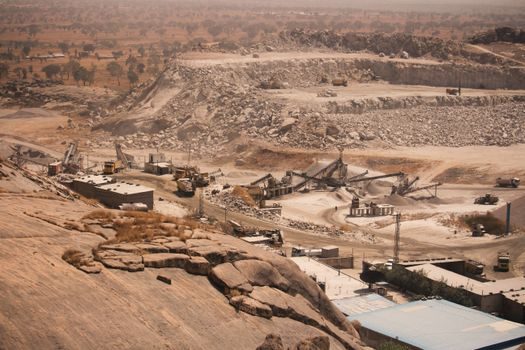
Two primary reference documents anchor any mining dust selection: the NIOSH Dust Control Handbook for Industrial Minerals Mining and Processing, which covers hood design, airflow specification, and unit-operation control points [S1][S2], and the MSHA Best Practices for Dust Control in Metal/Nonmetal Mining, which walks respirable silica control in mineral processing [S7]. Source [S6] gives the 2026 market-side numbers: integrated multi-technology suppression trains clearing 99% cumulative efficiency and regulatory exposure thresholds in the 1.5-5 mg/m³ band.
Trackable 2026 signals to watch: vendors bundling optical plus BAM plus gravimetric as a single calibrated package, supplier-side disclosure of IP65 or higher enclosure rating on optical heads, and explicit ATEX/IECEx certification language on underground-rated units [S3]. For complementary equipment selection on the same site, the backhoe loader spec map for mining and the multistage centrifugal pump spec map cover the heavy mobile and slurry-handling sides of the same procurement cycle, while a dust particle meter reference closes the loop on bench-level verification readings.