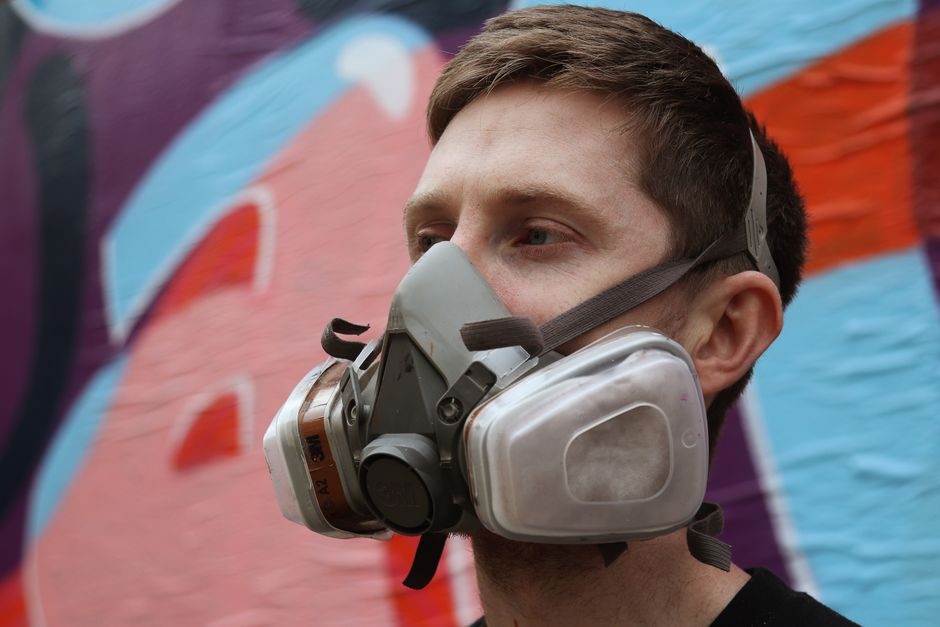
A disposable FFP2 / N95-equivalent dust mask sourced from Chinese factories typically lands between US$0.10 and US$2.00 per piece at 1,000-piece MOQ on Made-in-China.com and Alibaba.com listings refreshed in May 2026, while reusable half-face respirator sets start at roughly US$190 and climb past US$320 per set on the same B2B channels [S3][S7].
The category spans three product families: disposable particulate respirators, elastomeric half- and full-face reusable respirators with replaceable cartridges, and powered air-purifying respirators (PAPRs). For the 2026 procurement cycle the decisive variables are filter class, fit-test method, certification scope and the supplier's ability to hold the same test report across repeat runs.
Filter Classes and What Each One Actually Filters
The European EN 149 scheme grades particulate-only respirators as FFP1 (filters ≥80% of airborne particles), FFP2 (≥94%) and FFP3 (≥99%), with FFP2 broadly equivalent to US N95 / China KN95 performance and FFP3 broadly equivalent to N100 [S1][S2].
For nuisance dust, sweeping and low-toxicity wood or textile particles, FFP1-tier products are usually sufficient; for silica dust in stone-cutting, foundry work and abrasive blasting the specifier is almost always forced up to FFP2 minimum, with FFP3 specified once the contaminant carries a WEL (workplace exposure limit) below the FFP2 capture envelope. EN 149 also divides every class into reusable (marking "R") and single-shift ("NR") and adds a Dolomite-clogging test ("D") that is the cleanest indicator of how a mask will behave in a real dusty environment rather than on a clean lab bench [S1].
US-side NIOSH N95 / N99 / N100 carry their own 42 CFR Part 84 protocol, while the China GB 2626-2019 KN95 / KN100 / KP95 / KP100 series is the most common drop-in alternative on Chinese B2B listings; spec teams that ship globally usually run a dual-certification check (EN 149 + GB 2626) so the same SKU can be re-issued across plants [S2][S3].
Disposable vs Reusable vs Powered: Picking the Architecture
Disposable FFP2 respirators are the right pick when task duration is short (typically under one shift), contamination is intermittent and disposal logistics are simple, and they remain the highest-volume SKU on Chinese B2B channels — Alibaba lists 343 verified dust-mask suppliers as of May 2026 [S2].
Reusable elastomeric half-face or full-face respirators (US$190 to US$320 per set entry range on Made-in-China.com) become economic once the same worker is masking more than 30 to 40 shifts per cartridge pair, and they accept gas/vapour cartridges in addition to P100 / P3 particulate pads, which disposables cannot [S7]. Full-face variants add an ANSI Z87.1 / EN 166 polycarbonate visor, which is the cleanest way to spec eye protection into the same respiratory enclosure when the hazard is splash + particulate combined.
Powered air-purifying respirators (PAPRs) — sometimes listed as "factory price safe-type dust mask" or SCBA-tied kits on Made-in-China.com at the US$190-US$320 tier — add a battery blower that keeps the mask under positive pressure, which matters in healthcare isolation rooms, pharmaceutical aseptic filling and any IDLH-adjacent atmosphere [S7]. PAPR hoods and helmets are also the only comfortable option for workers with facial hair who cannot pass a quantitative fit test on a tight-fitting disposable.
Side-by-Side Comparison of the Main Options
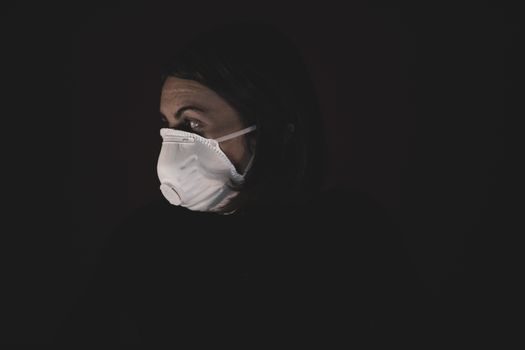
Lining the three architectures against four decision criteria gives a defensible selection grid: cost per shift, fit-test compatibility, maintenance burden and contaminant scope. [S1]
Disposable FFP2 / N95 sits at roughly US$0.10 to US$2.00 per unit, fits on standard qualitative or quantitative fit-test protocols, requires zero maintenance beyond disposal, and is particulate-only. Reusable elastomeric half-face runs US$190 to US$320 per set but drops to roughly US$0.50 to US$1.50 per shift over a one-year service life, passes the same fit tests on a reusable silicone facepiece, needs cartridge swaps and disinfection between users, and covers particulates plus acid gas / organic vapour / formaldehyde cartridges. Full-face reusable adds a Z87.1 visor, eye-splash protection and a higher protection factor, but reaches US$300 to US$500+ per set. PAPR sits at US$500 to US$2,000+ per kit including blower, battery and hood, allows fit-test exemption for hood-style units, requires battery charging and HE filter replacement, and covers the broadest contaminant scope including aerosols and biological agents [S1][S2][S7].
Who a Dust Mask Is For — and Who It Is Not For
Dust masks in the FFP1-to-FFP3 range are engineered for particulates: silica, wood, cement, grain, asbestos-abatement, weld fume, foundry dust and similar inert or nuisance aerosols, and they remain mandatory PPE on construction sites in the EU under local transpositions of the EU Directive 89/656/EEC on PPE use [S1][S3].
They are not the right tool for oxygen-deficient atmospheres (below 19.5% O2), unknown atmospheres, or any environment where the contaminant is a true gas or vapour — those require supplied-air respirators (SAR) or self-contained breathing apparatus (SCBA), not a particulate mask. They are also a poor choice for isocyanate paint spray, where a supplied-air hood or PAPR with an organic-vapour cartridge is the conservative spec. If a worker cannot pass a fit test on a tight-fitting disposable because of facial hair, eyewear, or scarring, a hooded PAPR is the specifier's exit ramp, not a "try a different brand of FFP2" [S1].
Real Use Cases: Stone Cutting, Spray Painting, Pharma, Healthcare
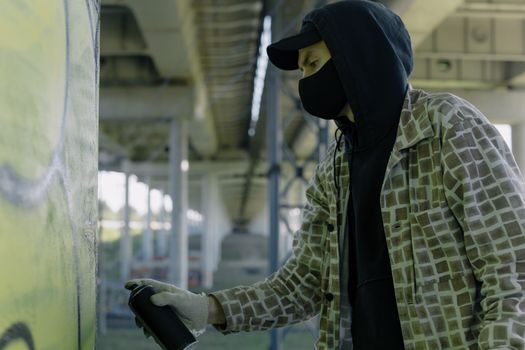
Stone-cutting and engineered-stone fabrication shops spec FFP3 minimum because crystalline silica is classed as a Category 1A carcinogen under EU CLP, and a single 4-hour shift on a dry-cut saw can exceed the WEL on an FFP2 [S1].
Auto-body prep and spray-painting booths usually move to a half-face elastomeric with combined A2P3 / ABEK1P3 cartridges, which is the spec to capture both organic vapour from clearcoat and the particulate overspray. Pharmaceutical aseptic filling and hospital isolation rooms sit in PAPR territory because the worker wears the hood for an entire shift and the battery blower cuts heat stress by 2 to 3°C equivalent. For warehouse sweeping, woodworking hobbyists and DIY sanding, an FFP1 or FFP2 disposable at US$0.10 to US$1.00 per piece remains the volume pick on Alibaba and Made-in-China B2B listings [S2][S3].
Certification and Sourcing Discipline for 2026
A defensible 2026 dust-mask purchase order carries four documents: a current EN 149 / GB 2626 / NIOSH 42 CFR Part 84 test report issued within the last 24 months, a Declaration of Conformity (DoC) traceable to the notified body number printed on the mask, an ISO 13485 or ISO 9001 certificate for the manufacturing site, and a fit-test record for each wearer (qualitative for FFP1/FFP2, quantitative for FFP3 tight-fitting) [S1][S2].
For sourcing on Chinese B2B platforms, Alibaba's supplier pages show response rate (54.5% on one Foshan-based supplier cluster) and verified-supplier flags that help cut the first-pass list of 343 suppliers down to a workable 10 to 20 audited factories [S2]. Made-in-China's Diamond / Gold / Audited badges are the same gate; expect 1,000-piece MOQs at the entry tier, 30% to 50% deposit, and 30-day production lead time on FFP2 disposables, with CE / GB 2626 documentation supplied as part of the shipment packet [S3].
Limitations, Failure Modes and What Spec Teams Miss

Real-world dust-mask failure rarely comes from the filter media itself; it comes from poor fit, so the OSHA-mandated fit-test pass rate on first attempt for tight-fitting disposables typically sits in the 60% to 80% range and drops further for workers with facial hair, dental bridges or scarring [S1].
Second failure mode is re-use of single-shift "NR" disposables across multiple days — the electrostatic charge on the melt-blown layer degrades visibly after 8 to 12 hours of accumulated wear and the filtration efficiency drops from the FFP2 94% claim toward the FFP1 80% floor. Third failure mode is valve misuse: exhalation-valve FFP2 / N95 masks protect the wearer but do not protect the patient or co-worker from the wearer's exhaled aerosols, which is why source-control (non-valved) is mandatory in clinical settings. Fourth, do not assume a KN95 from any unverified Chinese factory is equivalent to a US NIOSH-approved N95 — the FDA and CDC have both published counterfeiting alerts, and the spec-side defence is to demand the NIOSH approval number (TC-84A-XXXX) printed on the mask body before shipment leaves the factory [S2][S3].
For related PPE-adjacent industrial categories such as hydraulic system components and pneumatic valve actuators, the same audit pattern applies: a current test report, a DoC, a notified-body number, and a fit-test record. For understanding the broader PPE filtering category itself, see the dust mask encyclopedia entry for the filter-class taxonomy and the relationship to higher-tier respirators.
Two trackable signals for the back half of 2026: monitor NIOSH's scheduled revision activity on 42 CFR Part 84 for powered air-purifying elements, and watch the EU's review of EN 149:2001 + A1:2009 for a possible A2 amendment covering bioaerosols — both will shift the FFP2 vs FFP3 specification line that drives most 2026 procurement budgets.
For component-level specifications, see linear guide, and crossed roller guide.