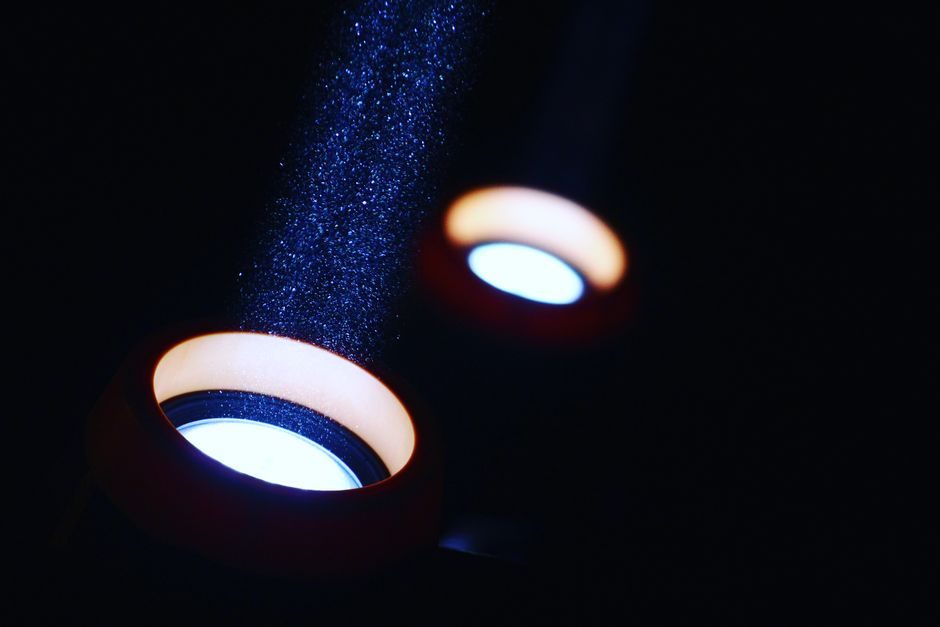
A 2026 bench-style dust particle meter for cleanroom and HVAC use typically lists between USD 800 and USD 6,500 for a six-channel 0.3-25 µm optical counter, while a Heubach Type I/II/III rotating-drum dustiness tester used in pigment, enzyme and bulk-powder R&D lists in the USD 18,000-25,000+ band [S2]. The order-of-magnitude gap is set by sensor family (laser scattering vs gravimetric filter vs rotating-drum), probe geometry, and whether the unit is handheld, benchtop, or a customised CustoMeter build [S2].
Three price clusters dominate the 2026 catalog: consumer/handheld particle counters (USD 200-1,200), industrial cleanroom/IAQ optical counters (USD 800-6,500), and laboratory dustiness testers (USD 18,000-25,000+), each serving a different buyer [S2][S1]. Standards in this segment are split between ISO 21501-4 for cleanroom particle counting and EN 15051 / EN 17199 / DIN 55992 for bulk-material dustiness, which is why two instruments at similar PM2.5/PM10 resolution can sit USD 15,000 apart.
Sensor Family Is the Single Largest Cost Driver
Laser-scattering optical particle counters using a 650 nm diode and a photodiode detector dominate the sub-USD 5,000 band and typically resolve six channels in 0.3, 0.5, 1.0, 2.5, 5.0 and 10 µm bins, with flow rates held at 0.1 CFM (2.83 L/min) per ISO 21501-4 sampling conventions [S1]. Gravimetric reference methods (filter + microbalance) add a USD 2,000-4,000 premium because of the precision balance and HEPA-filter consumable line, and are usually purchased as a secondary check, not a primary monitor [S1].
Rotating-drum and continuous-drop dustiness testers, the Heubach family for example, apply mechanical agitation to the powder sample so the released fines can be measured on particle-size-selective filters at fixed airflow — that fixed-flow constraint is why the Type I AE respirable/thoracic variant is a customised build, not a catalog SKU [S2]. Procurement teams writing an RFQ for a dust particle meter line should size the budget to the sensor family first, then the channel count, because the two are not independent — a six-channel cleanroom unit and a single-channel respirable dustiness rig can land in the same three-figure range of capital cost.
Standards Compliance Pushes the 2x-4x Multiplier
Compliance with EN 15051 (workplace exposure to dust by bulk-handling) and EN 17199 (workplace exposure to dust by powder handling) is built into the laboratory dustiness testers Heubach has produced since 1985, and the same instruments are referenced from DIN 55992-1/-2 and EEC 85/157 for pigment and foodstuff dustiness classification [S2]. This is why a Heubach Type III with Type III active-agitation capability and a particle-size-selective filter stack is a USD 20,000+ line item, while a generic cleanroom counter that is also "PM2.5/PM10 capable" can be one-tenth that price [S2].
For a cleanroom or pharmaceutical buyer the relevant reference is ISO 21501-4 (particle counter calibration) plus ISO 14644-1/-2 cleanroom classification; a calibration certificate traceable to NIST or a national lab typically adds 8-12% to the unit price and a USD 300-600 annual recalibration line on the TCO. Buyers who only need a trend indicator for an HVAC or IAQ application can drop the calibration scope and stay near the bottom of the industrial band. For an at-a-glance definition of channel count, sample flow and the difference between mass-concentration and count-concentration output, the dust detector reference page is a useful cross-check against any vendor datasheet.
Probe Geometry, Flow Path and Sample Conditioning
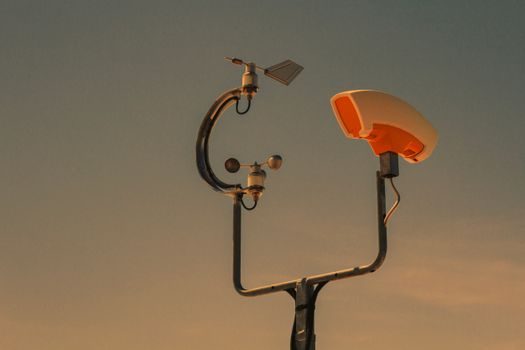
Probe geometry and isokinetic sampling matter more than marketing brochures admit: a stainless-steel inlet probe with anti-static coating and a heated inlet to keep the sample above dew point adds roughly USD 800-2,500 over a passive plastic probe, and is mandatory in many wet-process or high-humidity lines. Flow accuracy to ±2% of the set point, which ISO 21501-4 calls out, is achieved with a mass-flow controller rather than an orifice plate, and that is one of the silent reasons a "look-alike" meter at USD 1,200 cannot match a USD 4,500 unit on channel-to-channel correlation.
For outdoor or stack-monitoring deployments, the additional line items are a PM2.5 sharp-cut cyclone (USD 400-900), a Nafion dryer for humid streams (USD 600-1,500) and, in ATEX/IECEx Zone 2 areas, an intrinsically safe head with barrier — together these can lift a cleanroom-spec instrument from USD 4,500 to USD 7,500-9,000 before the rack and data-acquisition module. The dust mask reference is a useful sanity check on the human-health fractions (respirable, thoracic, inhalable) these probes are sized against.
Total Cost of Ownership: More Than the Sticker
A laboratory rotating-drum dustiness tester skews heavier on service because of mechanical wear parts (drum seals, bearings, brush sets) and on custom filter batches. [S2]
Handheld consumer-grade units have a near-zero service line but a higher replacement frequency — typical service life is two to three years in continuous plant use, which makes a USD 500 handheld effectively a USD 200/yr instrument over a five-year window. For a buyer comparing two cleanroom-grade meters at USD 3,200 and USD 4,800, the cheaper unit is the right pick only if the data-acquisition layer is already in place and the calibration cadence can be met with a third-party lab. For deeper spec criteria on channel count, mass-fraction targets and compliance fit, the 2026 reference on dust particle meter selection lines the main options up against the same 2-4 decision criteria a procurement engineer would actually score.
Who This Pricing Applies To — and Who It Does Not
The bands above fit a process engineer or EHS manager buying one to five units for cleanroom, IAQ, stack monitoring or bulk-powder dustiness work. They do not fit three adjacent use cases. First, a buyer who needs regulatory-grade PM2.5/PM10 for a national air-quality network should look at the FEM/FRM federal reference method instruments, which are an entirely different product line. Second, a buyer specifying a linear guide or crossed roller guide for the moving stage of an automatic sampling robot is in a different price book and should not conflate that BOM with the dust meter line. Third, a buyer sourcing a magnetic particle tester for NDT, not air monitoring, is shopping a different instrument family — the word "particle" overlaps but the standards, probes and price points do not. [S2]
For procurement teams that have already locked the sensor family and are now negotiating on volume tier, the realistic 2026 discount ladder is: 1-2 units list, 3-5 units 5-8% off, 6-10 units 10-15% off with extended warranty, 10+ units 15-22% off with calibration contract bundled. Lead time in 2026 has stabilised at 4-8 weeks for catalog optical counters and 10-16 weeks for laboratory dustiness rigs because of the CNC-machined mechanical assemblies and the manual final-assembly step that smaller EU manufacturers still retain in-house [S2].
Trackable signals to watch over the next two quarters: (1) any new EN 17199-3 or -4 revision drafts that would re-classify laboratory dustiness methods and force a re-bid on existing rigs; (2) a second-source MEMS optical head entering the sub-USD 1,500 industrial band, which would compress margins on entry-level cleanroom counters; (3) Chinese OEM price points on the Made-in-China wholesale tier for low-end optical counters, which historically undercut EU-built equivalents by 30-50% and have already surfaced in adjacent PPE categories. The pragmatic next step for any buyer is to lock the standard (ISO 21501-4 vs EN 15051/EN 17199) first, then the sensor family, then the probe geometry — pricing is downstream of all three. For a side-by-side look at how channel count, range and application match across the main meter types, the dust particle meter selection principle, range and application match reference is the natural follow-up read.