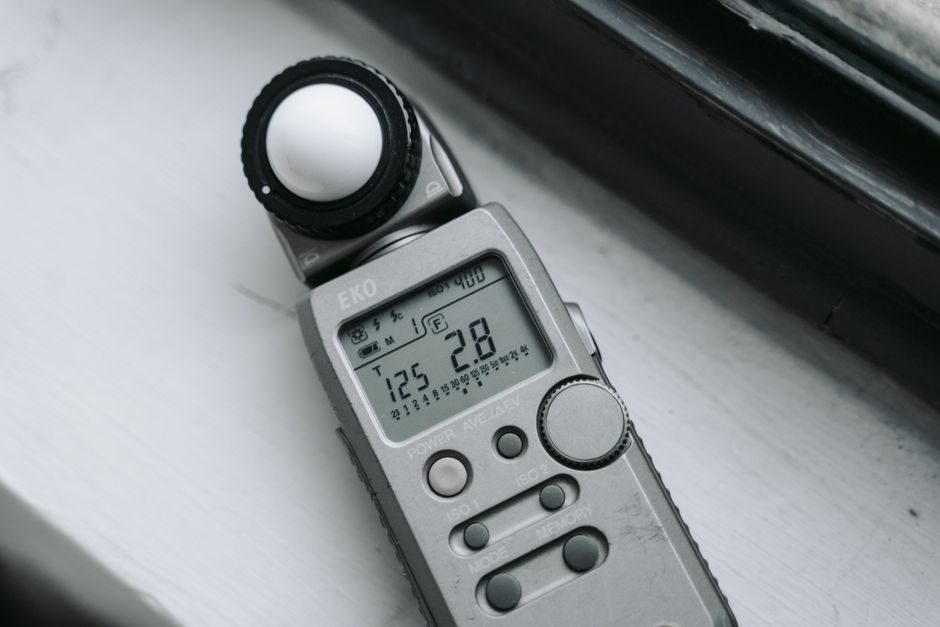
A dust particle meter and a lux meter solve different physical problems: the first resolves airborne mass or number concentration of particulate matter, the second resolves visible-light illuminance on a photometric (CIE Vλ-weighted) detector [S1][S2].
Industrial hygiene teams, pigment processors, and cleanroom operators specify dust meters against standards like EN 15051, EN 17199, and DIN 55992, while lighting engineers, display QA labs, and workplace-safety officers specify lux meters against photometric conventions and occupational lighting guidelines [S2].
What Each Instrument Actually Measures
A dust particle meter targets suspended solid or liquid particulates in air. The Heubach Dustmeter family, for example, was developed around 1985 to quantify dust release from powders, granules, seeds, and pellets using a rotating drum, continuous drop, and a Type III active-agitation method, with outputs tied to EN 15051, EN 17199, and DIN 55992 dustiness classifications [S2]. Hazardous categories typically distinguished include mineral, metallic, chemical, organic/vegetable, and biohazard dusts, where respirable and thoracic fractions are the size cuts of interest for lung-pathology risk [S2]. A standard reference for selecting between optical and gravimetric dust instrument types is the dust particle meter overview on the spec side.
A lux meter, by contrast, integrates illuminance E in lux (lm/m²) on a CIE V(λ)-corrected silicon photodiode, with the term itself transliterated as 照度计 in instrument-engineering glossaries [S1][S3]. Typical display ranges span 0.1–400 000 lux depending on silicon-cell class and filter stack, and the same enclosure often bundles sound level, hygrometer, thermometer, and data-logger channels in OEM/ODM product lines [S4]. The spec-side primer for photometric head selection is the lux meter entry.
Core Decision Criteria: Sensor, Output, and Standard
Selection between a dust particle meter and a lux meter is decided by three orthogonal criteria, and confusing them is a common rookie procurement error. [S4]
First, the measurand. Dust meters resolve either mass concentration (mg/m³) via gravimetric filter or tapered-element oscillation, particle count (counts/m³) via optical scattering, or a dustiness index (e.g. EN 15051 category) via a defined agitation sequence, while lux meters resolve only illuminance, never particle properties [S2]. The two sensor classes share no front-end optics and no calibration artefact: a dust meter's laser or white-light scattering head is dimensioned around sub-micrometre to tens-of-micrometre aerodynamic diameters, whereas a lux meter's diffuser and V(λ) filter are dimensioned around the 380–780 nm photopic response [S1][S2].
Second, the regulatory hook. Dust meter buyers cite REACH, EN 15051, EN 17199, ESTA, DIN 55992, and EEC 85/157 for exposure and product-dustiness limits, while lux meter buyers cite workplace-lighting standards and CIE S 002 photopic conventions rather than occupational exposure limits [S2]. Third, the output signal. Dust meters stream 4–20 mA, Modbus RTU/TCP, or SDI-12 to a SCADA or environmental DAS; lux meters typically stream a single lux value, often logged to internal memory or USB, with much simpler wiring [S2][S4].
Who Needs Which Instrument

A dust particle meter is mandatory for pigment, toner, detergent-enzyme, and powder-coating plants where the German Institute for Hazardous Goods has classified over 800 materials for dustiness, where respirable-fraction control links directly to lung-cancer and baker's-asthma risk, and where buyers must demonstrate EN 15051 / EN 17199 compliance in supplier qualification documents [S2]. The Heubach Dustmeter line, originally developed in-house around 1985 to drive lead-bearing pigment reformulation, became a DIN-recognised reference and is now one of the most cited methods in dust-measurement literature [S2].
A lux meter is mandatory for office and factory lighting retrofits, road and tunnel lighting commissioning, display-brightness QA on LCD/OLED production lines, greenhouse and poultry-house photobiology studies, and emergency-lighting lux-level verification at floor plane [S4]. Buyers in these segments commonly request a JIS C 1609-1 or equivalent Class A/B conformance on the photometric head, cosine correction to within a few per cent at 30°/60°/80° incidence, and a logging interval that matches the longest unattended shift.
Cross-specifying the two is a documented failure mode: a photometric head in a dusty plant will drift because its diffuser scatters sub-micrometre pigment particles into the V(λ) filter stack, and an optical particle counter in a clean lighting lab will under-report because it has no photometric stage. For sites that actually need both functions, an environmental instrument stack that pairs an optical dust detector with a separate lux channel is the engineering-correct architecture, not a hybridised single head.
Use-Case Comparison Matrix
Lining the two instruments up against four decision criteria sharpens the choice for procurement. A dust particle meter scores on particulate-mass or -count resolution, on regulatory linkage to EN 15051 / EN 17199 / DIN 55992 / REACH, on integration with industrial DAS via 4–20 mA or Modbus, and on data dimensionality (mass, count, size bin, fraction), while a lux meter scores on photometric accuracy, on regulatory linkage to lighting and workplace-illumination standards, on integration with USB or SD logging, and on data simplicity (single lux value plus timestamp) [S2][S4]. Where the criteria flip, the instruments are non-substitutable: a lux meter cannot resolve EN 15051 dustiness categories, and a dust meter cannot resolve illuminance.
For occupational-hygiene projects in pigment, chemical, or food-powder lines, specify the dust instrument and treat lux metering as out-of-scope. For lighting-retrofit and display-QA projects, specify the lux meter and ignore particle data. For greenhouses or animal-housing where both dust and photobiology matter, deploy both as separate instruments with documented calibration intervals, because the dust mask PPE discussion in the spec encyclopedia also confirms that dust and lux requirements travel on independent compliance tracks.
Selection Map: Decision Logic Step by Step
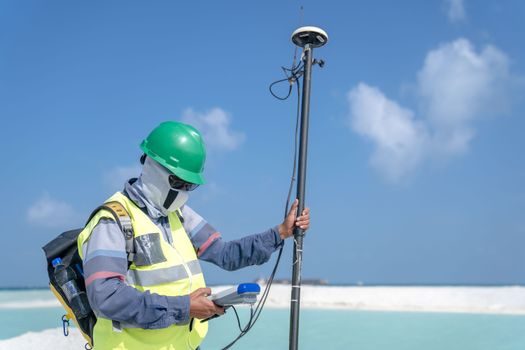
Step one — name the measurand. If the deliverable is mg/m³, counts/m³, or an EN 15051 dustiness category, the answer is a dust particle meter; if the deliverable is lux, the answer is a lux meter [S1][S2]. Step two — name the regulatory framework. REACH, EN 15051, EN 17199, DIN 55992, ESTA, and EEC 85/157 belong to the dust-meter side; workplace-lighting standards and CIE photopic conventions belong to the lux-meter side [S2]. Step three — name the data sink. Industrial SCADA, EMS, and continuous emissions monitoring point at dust meters with industrial protocols; commissioning reports and lighting audits point at lux meters with USB or Bluetooth logging [S2][S4]. Step four — name the environment. A CNC-machined aluminium housing with hand assembly in Austria is the dust-meter reference build for harsh powder-handling lines, whereas a handheld ABS enclosure with silicone keypad is the lux-meter reference build for field walk-throughs [S2][S4].
Cost bands differ accordingly. Industrial dust meters with EN 15051/EN 17199 capability and respirable/thoracic fraction filtering sit in the upper mid-five-figure USD range, while EN 17025-traceable lux meters with Class A/B photometric heads sit in the low-three-figure to low-four-figure USD range. That an order-of-magnitude price gap exists between the two is itself a quick disqualifier when a buyer is asked to quote a single SKU for both jobs.
Limits, Failure Modes, and Cross-Interference
Dust particle meters fail when (1) the aerosol is hygroscopic and the inlet is unconditioned, biasing the size cut; (2) the agitation method does not match the EN 15051 / DIN 55992 reference, breaking traceability; or (3) the respirable/thoracic cyclone is operated outside its specified flow window, distorting the fraction split [S2]. Lux meters fail when (1) the diffuser is contaminated by oil or dust, shifting the cosine response; (2) the V(λ) filter ages and the photometric match drifts; or (3) the operator measures a pulsed-LED source without a flicker-corrected head. Cross-interference is one-directional: dust on a lux-meter diffuser attenuates illuminance, but stray light on a dust-meter inlet does not bias particle counts beyond the documented noise floor.
Maintenance cadences are also non-overlapping. Dust-meter filter elements, cyclones, and pumps are consumables on a 90-day to annual schedule; lux-meter diffusers and reference standard lamps are on a 6- to 12-month schedule. Bundling both into a single service contract is feasible only when a site safety officer owns the master register.
Sourcing Notes and Trackable Signals
Heubach's published reference remains the most-cited Dustmeter build, with rotating-drum, continuous-drop, and Type III active-agitation methods mapped to EN 15051, EN 17199, and DIN 55992, and the custom-built Type I AE variant adding particle-size-selective filters for respirable and thoracic fractions [S2]. On the photometric side, OEM/ODM lux-meter production from the China supply base spans data loggers, sound level meters, hygrometers, thermometers, and combined temperature/humidity/light/decibel enclosures [S4].
Two trackable signals to monitor over the next two quarters: any revision to EN 15051 or EN 17199 dustiness classification bands that would re-tier existing installations, and any tightening of workplace-illumination limits that would re-tier lux-meter Class A/B conformance expectations. Buyers should also cross-reference our 2026 buyer briefs on Dust Particle Meter selection and Lux Meter sensor-class and certs before locking a specification.