
Across a typical 10-year service life, the purchase price of a dynamic compactor represents only a minority share of the total cost of ownership, with energy consumption, wear-parts replacement, and unplanned downtime forming the larger cost mass per widely cited TCO methodology [S2][S5].
Process engineers evaluating compaction equipment should treat TCO as a four-bucket model — acquisition, energy, maintenance (planned and unplanned wear parts), and end-of-life — and weight each bucket by its expected share rather than chasing the lowest sticker price [S2].
What TCO Means for a Dynamic Compactor, and Why Static Quotes Mislead
Total Cost of Ownership (TCO) is defined as the cumulative cost incurred over the full life cycle of an asset, covering purchase, operation, maintenance, support, and disposal; the framework is widely used in capital-equipment planning because it surfaces costs that initial-budget snapshots miss [S2].
For production equipment, including injection moulding machines and similar heavy industrial assets, a dynamic TCO method replaces static spreadsheet estimates with time-resolved accounting of energy and maintenance flows, producing a more realistic lifecycle figure [S5]. Applying that same logic to a dynamic compactor means the energy line item must be modelled against the actual duty cycle, not a nameplate kW figure divided by hours.
Common hidden-cost items that static quotes omit include: hydraulic-oil replacement intervals, tamper-foot wear allowance, eccentric-bearing service life, electrical-peak demand charges, foundation-bolt re-torque, and disposal of contaminated oil at end of life — each of which should be carried as a separate line in a TCO model [S2].
The Four Cost Buckets: Acquisition, Energy, Maintenance, End-of-Life
The cost of acquiring a dynamic compactor depends on tamping weight, eccentric moment, and base-machine frame rating; a useful internal benchmark is to express acquisition cost per kilojoule of rated compaction energy, so two quotes with different kJ ratings can be normalised before comparing [S2].
Energy is the largest single operating-cost bucket on most heavy compaction profiles, and it scales with two measurable variables: motor kW and annual operating hours, both of which must be confirmed against the actual site duty cycle rather than nameplate data [S5]. Demand charges and power-factor penalties on three-phase supplies can add a further percentage to the energy line and are frequently excluded from supplier quotes.
Maintenance splits into planned (oil, filters, seals, tamper-foot rotation) and unplanned (eccentric-bearing failure, hydraulic-hose burst, electrical fault) — the unplanned bucket is where most TCO overruns originate, and it is driven by preventive-maintenance discipline rather than machine design alone [S2][S5]. End-of-life includes decommissioning, oil disposal, and any residual resale value, which for well-documented heavy machinery is typically a small but non-zero credit [S2].
How the Cost Buckets Move: Tier Comparison by Compactor Class
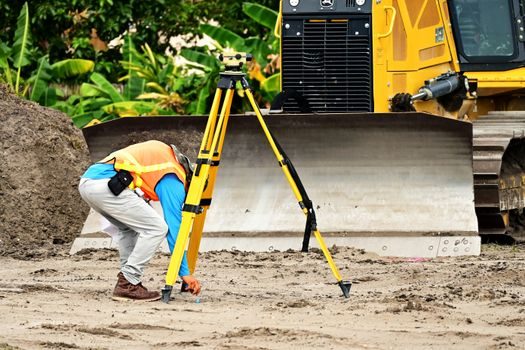
Light-class dynamic compactors (typically smaller tamping-foot units for trench and backfill work) have a low acquisition cost but a high relative maintenance share, because wear components are smaller and reach service intervals faster under continuous duty. [S1]
Mid-class units for road-base and subgrade work generally hit the lowest 10-year TCO per cubic metre of compacted fill, because their energy-per-pass figure is high enough to keep passes low, while wear-part life is acceptable in standard soil conditions.
Heavy-class high-energy compactors for cohesive soils and deep lifts have the highest sticker price and the highest single-pass energy draw, but their per-cubic-metre cost can still be competitive when pass-count reduction is properly valued; conversely, specifying a heavy unit on granular fill over-pays for energy the soil does not need [S2][S5].
Who a Dynamic-Compactor TCO Model Is For — and Who It Is Not
A TCO model is for buyers who already have a confirmed annual compaction-volume target, a known site duty cycle in hours per year, and a realistic maintenance-budget envelope; without those three inputs, the model produces decorative numbers rather than decision-grade figures [S2].
It is not for one-off rental decisions, short-duration pilot projects, or sites where the soil classification has not yet been confirmed by a geotechnical report — in those cases a per-shift rental quote plus mobilisation is a more honest cost figure than a 10-year projection built on assumptions. TCO also has limited value when the compactor will be redeployed across very different soil profiles, because the wear-part curve that drives the maintenance bucket will not hold [S5].
Total Cost of Ownership Beyond Purchase: Installation, Uptime, and Disposal
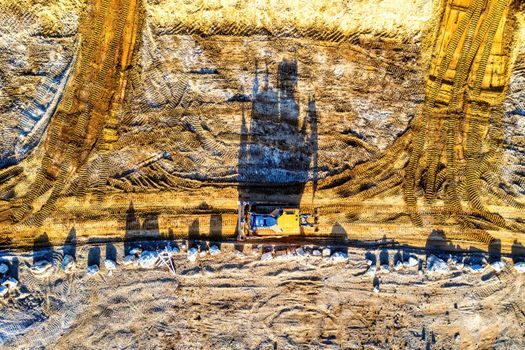
Installation cost is governed by site access, crane size, and foundation work; a five-phase site plan covering survey, base prep, rigging, alignment, and commissioning is the minimum framework to keep installation cost from drifting on [S5][S2]. Crew hours and crane hours are the two line items that most often overrun, and both should be quoted as fixed-price packages rather than time-and-material.
Uptime is the single biggest lever on TCO per unit of output, because every percentage point of unplanned downtime shifts the energy and wear-part cost per compacted cubic metre upward against a fixed output target; preventive-maintenance intervals, spare-parts kit completeness, and mean-time-to-repair on the eccentric assembly should be requested in writing before purchase [S2]. End-of-life cost is small but real: hydraulic-oil disposal must be quoted against local waste-oil regulations, and any resale credit should be tied to documented service history rather than a verbal estimate.
Failure Modes and Constraints That Skew TCO
Three failure modes drive most TCO overruns on dynamic compactors: eccentric-bearing failure under high-cycle duty, hydraulic-system contamination from inadequate filtration, and electrical-drive faults caused by poor power-quality on weak grid connections [S5].
The first two are mitigated by preventive-maintenance discipline and filtration specification; the third is a site constraint that no amount of machine design can overcome, so sites with poor power quality should size the electrical supply upgrade into the TCO model rather than treat it as free. A second structural constraint is operator skill — an experienced operator can cut pass count by 20–30% on the same compaction target, which directly lowers the energy and wear-part buckets [S2].
Standards, Sourcing Signals, and What to Lock Into the Spec
For procurement audit trails, the TCO model should sit alongside the equipment spec sheet, the site survey, and the maintenance-plan document, with version-dated revisions so the figures can be reproduced by a successor engineer [S2]. A useful internal rule is to demand that suppliers quote acquisition, energy-at-expected-duty, and a 5-year wear-part kit as three separate lines, so the model is not built on a blended number that hides the energy and maintenance shares.
Trackable signals to monitor after award: actual kWh per compacted cubic metre against the modelled figure, wear-part replacement hours against the supplier's stated interval, and unplanned-downtime hours per 1,000 operating hours — each of these is a measurable indicator that the as-built TCO is drifting from the modelled TCO, and a quarterly review against these three numbers is the cheapest way to keep the lifecycle model honest [S2][S5].
The underlying component specifications are covered under total station, and dynamic balancing machine.
For related coverage, see Molding Line Advantages and Disadvantages: Spec, Cost, and Selection Map.