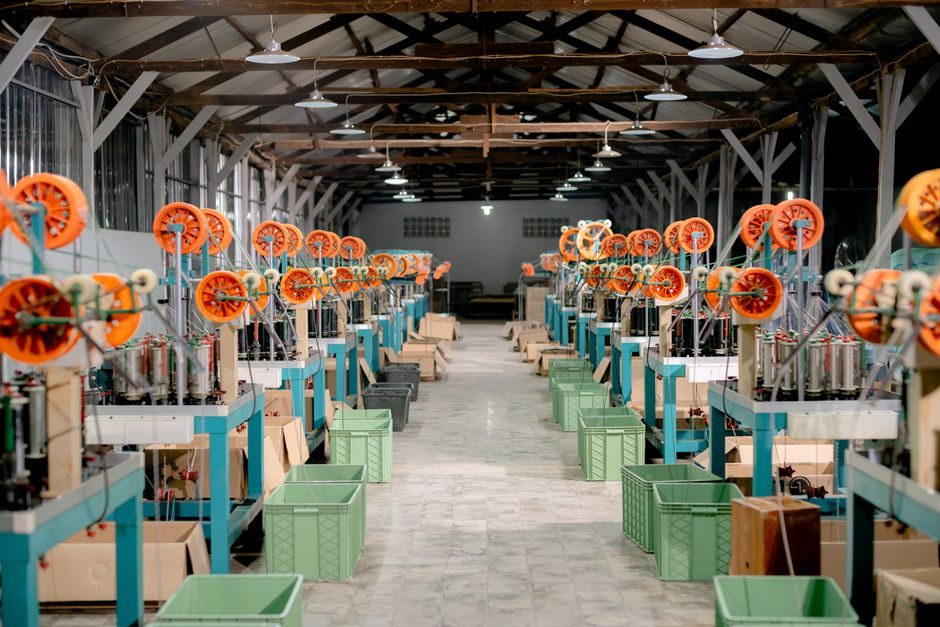
Specifying electric motor manufacturing equipment starts with five non-negotiables: IEC 60034 / NEMA MG-1 frame and shaft heights, an IP code per EN 60034-5, an IC cooling code per EN 60034-6, an IM mounting code per EN 60034-7, and a thermal class that matches the application's insulation system [S1][S2].
For US builds, supply is 60 Hz three-phase at 208 / 240 / 480 / 600 V (single-phase capped at 240 V and generally below 1 hp) [S2]; for EU/global builds, WEG publishes against IEC 60072-1 frame dimensions, with hazardous-area protection options including Ex "db", Ex "db eb", Ex "eb", Ex "pxb/pyb", Ex "ib", Ex "q", Ex "ob" and Ex "mb" for Zone 0/1 plus Ex "pzc / ic / ec / oc / mc" for Zone 2 [S3].
Frame, Enclosure and Cooling Codes Drive Mechanical Fit
Frame dimensions are standardised against IEC 60072-1 (WEG builds to shaft-height tables in that document) [S3] and NEMA MG-1 shaft-height series in the US, with vibration severity per EN 60034-14 (machines with shaft heights 56 mm and higher) and noise limits per EN 60034-9 [S1]. The IP code is set by EN 60034-5: TEFC small-frame machines typically carry IP55 (dust-protected + hose-directed water), while washdown or outdoor builds move to IP65 or IP66 [S1][S2].
Cooling code per EN 60034-6 uses an IC designation where the first digit characterises the internal cooling circuit and the second the external one; totally-enclosed fan-cooled (TEFC) and totally-enclosed blower-cooled (TEBC) are the workhorses of motor manufacturing lines [S1]. Enclosure selection must be paired with the IM mounting code (B3 foot, B5 flange, B14 face, B35 foot+flange combinations are the most common) before shaft, bearing and terminal-box position can be finalised [S1][S2].
Power Supply, Insulation Class and Efficiency Tier
In the US, three-phase at 60 Hz is standard for motors 1 hp and up, with 120 V single-phase usually capped at 1/3 hp and 240 V single-phase the practical limit for sub-1 hp [S2]. For global IEC builds, nameplate voltage is given as a multiple-rated value (e.g. 220-240/380-415 V 50 Hz, 460 V 60 Hz) to cover mains variation between regions [S3].
Insulation is split into thermal classes — B (130 °C), F (155 °C) and H (180 °C) — and the design rule is that the motor is wound in class F but operated at class B temperature rise to extend winding life [S1][S3]. Efficiency is then tiered: IE2 (Standard), IE3 (Premium), IE4 (Super-Premium) and IE5 (Ultra-Premium) under IEC 60034-30-1, with NEMA MG-1 mapping similar bands under "Premium" and "NEMA Super-Premium" labels [S1][S2].
Selection Criteria: Who Needs What
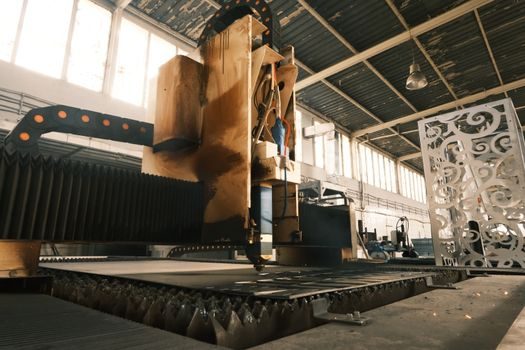
Conveyor and continuous-process lines (pumps, fans, compressors) are well served by stock IE3 TEFC induction motors in standard frame sizes — minimum customisation, fastest lead time, lowest unit cost [S2][S4]. Assembly-line robotics, servo-driven positioning and indexing tables are NOT served by standard induction motors; they need matched electric actuator drives, low-inertia rotors or permanent-magnet servo motors with feedback resolvers, and belong in a different spec flow [S4].
For hazardous-area Zone 0/1 chemical or refinery duty, only Ex-certified enclosures with the correct protection concept apply — for example, flameproof Ex "db" for the motor body and increased-safety Ex "eb" for the terminal box — and the specifier must also match the ATEX/IECEx equipment protection level to the gas group and temperature class [S3]. For inverter duty where a VFD drives the motor, the spec must add an insulated opposite-drive-end bearing, a shaft-grounding brush, and a stray-shaft-voltage limit — Texas A&M's design standard caps that at 300 mV maximum with the grounding brush sized and configured to hold the limit under single-ended grounding, and wear indicators visible during normal operation [S6].
Criteria Comparison: Three Common Motor Builds
Three-phase squirrel-cage induction, totally-enclosed blower-cooled, vs. inverter-duty TEFC vs. hazardous-area Ex "eb": on duty cycle the induction TEFC handles S1 continuous and limited S2 short-time, the inverter-duty build adds the insulated bearing + 300 mV grounding requirement [S6] and is rated for variable-speed operation, while the Ex "eb" build trades some thermal headroom for zone-certified terminal-box safety [S3]. On cost the standard induction TEFC is the cheapest and the Ex "eb" the most expensive, on lead-time the standard TEFC is broadly available from stock and the Ex build is typically built-to-order, and on maintenance the standard induction TEFC needs only bearing grease at standard intervals, while inverter-duty adds brush/bearing-insulation inspection and the Ex build adds certified-component revalidation [S1][S2][S3][S6].
Limits, Failure Modes and VFD Pitfalls
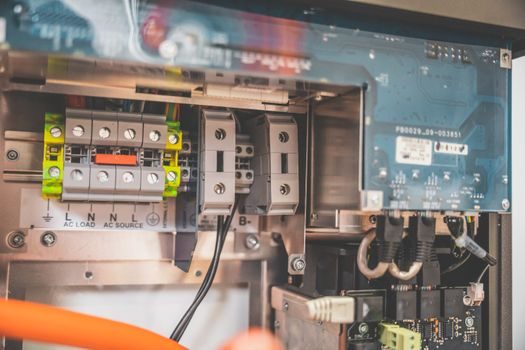
The single most common motor failure on VFD-driven lines is bearing fluting from common-mode shaft voltage, which is exactly why inverter-duty builds now ship with an AEGIS-style shaft-grounding ring or brush and an insulated opposite-DE bearing [S6]. Exceeding the thermal class — for example, running a class-B-rise motor continuously in a class-F temperature environment — collapses insulation life roughly in half for every 10 °C of additional hot-spot temperature (the Montsinger rule referenced in motor engineering practice) [S1][S3].
Misreading the IP code is the second classic failure: specifying IP55 for a food-and-beverage washdown zone that needs IP69K leaves water ingress paths open, while over-specifying IP66 on a clean indoor conveyor wastes cost and thermal margin [S1][S2]. Frame-mismatch errors (mixing IEC 60072-1 dimensions with NEMA MG-1 shaft heights) also show up at the terminal-box and foot-mounting interfaces, which is why spec sheets must state the dimensional standard explicitly [S1][S3].
Sourcing, Standards and Trackable Signals
Build the spec line by line: power source and voltage (60 Hz three-phase 208/240/480/600 V US [S2]; IEC 220-240/380-415 V 50 Hz or 460 V 60 Hz global [S3]), enclosure and cooling (IP55 TEFC IC411 as the stock default, per EN 60034-5 and EN 60034-6 [S1]), mounting (IM B3/B5/B14/B35 per EN 60034-7 [S1]), frame (IEC 60072-1 [S3] or NEMA MG-1 [S2]), thermal class (F winding, B rise) [S3], efficiency (IE3/IE4 per IEC 60034-30-1 or NEMA Premium [S1][S2]), and hazardous-area certification only if the zone requires it (Ex "db eb / eb / px / ib" per IEC 60079-series [S3]).
Stock induction motors in standard frames will continue to be the highest-volume electric-motor manufacturing output globally, with inverter-duty and IE4/IE5 efficiency builds the fastest-growing slice in process and HVAC retrofit work [S1][S4]. Two trackable signals to watch on the next sourcing cycle: the actual IE5 product launches from major OEMs (WEG, ABB, Baldor-Reliance) against the IEC 60034-30-1 efficiency bands, and the rate at which new spec sheets adopt the insulated-bearing + 300 mV shaft-grounding rule for inverter duty [S1][S3][S6]. For related sourcing criteria on the metals side of motor lamination stacks, the carbon steel selection for oil and gas spec map covers the steel grades that feed stator and rotor punching, while measuring instruments 2026 ISO GPS overhaul and sourcing criteria is the reference for the metrology side of motor line QA.
For the relevant spec sheets and selection criteria, see additive manufacturing material, and anti static equipment.