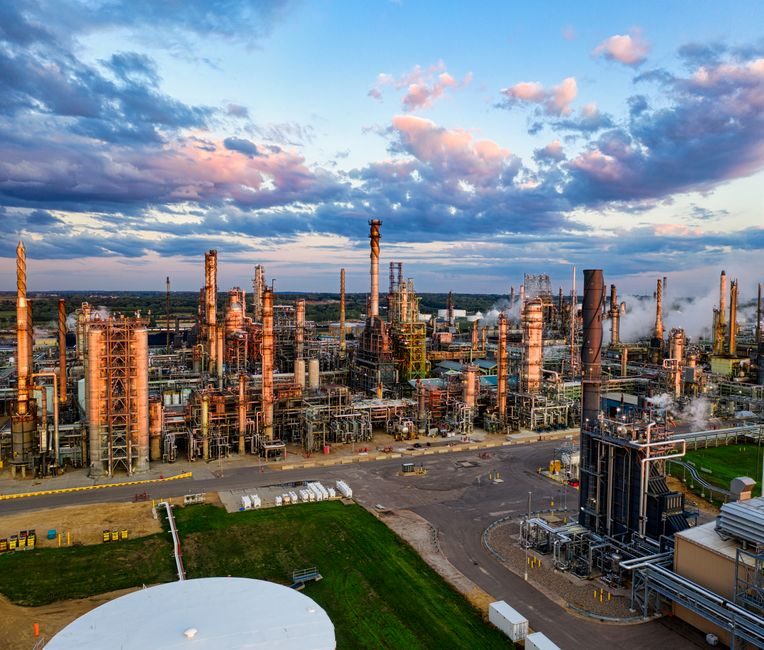
For upstream and midstream oil and gas, the practical carbon steel envelope is API 5L PSL2 grades X52 through X80 for linepipe, ASTM A106 Grade B/C for refinery high-temperature service, and ASTM A671/A672 for welded pressure vessels — all selected against operating pressures of 70–140 MPa in deep reservoirs and tightened by sour-service limits when H₂S partial pressure exceeds the NACE MR0175 threshold [S2][S3].
Carbon steel is defined by carbon content up to roughly 2% with small additions of silicon, manganese, phosphorus, and sulphur, and the oil and gas sector uses mainly the low- and medium-carbon end of that range because weldability and toughness collapse as carbon climbs above ~0.30% [S5][S7].
Grade Boundaries and Why High-Carbon Is Mostly Ruled Out
High-carbon steels in the 0.30–1.8% C band deliver high wear resistance but lose weldability and impact toughness, which is why piping and valve bodies in oil and gas are almost always low- to medium-carbon [S5][S6]. A widely cited industrial rule of thumb is that carbon content above 0.30% demands preheat and post-weld heat treatment to avoid hydrogen-assisted cracking, and the oil and gas sector pushes the carbon ceiling even lower for sour service [S5][S3].
Microalloyed and HSLA variants — small additions of vanadium, niobium, titanium — are increasingly specified for subsea flowlines and offshore platform legs where higher strength-to-weight ratio offsets the premium over plain carbon-manganese grades [S3]. For readers mapping the broader material family, the carbon steel encyclopedia entry covers the full low/medium/high classification and the metallurgy behind that cut-off.
Linepipe: API 5L PSL1 vs PSL2 and the X42–X80 Decision
API 5L PSL1 covers grades X42 through X70 for conventional onshore pipelines, while PSL2 tightens chemical composition and mandates Charpy impact testing, pushing the practical range to X52 through X80+ for deep-sea, high-pressure, and sour media lines [S2]. PSL2 is the default once a design engineer has to defend a fracture-control case to a third-party reviewer, and the cost gap between PSL1 and PSL2 is small compared with the welding and inspection savings downstream.
For pipeline pumps and compressor stations that move the produced fluid, multistage centrifugal pump selection typically pairs API 5L X65/X70 linepipe with ASTM A106 Grade B process piping at the manifold — the same carbon-manganese system on both sides of the block valve, which simplifies welding procedure qualification.
Refinery and Process Piping: ASTM A53, A106, A333, A671/A672
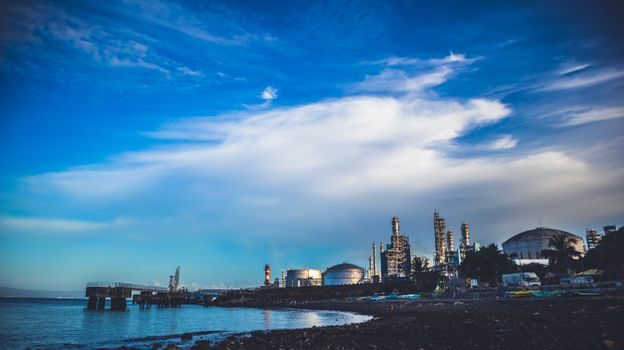
ASTM A53 (seamless, ERW, welded) covers water, steam, gas and low-pressure process lines; ASTM A106 Grade A/B/C is the workhorse for high-temperature refinery services such as furnace and boiler tubes; ASTM A333 grades are reserved for cryogenic and LNG cold-box piping; and ASTM A671/A672 cover electric-fusion-welded pipe for pressure vessels and oil and gas pipelines [S2]. Each step up the temperature or pressure ladder usually triggers a change in either the killing practice (killed steel vs semi-killed) or the deoxidation route, not just the schedule.
ASTM A234 fittings and ASTM A420 WPL3/WPL6/WPL8/WPL9 butt-weld fittings close the loop on the piping side: A234 for moderate and high-temperature service, A420 for low-temperature impact-tested service with each WPL grade pinned to a specific Charpy test temperature [S8]. For sour-service fittings, the same NACE MR0175 environment that gates the pipe also gates the fitting material; specifying A234 alone is not sufficient when H₂S is present.
Sour Service, H₂S, and the NACE MR0175 Gate
Whenever the partial pressure of H₂S in the produced fluid climbs into the NACE MR0175 sour envelope, the selection problem shifts from strength-of-steel to environment-assisted cracking: SSC, HIC, and SOHIC become the failure modes that drive hardness caps, microstructure requirements, and welding procedure restrictions [S3]. Carbon steel is still usable in many of these services, but only when the maximum HRC, the sulfur content, and the cooling rate after welding all sit inside the standard's limits — which is why PSL2 over PSL1 and killed fine-grain steel over semi-killed is the default in any H₂S-bearing upstream system [S2][S3].
Coatings, cathodic protection, and chemical inhibition extend the life of carbon steel in CO₂/H₂S service but do not remove the need to start from a metallurgy that can survive the environment on its own [S3]. For plant rooms where H₂S can accumulate, pairing the material spec with a fixed gas detector grid is the second line of defence that no material selection can replace.
Mechanical Properties That Actually Move the Decision
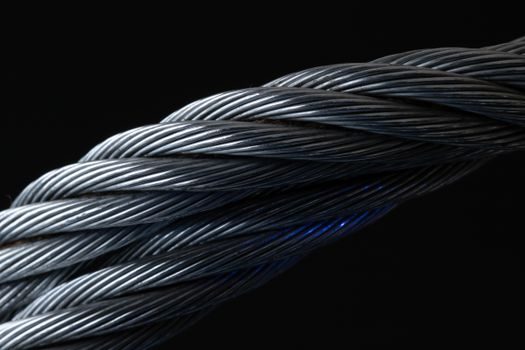
For API 5L PSL2 linepipe in the X52–X80 band, minimum yield strength moves from ~360 MPa at X52 to ~555 MPa at X80, and tensile strength scales roughly 1.15–1.20× above yield, while the upper-bound operating pressure of 70–140 MPa in deep reservoirs sets the wall-thickness math before the grade choice is even finalised [S2]. Charpy impact energy at the design minimum temperature — typically 27 J to 60 J at 0 °C for onshore, and 40 J to 80 J at –20 °C or colder for offshore and Arctic — is the second number that drives the linepipe call, not the yield [S2].
On the fitting and flange side, ASTM A105 forgings dominate carbon-steel valve bodies and bonnets up to ANSI Class 1500, while the trim inside the valve shifts to 410 SS, F51, or alloy 625 as soon as the service is corrosive enough to attack the seat — body and trim are decoupled decisions, not one [S6]. For upstream wellhead Christmas trees running into the 10,000 psi class, AISI 4130 low-alloy forgings frequently replace plain carbon steel because of their higher yield after quench-and-temper.
Fabrication, Welding, and Inspection Considerations
Low-carbon variants weld readily with SMAW, GMAW, and FCAW without mandatory preheat above ~30 mm wall; medium-carbon and microalloyed grades force controlled heat input, interpass temperature limits, and often PWHT to avoid HAZ softening and toew cracks [S3][S4]. The standard welding practice for sour service mirrors ASME B31.3 / B31.8 and requires hardness surveys on production welds, typically capping at HRC 22 for standard sour service and lower in severe environments per NACE MR0175 [S2].
For non-destructive testing, ultrasonic examination of forged components follows ASTM A503 for crankshaft-grade parts, while pipeline girth welds default to automatic UT or phased-array after the 2010s revisions of API 1104 — both are now baseline expectations rather than optional extras on any carbon-steel pipe circuit carrying hydrocarbons [S1].
Where Carbon Steel Loses: Corrosion, Temperature, and Sour Thresholds
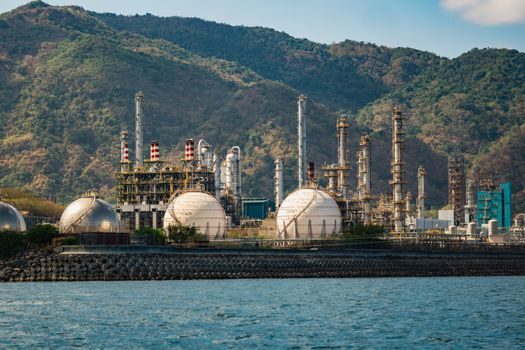
Carbon steel fails in three predictable ways: general corrosion in CO₂-saturated produced water above ~60 °C, pitting under chloride-laden insulation, and SSC/HIC in sour service when metallurgy, hardness, and environment align against the part [S3]. Above ~400 °C, plain carbon steel also loses creep strength and is displaced by Cr-Mo alloys (ASTM A335 P11/P22) in fired-heater coils and reactor loops [S2][S3].
The decision tree is therefore straightforward: stay with carbon steel where the service is sweet, the chloride activity is manageable, the temperature is below ~400 °C, and the operating pressure sits inside the X52–X80 API 5L envelope; switch to CRA-lined pipe, alloy 825/625 cladded pipe, or solid stainless the moment any of those gates flips, because retrofitting later costs roughly three to five times the upfront delta [S2][S3][S6].
Tracking Signals and What to Watch Next
Two signals are worth tracking: ASTM committee A01's recent re-approval of A1099/A1099M-20(2025) for modified alloy steel forgings and the 2025 batch of revisions across the A-series bar and forging standards indicate continued pressure-grade harmonisation around higher-strength sour-service forgings [S1]. The IntechOpen open-access chapter by Okuma, Nwaeju and Ofuyekpone, published 21 January 2026, also flags self-healing coatings, nanostructured alloys and digital corrosion monitoring as the next layer of protection on top of conventional carbon-manganese pipe [S3].
For procurement teams, the practical next move is to lock the linepipe grade (API 5L PSL2 X65 or X70), the fitting spec (ASTM A234 WPB for process, A420 WPL6 for cold service), and the sour-service envelope (NACE MR0175) on the same datasheet before any RFQ goes out, so that all three answers line up on the BOM and the welder is not asked to bridge incompatible rules mid-project.
Component reference pages worth checking: oil seal.