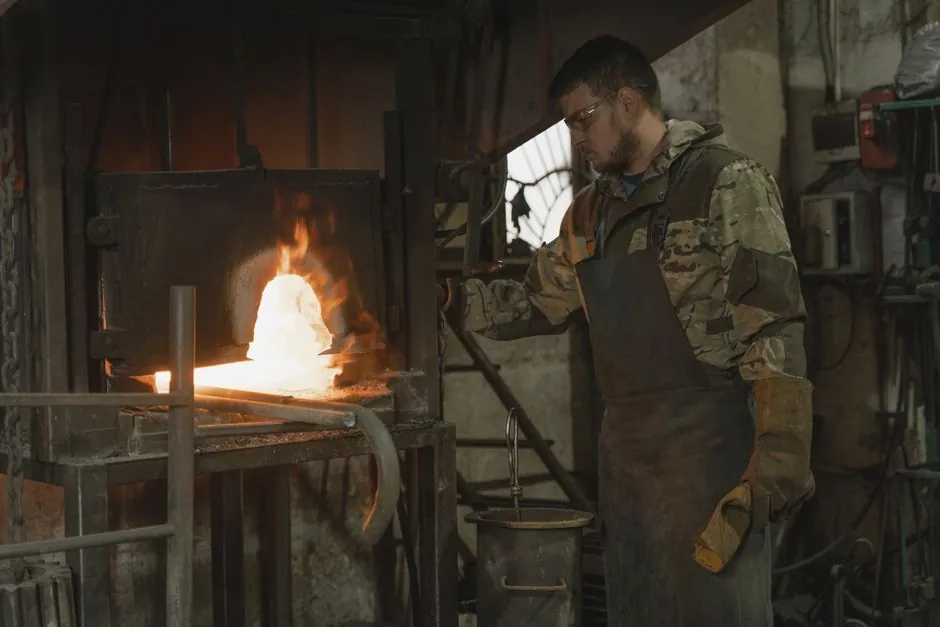
Silicon carbide crucibles are rated for high-temperature service, often in excess of 1600°C, and offer resistance to thermal shock.
For iron-melting foundries, the decision depends on bath temperature, temperature-change rate, slag chemistry, charging practice, and contamination limits, not material name alone.
Material choice by operating duty
Silicon carbide is a chemically bonded composite of silicon and carbon with high mechanical strength, thermal conductivity, oxidation resistance, and resistance to acidic or basic slags [S3]. Commercial formulations retain structural integrity above 1600°C, while specific SC-series products are rated to 1800°C [S5].
Cast iron crucibles are a practical low-cost choice where the bath is stable, thermal gradients are modest, and replacement labor is acceptable. Their weakness is not nominal temperature capability alone, but vulnerability to oxidation, thermal cycling, chemical attack, and mechanical damage. The material background for cast iron should therefore be treated as a starting point, not as proof that a particular crucible grade will survive a given duty cycle.
For intermittent iron melting, this supports a SiC trial where cast iron has produced cracking or premature replacement.
Decision criteria compared
Temperature capability favors SiC. Published supplier data list maximum operating temperatures of 1800°C for SC-100, SC-150, and SC-200 crucibles, with respective dimensions of 100/80/120 mm, 150/120/150 mm, and 200/160/200 mm outer diameter, inner diameter, and height [S5].
Thermal cycling also favors SiC because its low thermal expansion and high thermal conductivity reduce temperature gradients and thermal-shock cracking [S3][S5]. Cast iron is more defensible for steady holding, where the crucible sees fewer rapid temperature changes. Furnace selection also affects the result, because SiC operates effectively in induction furnaces and repeated high-temperature applications [S3].
Cost and replacement risk divide the options. Basic refractory and cast iron products generally have a lower purchase price, but SiC can reduce replacement frequency and maintenance labor over multiple cycles [S5]. The financial case must include units melted, thermal cycles, crucible mass, removal difficulty, and lost production, not purchase price alone.
Chemical compatibility is application-specific. SiC is described as stable against acidic and basic slags and as having low melt reactivity [S3], but alloy cleanliness, flux chemistry, and impurity pickup still require trials. Silicon carbide crucibles are described as having low reactivity that helps protect melt purity.
Best fit by use case
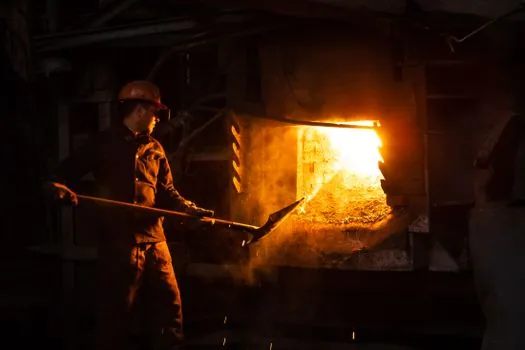
Specify SiC for rapid induction-heating cycles, frequent charge-and-pour operations, severe thermal gradients, or elevated holding temperatures near the material limit. SiC crucibles are used for cast iron, steel alloys, aluminum, copper, brass, bronze, gold, and silver, with published operating capability extending to 1800°C [S3][S5].
Specify cast iron for routine iron holding with controlled temperature, moderate bath agitation, manageable slag exposure, and an economical replacement strategy. This material is less attractive for precious-metal refining, where contamination control and thermal-shock resistance carry greater weight, and for copper-based melting where roller-formed SiC has a documented performance advantage [S2].
For removable crucibles, geometry is a separate engineering check. Match diameter, height, wall thickness, charge volume, furnace clearance, and pouring arrangement to the furnace. Standard SiC wall thicknesses span 10–15 mm in the listed SC-100 and SC-150 models, and thicker walls generally favor durability while thinner walls favor heat response [S3][S5].
Cast iron melting and chemistry interaction
Ductile iron grade EN-GJS-400-15 was melted using steel scrap and pig iron charges with silicon carbide additions from 0 to 0.91% of the charge. SiC increased carbon and silicon content without increasing impurity levels in the studied range, and it changed solidification behavior and the growth mechanism of spheroidal graphite precipitates [S1].
This result concerns SiC used as a metallurgical addition, not SiC used as the crucible material. It demonstrates that silicon carbide can modify cast-iron chemistry and structure, but it does not prove that an SiC crucible will provide cleaner metal than a cast iron crucible. Keep charge chemistry, inoculant practice, and holding time under separate process control.
A ductile-iron melting study used silicon carbide charge additions ranging from 0 to 0.91%. For holding-furnace procurement, specify the crucible material separately from the SiC addition rate.
Failure modes and operating controls
Document furnace capacity and dimensions, alloy range, holding temperature, temperature-change rate, charging method, fluxes, degassing, slag or dross removal, and emptying method before selecting a crucible [S2]. These nine operating categories determine whether thermal shock, erosion, chemical attack, or handling damage will control service life.
For SiC, control heating rate, avoid unnecessary empty-crucible cooling, prevent flux attack, and inspect wall thickness, cracks, spalling, and pouring-spout wear. For cast iron, replace the vessel when oxidation, cracking, wall thinning, or contamination exceeds the process limit. A finite service life must be established from actual melt records, because supplier claims and field reports cannot substitute for installation-specific data.
Procurement should specify the alloy, target temperature, maximum temperature-change rate, slag or flux chemistry, charge mass, cycle frequency, removal method, acceptable contamination, and required service life. For a SiC vessel, also request the grade, manufacturing method, dimensions, wall thickness, maximum temperature, and manufacturer test data; for cast iron, request the grade, working temperature, and prior use history.
Purchase specification and validation
Run a controlled A/B trial before a fleet change: one silicon carbide crucible and one cast iron crucible on the same furnace position, alloy, charge mass, and temperature schedule. Record cycles, melt time, holding time, slag condition, cracks, wall loss, metal chemistry, and unplanned downtime [S2].
Use the trial results to calculate cost per accepted heat, not cost per crucible. Divide total vessel cost, replacement labor, refractory loss, rejected metal, and downtime by the number of acceptable heats. If SiC survives more cycles or reduces contamination enough to offset its higher purchase price, it becomes the stronger holding-furnace option.
Track melt count, cumulative holding hours, wall-loss measurements, thermal-cycle events, and contamination results for each crucible. Replace a sample before visible failure when the trial establishes a defensible wear limit, then validate that limit against production losses before using it for maintenance planning.