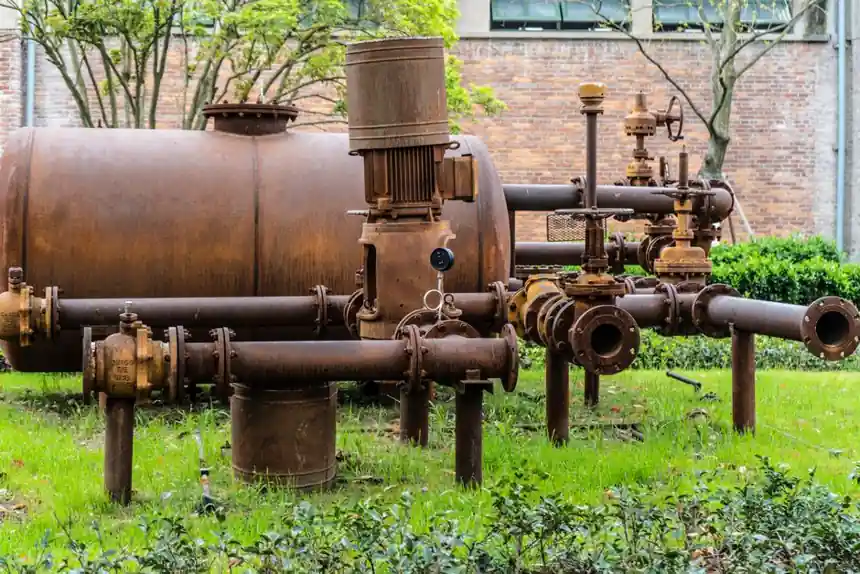
An electromagnetic flowmeter requires the measured medium to meet a conductivity floor of ≥5 μS/cm, with most water-based duty sitting in the 200–800 μS/cm band per current OEM documentation [S1][S3]. Sizing is governed by three hard limits: pipe inner diameter, flow velocity, and the liner/electrode material pair, all driven by Faraday’s-law voltage that is proportional to magnetic flux density, bore, and average velocity [S2][S5].
For chemical and water-plant duty, the realistic operating velocity window is 0.3–10 m/s, with manufacturers recommending a practical band of 0.5–10 m/s and a usable turndown of 150:1 [S1][S4]. Standard inline sizes span DN10 to DN1200, PTFE-lined flow-through bodies go up to DN600, and rubber-lined bodies extend to DN1200 for water and slurry mains [S4][S5].
Conductivity and medium: the first pass/fail gate
The medium must be a conductive liquid with a minimum conductivity of 5 μS/cm to generate a usable Faraday signal, while tap water at 100–500 μS/cm and most acid/base solutions at ≥10 μS/cm sit comfortably above that floor [S3]. Pure water, oils, organic solvents, alcohol, and gasoline are excluded by physics: no conductive path through the bore, no induced voltage at the electrodes [S3].
For low-conductivity fluids such as slurries, weak electrolytes, or demineralised water below 5 μS/cm, capacitive or high-frequency excitation designs extend the floor down to roughly 0.1 μS/cm, at the cost of a larger converter and tighter grounding [S3]. Bürkert specifies its Type 8045 mag meter with stainless-steel sensor bodies for PN16 and 110°C service, and the Alloy C22 electrode variant for aggressive chemicals and sea water [S2].
Liner and electrode matrix for chemical duty
Liner choice is the second decision layer, paired against corrosion profile, temperature, and solids content. PTFE/PFA covers -20 to 180°C, PFA up to 260°C, and is the default for strong acids, alkalis, and sanitary service, but is unsuitable for abrasive slurries above 5% solids [S3][S4]. Polyurethane (PU) takes -10 to 80°C and is the wear-resistant option for mining slurry, coal slurry, and sewage; chloroprene/butyl rubber at -10 to 80°C is the cost-effective pick for clean water and neutral sewage [S3].
Ceramic (Al₂O₃) covers -20 to 250°C for high-wear, high-temperature service, but is brittle and costly, so it is reserved for genuinely punishing duties [S3]. On the electrode side, 316L stainless steel is the standard choice for clean water and weakly corrosive fluids, but is unsuitable for hydrochloric acid, sulfuric acid, and chloride-rich media where pitting attacks the wetted face [S3][S5]. Hastelloy C-276 handles oxidising acids, mixed acids, sea water, and non-oxidising salts, but is not the right pick for concentrated hydrochloric acid or hot hydrofluoric acid [S3][S5].
Pressure, temperature, and DN-to-MPa mapping
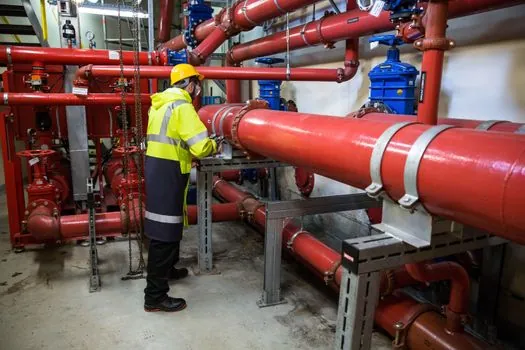
Rated working pressure drops with bore. Standard chemical-grade bodies are commonly rated ≤1.6 MPa for DN300 and below, ≤1.0 MPa for DN350 and above, with high-pressure flange variants available at 2.5/4.0/6.4/10 MPa on custom order [S3]. Inline stainless-steel chemical meters from Hefei Yutuo specify ≤2.5 MPa for DN10–DN65, ≤1.6 MPa for DN80–DN150, and ≤1.0 MPa for DN200–DN1200, which is the most aggressive DN-to-pressure map in the surveyed OEM data [S5].
Temperature windows depend on the liner: standard rubber from -20 to +60°C, high-temperature rubber -20 to +90°C, PTFE -30 to +100°C, and high-temperature PTFE -30 to +180°C [S5]. PTFE/F46 liners extend that further to +160°C and +120°C respectively on the Haiterhb datasheet, with PTFE bottoms around -30°C and a +180°C ceiling on high-temperature grades [S4]. A practical sizing rule is to keep nominal pressure above pipe design pressure, and keep liner temperature resistance at least 10°C above the maximum process medium temperature [S3].
Sizing math: velocity, DN, and turndown
The standard velocity window for mag meters is 0.3–10 m/s, with the recommended real-world band of 0.5–10 m/s to avoid electrode noise at the low end and liner erosion at the high end [S1][S2][S4]. To size a meter, convert the design flow into a target velocity, then pick the smallest DN whose cross-section delivers that velocity, while leaving headroom for the 150:1 turndown that most current meters publish [S4][S5].
A worked example using the Yutuo spec: a 50 m³/h design flow on water gives roughly 7 m/s at DN50, which is within the recommended 0.5–10 m/s band, so DN50 is a clean fit [S5]. At low-flow dosing (for example 0.5 m³/h), the same DN50 would run around 0.07 m/s, well below the 0.3 m/s floor, so the correct move is to step down to a low-flow meter such as the Bürkert Type 8051 full-bore mag flowmeter, which is aimed at high-precision dosing and filling rather than water-treatment mains [S2].
Accuracy classes, repeatability, and comms
Inline accuracy classes are commonly published as 0.2, 0.5, and 1.0, with the 0.2 class reserved for high-end chemical and custody-grade duty, and 0.5/1.0 covering general water and process service [S5]. Repeatability is tighter than accuracy and typically lands at ±0.1% of measured value across the surveyed datasheets [S4][S5]. Bürkert’s Type 8054/8055 full-bore meters target water treatment and general-purpose duty, where 0.5% accuracy is usually the right price/performance compromise [S2].
Output and comms options are now standard: 4–20 mA fully isolated with load resistance below 750 Ω, 0–1 kHz pulse output, and digital protocols including RS485, RS232, HART, and Modbus, depending on converter option [S4][S5]. Explosion-proof marking on the Yutuo chemical meter is mdIIBT4, which is the relevant Chinese GB-style mark for hazardous-area installation on chemical sites [S5]. For wider process-control context, the same kind of comms and grounding discipline that drives temperature recorder selection applies to mag-meter signal integrity in noisy plant environments.
Installation: straight-pipe runs, earthing, and ingress
Electromagnetic meters are circular-pipe devices, so installation on rectangular headers and tanks gives degraded profiles; the spec sheets call out straight-pipe minimums to protect accuracy. Standard inline meters require upstream ≥10 DN and downstream ≥5 DN, while the Yutuo chemical meter tightens that to upstream ≥5 DN and downstream ≥2 DN, reflecting its full-bore bore design [S4][S5]. Earthing and a proper grounding ring are mandatory when the pipeline is non-conductive or lined, otherwise the Faraday signal leaks through the liner and the reading drifts.
Protection class splits into IP68 for submersible meter chambers and IP65 for general-purpose wall- or pipe-mounted converters, with operating temperature -25 to +60°C and relative humidity 5–95% [S4][S5]. Power supply is wide-range, 85–265 V at 45–63 Hz, with 18–28 VDC available for solar, battery, or instrument-air skids, and total power consumption stays below 20 W on the surveyed units [S4][S5].
Who should NOT pick a standard mag meter
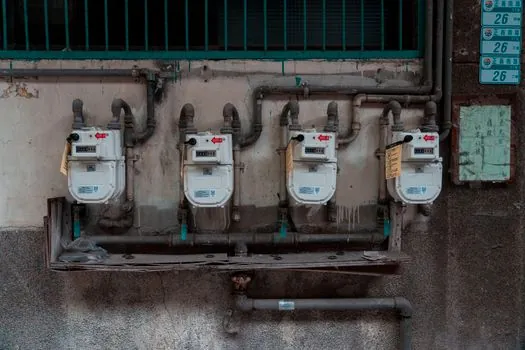
Standard electromagnetic flowmeters are the wrong instrument for non-conductive media (oils, organic solvents, hydrocarbons, high-purity water below 5 μS/cm) and for two-phase flows with significant gas entrainment, where the gas phase breaks the conductive path and the electrodes see a noisy, unstable signal [S3]. For hydrocarbon and steam service, coriolis, vortex, or turbine meters are the correct alternatives, while for two-phase slurries above 5% solids, PTFE liners will erode and PU or ceramic liners are the right pick [S3].
On hot, abrasive, high-solids slurry above 120°C, ceramic liners justify their higher cost over PTFE/PFA despite the brittleness penalty, because PTFE softens and PU degrades past their temperature ceilings [S3]. For very low conductivity fluids below 5 μS/cm, specify a capacitive or high-frequency excitation meter, not a standard 5 μS/cm unit, otherwise the converter will fail to lock onto a stable flow signal [S3].
Shortlist logic and next signal
A defensible shortlist starts with the medium matrix: PTFE/Hastelloy C-276 for strong acids and alkalis within -20 to +180°C, PU/316L for abrasive slurry within -10 to +80°C, chloroprene rubber/316L for clean water and neutral sewage, and ceramic/Hastelloy for hot abrasive slurry within -20 to +250°C [S3]. Lock DN against the 0.5–10 m/s velocity window, then pick the accuracy class (0.2/0.5/1.0) and comms stack (4–20 mA + HART, or Modbus/RS485) that match the plant’s control system [S2][S4][S5].
Watch two signals over the next procurement cycle: continued displacement of PTFE/PFA liners by ceramic in mining slurry above 120°C, and tighter integration of HART/IP over Modbus RTU on brownfield water-plant rebuilds where the existing SCADA already speaks Modbus. Both will reshape the 0.5% class shortlist for chemical and water service through 2026 [S4][S5].
Spec-level background on the components involved: linear guide, and crossed roller guide.