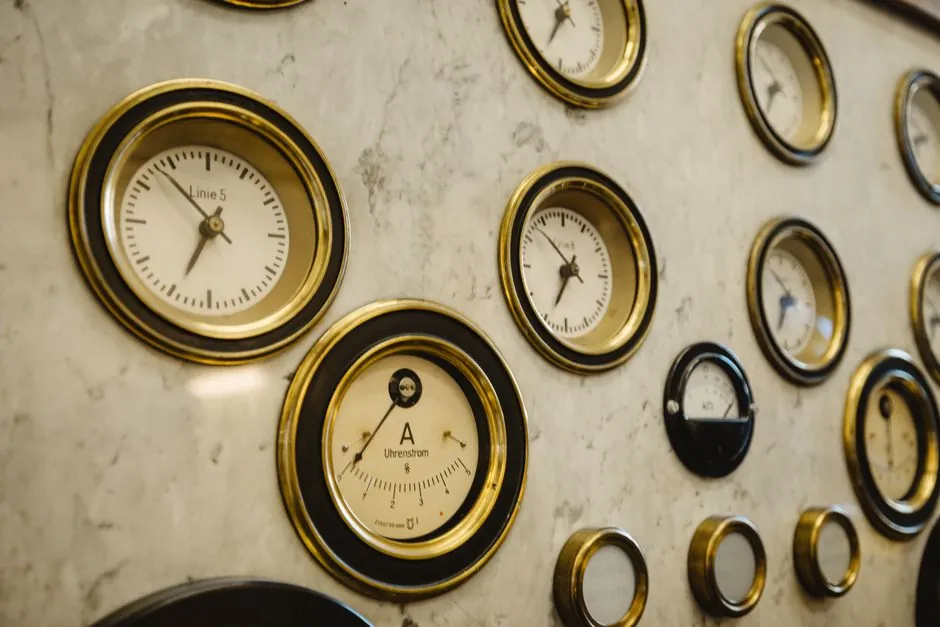
Endress+Hauser, KROHNE, Siemens, Emerson, ABB, Yokogawa, and Honeywell head the global flowmeter market, while ISO 9001-certified Chinese specialists such as Hangjia (HFM series), Kaifeng, and Sino-Inst hold the DN15–DN300 mid-tier with 4–20 mA plus HART or Modbus output as standard [S9][S3].
In practice, the buyer's first decision is the measuring principle, not the brand: electromagnetic (magmeter) for conductive liquids ≥5 µS/cm, Coriolis for mass-flow custody transfer, vortex or swirl for saturated steam up to 400°C, ultrasonic transit-time for clean water and wet gas, and positive-displacement gear meters for high-viscosity oils and fuels [S2][S3][S4].
Magmeter family: from basic water to SIL-rated process
OPTIFLUX 4400 is the current KROHNE flagship for safety instrumented functions: certified to SIL 2/3, with automated partial proof testing, Bluetooth parameterisation, and a fault response time of 2 minutes against NAMUR NE 107 status indication [S4].
The same family scales down to wafer-style OPTIFLUX 1050 (DN10–DN150, PN40, 4–20 mA plus HART, Modbus) for general water service at media conductivity ≥5 µS/cm, and OPTIFLUX 2300 carries ±0.2% accuracy with OIML R49 and MI-001 custody-transfer approvals for utility billing [S4]. Liner and electrode selection (PTFE, PFA, rubber, 316L, Hastelloy, titanium) is what actually decides chemical compatibility, not the model number [S3].
Steam, gas and high-temperature service: vortex, swirl and Gilflo
Spirax Sarco's vortex line is rated DN15–DN300, ±1% of reading, 4–20 mA plus HART and pulse output, flanged PN16–PN40, with media temperatures up to 400°C and pressures to 100 barg, no moving parts and IBR compatibility for Indian boiler regulation [S2].
For wet and superheated steam, the Gilflo ILVA delivers a 100:1 turndown at ±2% accuracy and needs no straight upstream pipe, a real advantage in cramped retrofit pipe racks where the specifier cannot add the 10D run that orifice plates demand [S2]. The SLM30-E swirl meter covers DN15–DN200, ±1.5% accuracy, with 4–20 mA, HART, Modbus and an integral totaliser LCD for energy metering skids [S2].
Ultrasonic transit-time and Coriolis: gas, steam and custody transfer
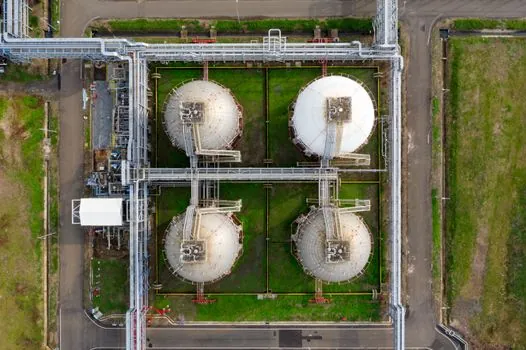
Endress+Hauser's Prosonic Flow G 300/500 measures gas up to 150°C and 100 bar with condensate-insensitive transducers, solving the wet-gas failure mode that hit earlier ultrasonic designs, while Siemens SITRANS FST030 transit-time meters are integrated with PCS 7 and TIA Portal for water and wastewater utility work [S8].
FCI's FS10i is the insertion-style thermal switch and monitor for 1/2 in (13 mm) and larger lines, repeatable on both liquid and air/gas, and typically used as a fast-responding flow/no-flow interlock rather than a precision meter [S1]. For custody-transfer mass flow, the Coriolis tier is dominated by Endress+Hauser Promass, Emerson Micro Motion, and ABB, all of which measure mass flow directly, are independent of density, viscosity and temperature profiles, and remain the only practical choice for high-accuracy batching of fuels, chemicals and slurries [S7][S9].
Selection criteria: technology, accuracy class, output protocol
Decision gates now run in this order: media conductivity (electromagnetic needs ≥5 µS/cm), clean versus dirty service (turbine and Coriolis foul, magmeter and vortex tolerate more solids), required accuracy class (±0.2% for OIML R49 billing versus ±1–2% for process monitoring), output stack (4–20 mA plus HART 7 versus Foundation Fieldbus, PROFINET or Ethernet-APL), and finally SIL rating for safety loops [S3][S4][S7].
A direct comparison: magmeters (OPTIFLUX, HFM100) win on conductive dirty water at zero pressure drop but fail on hydrocarbons and gases; Coriolis (Micro Motion, Promass) win on mass accuracy and multi-variable output but carry a 3–8x price premium; vortex (Spirax Sarco) win on steam and gas at no moving parts but need adequate Reynolds number and straight pipe; turbine (HFM90, CT15) win on clean low-viscosity liquids at high accuracy (up to ±0.5%) but tolerate no particulates [S2][S3][S4][S6].
Industrial and supply-chain signals worth tracking
Two near-term signals matter for 2026 sourcing: HART 7 and Ethernet-APL rollout at the skid level, which forces buyers to confirm that the supplier's I/O board supports the rev (HART 7 adds wirelessHART and burst mode), and the consolidation of regional distributors, since a meter that cannot be serviced within 48 hours during a production crisis has effectively zero availability regardless of its datasheet accuracy [S7][S9].
For buyers, the practical next step is to lock the measuring principle first, then request three vendor quotes for matched line size, liner/electrode material, accuracy class and output protocol, and only then negotiate price; the same logic also governs adjacent instrumentation, as the temperature recorder supplier landscape in 2026 shows the same SIL-plus-protocol pattern. Reference pages on flow meter fundamentals, electromagnetic flowmeter construction and Coriolis flowmeter operating limits help frame the spec sheets before vendor talks.