Specifying the wrong flowmeter class is one of the most expensive instrumentation mistakes a process engineer can make: a DN200 magmeter installed in a clean refined-product line can lose 1-2 accuracy points against a calibrated turbine, while a turbine dropped into a 5% solids slurry typically fails within weeks. The 2026 supplier landscape still splits cleanly between the two technologies [S1].
DirectIndustry's industrial-manufacturer index lists 73 vendors offering 205 electromagnetic flowmeter products, a breadth that reflects how the magmeter has become the default liquid meter for water, wastewater, and conductive chemicals [S1]. Chinese OEMs such as Sunstrand [S2], Q&T [S3], Kaifeng Qingtianweiye [S4], SKLD [S6], and the ZW-LWS health-grade line from suppliers like Yibao [S5] round out the global supply picture, with reported factory footprints from 69,000 m² and exports to 150+ countries [S3].
Operating principle and what each meter can actually measure
An electromagnetic flowmeter uses Faraday's law: a conductive liquid moving through a magnetic field induces a voltage on electrodes embedded in a lined measuring tube, with no moving parts and no obstruction to flow [S1]. Because the output depends on electrical conductivity rather than mechanical motion, magmeters tolerate slurries, pulp stock, raw sewage, and most aggressive chemical slurries, with SKLD's 2026 catalog covering DN6 to DN3000 in IP68 housings and a 150:1 turndown ratio for water, wastewater, and chemical service [S6].
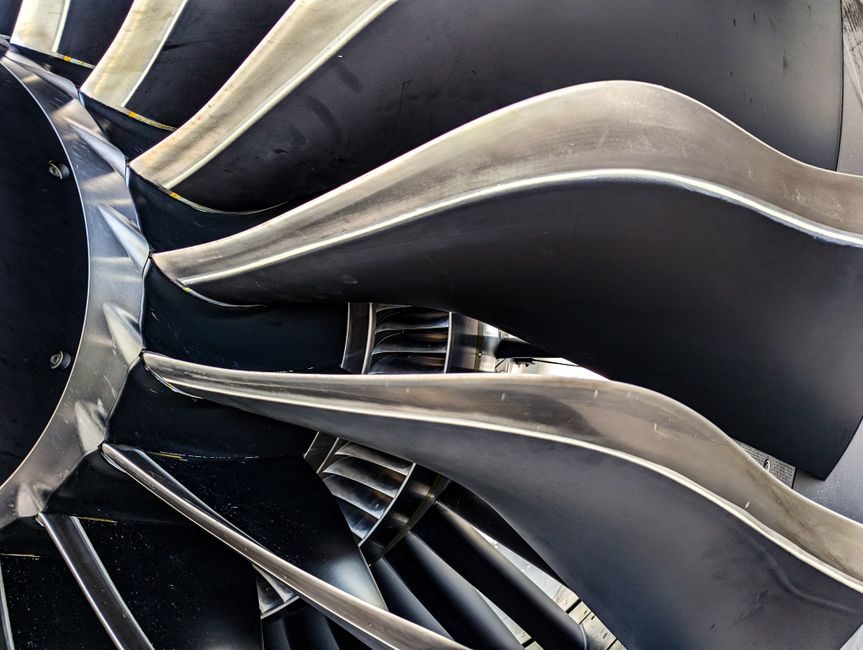
A turbine flowmeter uses a multi-blade rotor suspended in the flow stream; the rotor's angular velocity is proportional to volumetric flow, and the blades pass a pickup coil to generate a frequency output. The ZW-LWS health-grade turbine line is positioned for pharmaceutical, food, and clean-liquid applications where sanitary construction and high repeatability outweigh the cost premium [S5]. The trade-off is mechanical: anything that fouls, abrades, or distorts the rotor profile — fibers, sand, scale, free water in oil — directly degrades turbine accuracy.
Accuracy, turndown, and pressure-drop envelope
Supplier-published accuracy bands remain the clearest discriminator: SKLD's electromagnetic flowmeter is rated at ±0.5% of reading across its turndown, a class-typical figure for a modern magmeter with 150:1 rangeability [S6]. Industrial-manufacturer catalog data on directindustry.com also groups magmeters as a default-conductive-liquid class, with the 205-product breadth skewed to water, wastewater, and chemical skid builders [S1].
Turbine flowmeters in the 2026 Chinese OEM catalogs (Q&T, Kaifeng, Yibao ZW-LWS) are typically quoted between ±0.2% and ±0.5% of reading on clean, single-phase liquids, with much higher frequency resolution per unit flow, which is why hydrocarbon custody-transfer skids, diesel fuel lines, and clean water injection still default to the turbine. The pressure-drop penalty is the catch: a turbine introduces a flow restriction where a magmeter of equivalent line size produces essentially zero permanent pressure loss, a non-trivial difference in long district-water or chemical-loop pipe runs.
Fluid compatibility and process fit

Conductive liquids with at least roughly 5 µS/cm are the hard floor for any electromagnetic flowmeter; hydrocarbons, deionized water, and most oils are simply invisible to it. This is the single largest reason turbines retain a market in oil & gas, fuel-loading, and pharmaceutical pure-water loops where conductivity is too low for a magmeter. [S1]
Turbine meters cannot tolerate the fluids that magmeters excel at: raw sewage, mining slurries, paper-stock, and any abrasive or fibrous stream will accelerate bearing wear and bias calibration. For these services the magmeter is the only defensible choice, and the breadth of DN6-DN3000 IP68 offerings in the 2026 SKLD catalog is designed exactly for that envelope [S6]. The ZW-LWS sanitary turbine, by contrast, is built around clean, low-viscosity pharmaceutical and food streams [S5].
Installation, liner/electrode materials, and hazardous-area rating
Magmeter installations hinge on liner and electrode selection. The supplier landscape in 2026 — ABB on the European side, Sunstrand, Q&T, Kaifeng, and SKLD in Asia [S1][S2][S3][S4][S6] — means liner/electrode combinations are typically configurable at order entry rather than as a custom build.
Turbine flowmeters are mechanically simpler at the body level but require upstream straight-pipe runs (typically 10-15D) and a calibrated flow conditioner to hold their published accuracy. The ZW-LWS health-grade body is built for CIP/SIP in pharmaceutical skids, where surface finish and drainability matter more than hazardous-area certification [S5]. For hazardous-area chemical and refinery use, magmeters can be specified with ATEX/IECEx-rated housings as part of the standard build, which simplifies approvals paperwork compared with a turbine's pickup-coil and preamp.
Side-by-side comparison on four decision criteria
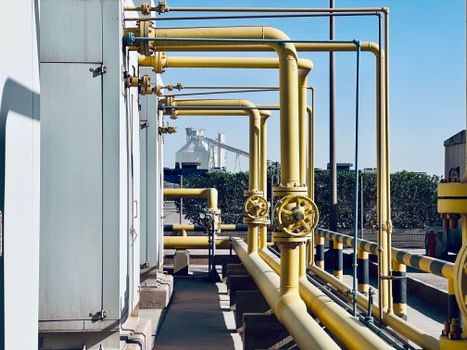
Engineers typically have to weigh these two technologies against four criteria: fluid type, accuracy, pressure drop, and maintenance profile. The matrix below summarizes the 2026 supplier-data picture. [S2]
Fluid type: magmeter requires conductive liquid (water, wastewater, acids, slurries); turbine requires clean, low-viscosity liquid (hydrocarbons, fuels, deionized or purified water) [S1][S5][S6]. Accuracy: magmeter typically ±0.5% of reading; turbine typically ±0.2% to ±0.5% on clean liquids. Pressure drop: magmeter essentially zero (no obstruction); turbine introduces measurable ΔP proportional to flow. Maintenance: magmeter has no moving parts and is largely maintenance-free; turbine has bearings, a rotor, and a pickup coil that wear with service.
Who should pick which meter in 2026
Choose an electromagnetic flowmeter if the process fluid is conductive and potentially dirty: raw and treated water, wastewater, chemical dosing, mining slurry, paper stock, and food slurries where the line cannot tolerate a pressure drop. The 2026 OEM catalog breadth — 205 magmeter products from 73 manufacturers globally [S1], plus the DN6-DN3000 IP68 range from SKLD [S6] — means a stock configuration exists for almost any line size in this class.
Choose a turbine flowmeter if the process fluid is clean, low-viscosity, and single-phase, and if the highest practical accuracy on a calibrated, conditioned straight run is the priority: refined hydrocarbon lines, fuel-loading skids, pharmaceutical pure-water loops, and the ZW-LWS sanitary-grade line for food and pharmaceutical service [S5]. For instrumentation calibration and signal-conditioning decisions on these skids, the same selection logic that drives temperature transmitter sensor and output choices applies — match the instrument class to the fluid physics, not to the lowest line-item price.
Limitations, failure modes, and signals to watch
Magmeters fail in three common ways: liner separation or permeation on chemical service, electrode coating or fouling in high-TDS or oily streams, and partial-fill errors when the meter is installed in a line that can run empty. Turbine meters fail differently: rotor bearing wear shifts the K-factor, blade erosion biases the high end of the range, and upstream disturbances (pumps, tees, partially closed valves) shift the meter out of its calibrated envelope faster than any mechanical wear. For processes that swing between clean and dirty service — a recurring headache in produced-water and refinery desalter loops — neither technology is ideal on its own, and many 2026 spec sheets explicitly steer buyers toward alternative classes (vortex, Coriolis, ultrasonic) for the swing case [S1].
Trackable signals over the next quarter: new sanitary-grade turbine releases for pharmaceutical skid builders following the ZW-LWS pattern [S5], wider DN6-DN3000 IP68 magmeter availability from Chinese OEMs [S3][S6], and continued consolidation on 150:1 turndown with HART and Ethernet-APL output options in the magmeter catalog [S1][S6]. For broader process-instrument trade-offs beyond flow, the same evidence-based comparison method used in differential pressure transmitter buying guides scales directly to flowmeter specification reviews.
Related: coriolis flowmeter.