
Specifying a lubricant for an electronics assembly or a connector-to-board mechanism is a different problem from picking one for a gearbox: contamination, outgassing, and plastics attack dominate the decision tree [S1].
Across the MOLYKOTE electronics catalog, 28 products target this market, with 16 tagged Wide Temperature Range, 15 for Good Plastics and Rubber Compatibility, and 3 carrying a Dielectric performance benefit, all evidence that the supplier base is segmented around these exact failure modes [S1].
Service envelope: temperature, viscosity, and NLGI
Industrial lubricant selection starts with temperature, which dictates base-oil chemistry, and with speed, which dictates the viscosity grade at operating temperature [S2]. For electronics service, the practical window is wider than most engineers expect: of the 28 electronics-tagged MOLYKOTE products, 22 carry a 101°C to 300°C high-temperature rating and 11 rate below -50°C at the low end [S1]. Viscosity at 40°C is split into 20 to 40 cSt (5 products), 61 to 100 cSt (3), 121 to 160 cSt (1), and 160+ cSt (2), with NLGI grades 1 (9), 2 (11), and 3 (6) covering the grease side of that same range [S1].
For comparison, an industrial mineral gear oil specification is typically written for bath or circulation systems at up to 160°F (about 71°C) with extreme-pressure additives, a far narrower envelope than most electronics applications actually require [S3]. The takeaway: do not re-use a gear-oil spec for a connector, switch, or potentiometer without re-checking both viscosity and compatibility. Practical guidance on the broader industrial lubricant selection logic, including the "4 C's" framework (Correct Technology, Quantity, Frequency, Procedures), is useful background but the technology axis changes for electronics [S2].
Plastic, rubber, and dielectric compatibility
Plastic and elastomer attack is the single most common root cause of field failures in lubricated electronics, so a lubricant without a verified plastics compatibility claim should be treated as not qualified for the application [S2]. Within the electronics catalog, 15 of 28 products carry an explicit Good Plastics and Rubber Compatibility tag, while only 3 carry a Dielectric tag, which is a useful filter: if the part sits near a live circuit or is a connector, dial for dielectric first; if it is a plastic gear or rack, dial for plastics compatibility first [S1].
For a related decision on plastic substrates used around those mechanisms, see this PTFE grade selection for electronics reference; the same dielectric and purity logic that drives PTFE grade choice also drives lubricant grade choice. Specification writing should also capture product compatibility: a polyalkylene glycol (PAG) base stock, for example, is not compatible with mineral oils or with polyalphaolefin (PAO) synthetics, and switching between them needs a documented flush procedure [S3].
Chemistry choices: mineral, PAO, ester, and PAG
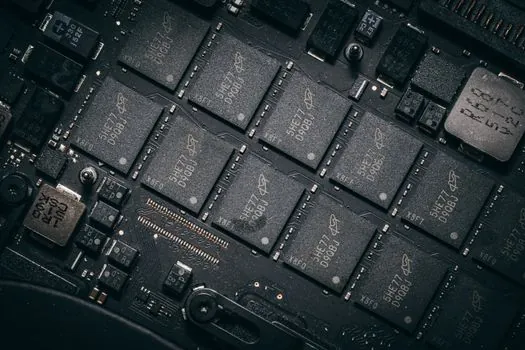
Base oil and additive chemistry together set oxidation stability, low-temperature torque, and plastic compatibility, so the chemistry question must be answered before viscosity or NLGI grade [S4]. General-purpose oils are typically 95% base oil (usually a mineral distillate) plus 5% additives; synthetic options use PAO, synthetic esters, or PAG to push viscosity index, oxidation stability, and consistency higher than mineral baselines [S5]. A base oil change from mineral to PAO/ester is also the largest single lever for energy consumption: synthetic lubricants reduce the energy a piece of equipment draws by holding viscosity closer to target across the operating range [S6].
For electronics, the trade-off is sharper: synthetics are cleaner, lower in ionic contamination, and more uniform, but they still have to be checked against the specific plastic. A quick decision matrix for the common chemistries:
Application-by-application fit: switches, connectors, motors, and slides
For switches, potentiometers, and small precision mechanisms, the 3 dielectric-tagged products in the catalog are the narrow filter; pairing that with a low NLGI grade (1 or 2) and a -50°C low-temperature rating covers most indoor and outdoor electronics enclosures [S1]. For electric motors in appliances and similar duty, 3 products are tagged Electric Motors and 10 carry High Speed Performance, which lines up with the speed-axes rule that high-speed contact points need a lower-viscosity base oil at operating temperature [S1][S2].
Slides, guides, and tracks (14 products in the catalog), rolling element bearings (8), and control cables (8) are the higher-load nodes; for these, the High Load Carrying Capability (9 products) and Good Wear Resistance (5) tags become the primary filter, with High Tack and Adhesion (3) added where the part is vertical or shock-loaded [S1]. Plastic lubrication is its own segment with 12 products, all of which carry plastics compatibility verification and most of which overlap with Wide Temperature Range, a useful single-source filter for plastic gear and rack assemblies [S1].
When NOT to use an electronics-grade lubricant

Electronics-grade lubricants are not a substitute for industrial gear oils, hydraulic fluids, or circulating oils; their formulation targets low load, low speed, plastic contact, and clean-room-adjacent cleanliness, not the high-load, high-temperature bulk lubrication that gearboxes, hydraulic systems, and turbines demand [S4].
Where the application is food-contact adjacent, an electronics-grade lubricant without NSF H1, NSF 51, or NSF 61 certification should be excluded, even if the chemistry looks suitable: only 1 of the 28 catalog products is Halal-certified, 1 Kosher, 2 NSF 51, 2 NSF 61, and 2 NSF H1, and the right certification is a hard gate, not a preference [S1]. For heavy industries or oil and gas, an electronics-grade lubricant will fail in days, not months, on load and water-washout resistance; the right move is to step up to a heavy-industry grease with corrosion-inhibitor and extreme-pressure additives, like the chain-lubricant case where the change doubled chain life in a copper-ore operation [S2]. For broader guidance on industrial lubricant categories, the industrial lubricant encyclopedia entry covers the full taxonomy.
Writing a lubricant spec for an electronics line
A lubricant specification is the contract between the application engineer and the storeroom, and it should explicitly capture scope, physical and chemical properties, performance properties, product compatibility, and product approvals [S3]. Physical and chemical properties should reference standard test methods: ISO viscosity grade per ASTM D2422, minimum viscosity index per ASTM D2270, flash point per ASTM D92, dropping point per ASTM D2265 for greases, copper corrosion per ASTM D130, and demulsibility per ASTM D1401 [S3].
Performance properties need to tie back to the actual failure modes in the electronics line (dielectric breakdown, plastic compatibility, low-temperature torque), and product approvals should reference the specific OEM or industry body (AGMA, NLGI, or the electronics OEM's own MQL/cleanroom spec) rather than a generic "complies with" claim [S3]. Adopting a general-purpose industrial rubber spec template is a common shortcut, but the rubber section must be replaced with an elastomer-and-plastics compatibility table tied to the actual polymer grades in the assembly.
Trackable signals to watch over the next 6 months
Two signals are worth tracking as the electronics-lubricant market moves: first, the share of catalog products carrying a Dielectric tag relative to total electronics products (currently 3 of 28 in this source), since connector and high-voltage PCB-adjacent applications are the fastest-growing demand pocket [S1].
Component reference pages worth checking: industrial adhesive, and industrial borescope.