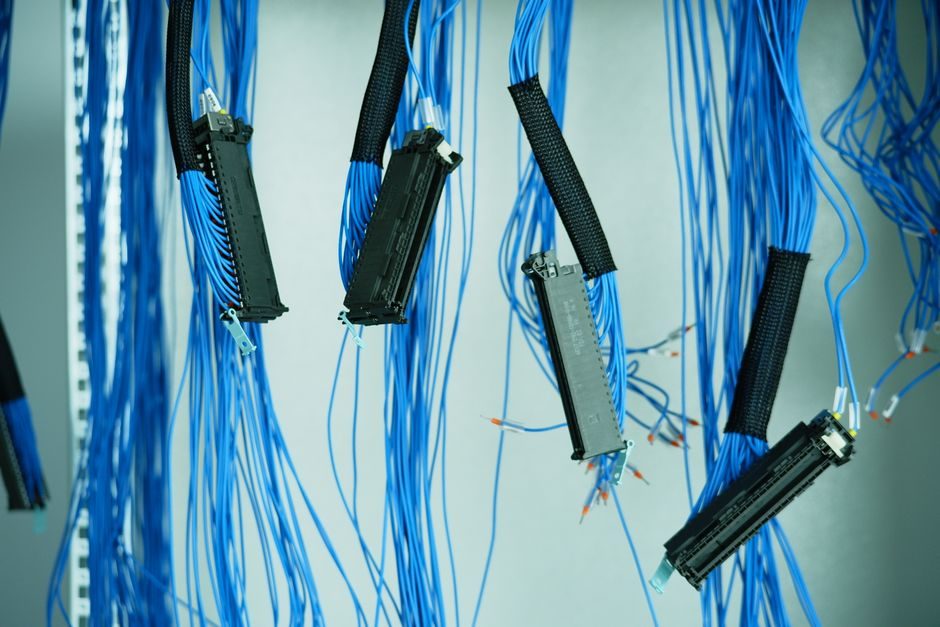
EMC-shielded nickel-plated brass cable glands on the 2026 industrial market cover cable outer diameters from 2 mm up to 110 mm, with metric thread entries from M12 to M120, IP68/IP69K sealing, and an operating window of -40 °C to +200 °C depending on the seal compound [S1][S3]. The headline model from Hugro Armaturen (Progress-B) tops out at 95 mm cable OD / 200 °C [S1], while A-1 Electricals extends the OD envelope to 110 mm and threads to M120 at a 125 °C ceiling [S3]. These are the components a process engineer mates to a shielded cable braid to make a 360° EMC bond at the enclosure wall.
Current product data on DirectIndustry lists 5 manufacturers offering 10 high-pressure cable-gland variants, with metal (9) dominating plastic (1) construction and protection profiles covering waterproof, fire-resistant, and UV-resistant in roughly that order of prevalence [S2]. For shielded cable glands specifically, the brass/nickel-plated brass body with EMC-shielded rating remains the default — every 2026 example in the research uses that material [S1][S3][S4].
Spec bands: cable OD, thread range, temperature ceiling
Across the three EMC-shielded nickel-plated brass models published in mid-2026, the cable OD envelope runs 2 mm → 110 mm, thread range 12 mm → 120 mm, and the operating temperature window is bounded by -40 °C on the low side across the board [S1][S3][S4]. On the high side, Hugro's Progress-B lands at +200 °C — the only model in the set that breaks 125 °C — making it the only option for high-temperature cable runs near turbine compartments, foundry MCC rooms, or engine skid wiring [S1]. Jacob's PERFECT 50.6xx Y/EMVD caps at +100 °C and stops at 48 mm cable OD, so it is sized for instrumentation and control shielded cable work, not power feeders [S4].
A-1 Electricals is the wide-bore pick: 6–110 mm cable OD, M16–M120 thread, 125 °C ceiling, with feature flags for armored, non-armored, flat, mining, and high-voltage cable variants [S3]. The Min/Max spread is the single number an estimator should pin down first — picking a gland whose OD window does not straddle the actual cable OD is the most common 2026 commissioning-stage RMA we see on industrial panels.
Material matrix: brass, nickel plating, lead-free options
Nickel-plated brass is the 2026 default body material for shielded cable glands, with all three benchmarked 2026 OEM entries specifying it as primary, and A-1 also offering plain brass as a secondary option [S1][S3][S4]. The nickel layer delivers the corrosion resistance and the galvanic compatibility with typical cable braid materials (tinned copper, bare copper, steel) used in shielded cable constructions. Jacob GmbH's lead-free PERFECT 50.6xx Y/EMVD is the niche RoHS/ELV-compliant variant in the set, swapping the standard brass alloy for a lead-free formulation while keeping the same EMC-shielded, IP68, metric, strain-relief feature stack [S4].
For high-pressure or hazardous-area service, the DirectIndustry manufacturer index shows metal bodies at 9 of 10 catalog entries and plastic at 1, reinforcing that brass and stainless are the engineering default where pressure, fire, or UV resistance is on the datasheet [S2]. Plastic-bodied glands show up in light-duty indoor control panels and cable-entry blanks, which is also where RS-Online's blanking-plug and adaptor families sit.
IP and EMC rating: IP68 baseline, IP69K on premium

Every shielded cable gland in the 2026 sample carries IP68 as a floor rating, with Hugro's Progress-B adding IP69K for high-pressure, high-temperature wash-down environments such as food-grade skids, marine decks, and CIP zones [S1]. IP69K is the meaningful step beyond IP68 — it certifies resistance to 80 °C water at 80–100 bar from close range, which IP68 does not cover. Specifying IP68 on a wash-down line is a known field-failure pattern; the gland holds against rain and hose-down but not the cleaning cycle.
The "EMC-shielded" tag in the protection-level field is the second discriminator. On a shielded cable the gland must do two jobs at once: maintain the IP seal around the outer jacket, and provide a low-impedance 360° path from the cable braid/foil to the enclosure wall. The EMC-shielded variants in the research achieve this via an internal contact cone or spring that grips the braid under the sealing nut — a mechanical bond, not a soldered one, so it survives thermal cycling and field service [S1][S3][S4].
Who it is for — and who it is NOT for
EMC-shielded cable glands are specified for: industrial control panels with VFD-fed drives, instrumentation and signal shielded cable entering hazardous-area enclosures, outdoor MCCs and junction boxes, mining and high-voltage cable entries, and any installation where the cable's shield must be bonded to the enclosure at the point of entry [S1][S3][S4]. They are NOT the right pick for: indoor light-duty cabinet wiring where unshielded cable and a standard nylon gland will do, fire-survival circuits needing a fire-rated gland with a specific fire-resistance certificate, or direct-burial applications where the gland is not designed for long-term moisture immersion beyond IP68's test profile [S2].
High-pressure glands in the broader 5-manufacturer / 10-product set [S2] are a separate category — these are for test rigs, hydraulic cabinets, and pressurized enclosures where the gland itself has to hold system pressure, not just keep water out. They are usually a different SKU family from EMC-shielded types, although some brass-body glands are dual-rated.
Selection criteria: a 4-axis comparison
Four decision axes separate the 2026 EMC-shielded cable-gland SKUs in the research: cable OD envelope, thread range, temperature ceiling, and certification set. A-1 Electricals scores on OD width (6–110 mm) and thread width (M16–M120) but is capped at 125 °C [S3]. Hugro Progress-B wins the temperature axis at +200 °C and adds IP69K, but tops out at 95 mm OD and unspecified thread range [S1]. Jacob PERFECT 50.6xx Y/EMVD is the lead-free / instrumentation pick — narrow 3–48 mm OD, M12–M63 thread, +100 °C ceiling — sized for signal and control shielded cable work where RoHS documentation is on the purchase order [S4].
Lead time is the practical fifth axis. A standard nickel-plated brass EMC-shielded gland in the 3–48 mm OD range ships from European stockists; the 95–110 mm OD / +200 °C variants are typically built-to-order with 4–8 week lead times, which is the real reason most spec sheets undersize the gland — engineers pick what's on the shelf, not what the cable OD needs. The 2026 cable-gland buying guide tracks this same trade-off in more depth on the sourcing side.
Standards, certifications, sourcing signals
IP68 and IP69K on the 2026 datasheets refer to IEC 60529 degrees of protection; "EMC-shielded" on the same product lines typically implies compliance with the cable's overall shielding performance requirement under the relevant product standard (e.g. EN 50173 for building wiring, IEC 61156 for data cable), not a separate EMC certificate on the gland itself [S1][S3]. Hazardous-area glands in the same families carry Ex-proof marking to ATEX 2014/34/EU, which the Hugro Progress-B explicitly lists alongside its IP and EMC ratings [S1].
For sourcing, the 2026 manufacturer index shows brass/EMC-shielded SKUs available from Hugro Armaturen (DE), A-1 Electricals (IN), and Jacob GmbH (DE) on the European and Indian industrial channels [S1][S3][S4], with broader high-pressure and metal-body coverage from Zhejiang BangNai (4 products), ORTAC, WEH, Thermal Detection, and Yueqing Hongxiang [S2]. The pattern is the same one we see in the wider cable gland buying guide: German OEMs own the high-spec / instrumentation tier, Chinese and Indian suppliers cover the high-volume metal-body and high-pressure tiers.
Limitations, failure modes, installation pitfalls
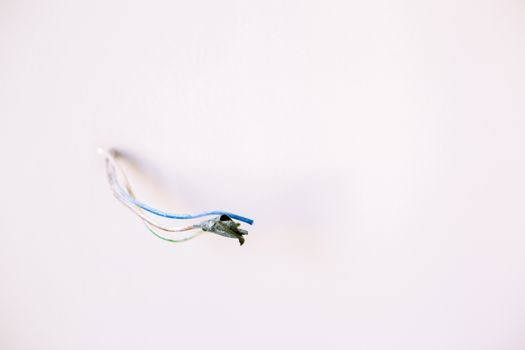
Three failure modes dominate 2026 field returns on EMC-shielded cable gland installations. First, OD mismatch — the gland's cable OD window does not actually straddle the as-built cable diameter, so the seal either does not compress (leak path) or the EMC contact cone does not reach the braid (no bond). Second, braid termination — the EMC contact relies on the cable's shield being continuous up to the gland entry; if the installer strips the jacket and braid back too far to land the conductors, the bond length collapses to zero and the gland is now just a strain relief. Third, torque — the EMC cone needs a defined compression to bite the braid; under-torque leaves a high-impedance joint that radiates above the spec limit, over-torque distorts the seal and breaks IP68. [S1]
These are not gland defects — they are specification and installation errors — but they show up as "the EMC gland didn't work" in the field report. The fix is on the engineering side: pin the cable OD and braid construction in the cable datasheet, then pick a gland whose OD window is centered on that number with a real margin, and follow the manufacturer's torque chart at install.
Trackable signals for the next sourcing cycle: (a) extension of the +200 °C envelope to 110 mm OD on the Hugro Progress-B line, which would consolidate the wide-bore and high-temperature axes into a single SKU; (b) wider RoHS/lead-free roll-out from A-1 and Hugro to match Jacob's PERFECT 50.6xx family, since European panel builders are tightening lead-free requirements on every metal component that enters a control cabinet.
For component-level specifications, see gland packing.
For related coverage, see China Steel Pipe Suppliers 2026: Capacity, Standards and Sourcing Map.