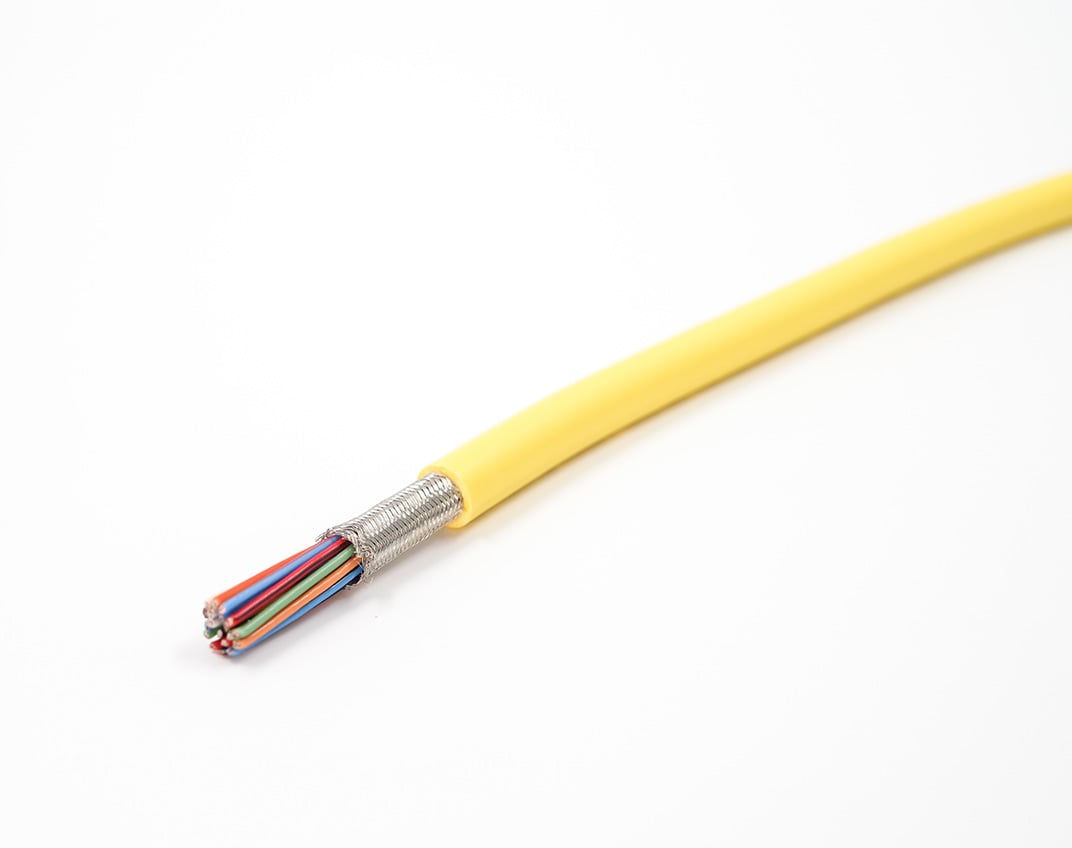
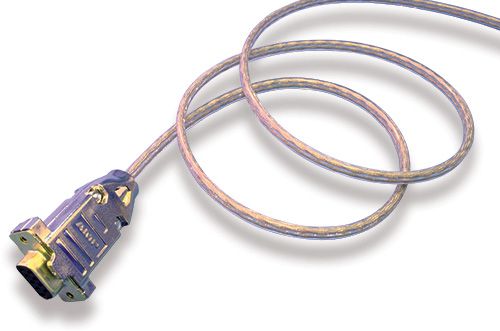
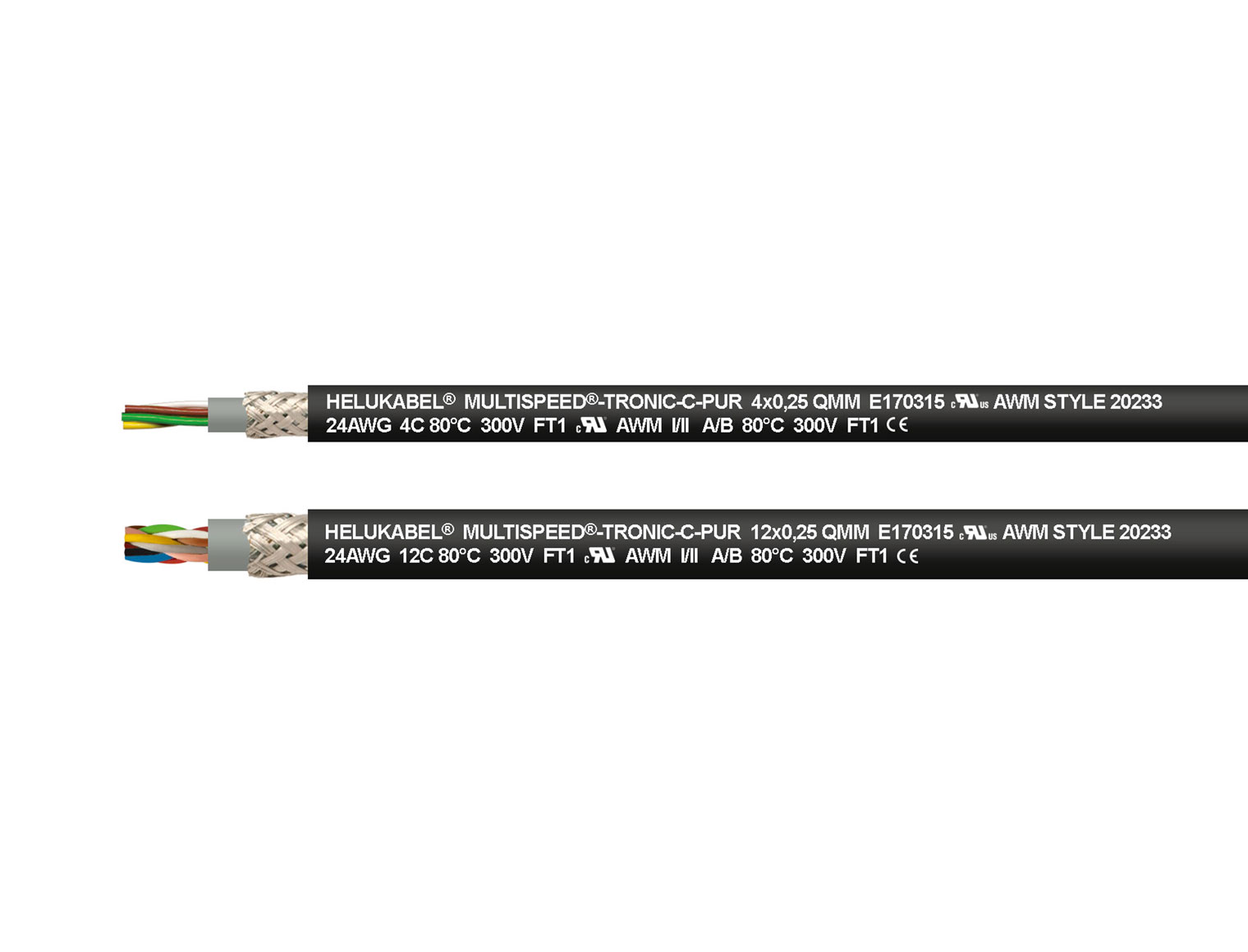
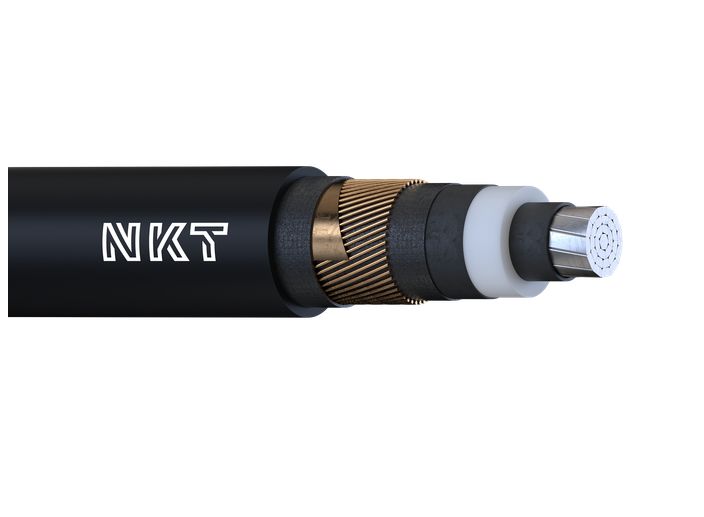
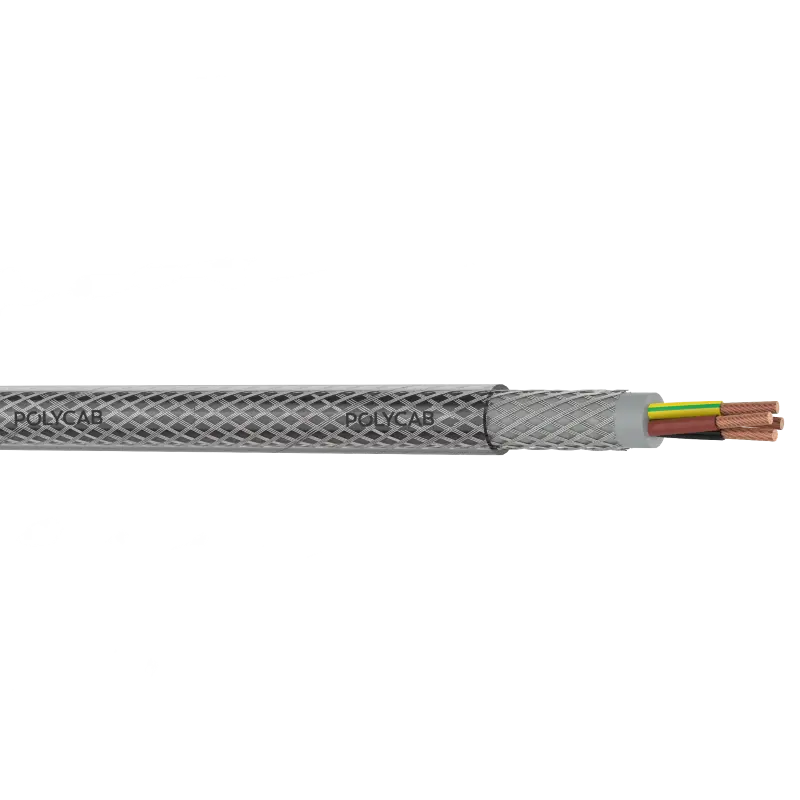
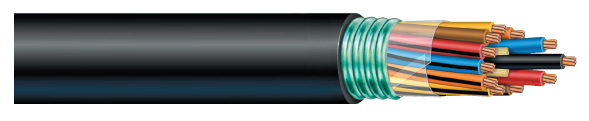
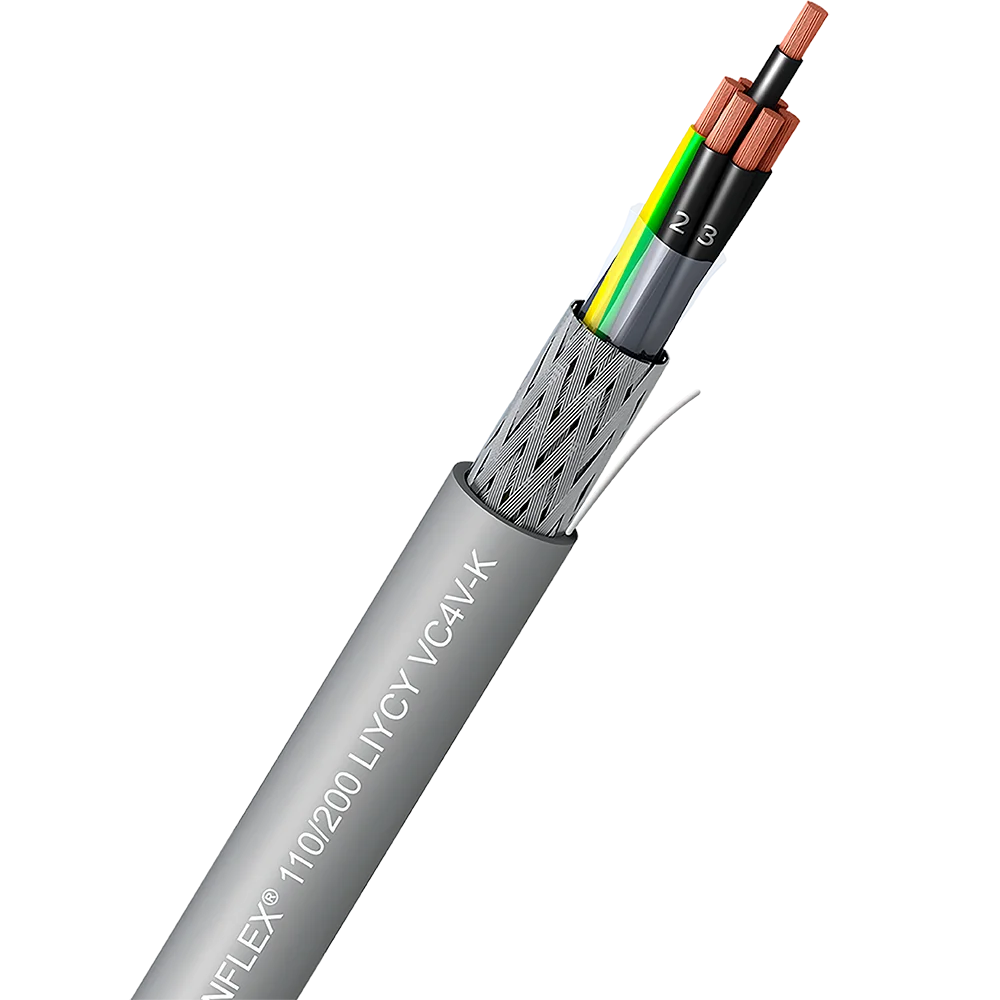
Shielded cable is electrical cable in which one or more conductors are enclosed by a conductive screen, a metallic foil, a woven braid, a spiral serve, or a combination, that intercepts electromagnetic interference (EMI) and radio-frequency interference (RFI) and gives it a controlled path to ground. The screen protects sensitive analog and data signals from outside noise and, equally, stops a noisy circuit from radiating into its neighbours.
In industrial plants the screen is the difference between a 4-20 mA loop that reads steadily and one that jitters whenever a variable-frequency drive starts. This guide explains the shield families, how coverage and transfer impedance actually behave with frequency, the governing standards, how to decode a cable data sheet, and how to ground and select a screened cable correctly.
This guide is written for industrial purchasing engineers and design engineers. It covers six chapters, from what shielding is and the physics of EMI, through shield types, screening performance, materials and standards, spec-sheet decoding, to grounding and the selection decision, with seven FAQs and manufacturer comparisons. Parameters reference IEC 62153-4, EN 50289-1-6, BS 5308 / PAS 5308, BS EN 50288-7, ISO/IEC 11801, IEC 60092-376, and the IEC 60332 / 60754 / 61034 fire-behaviour series.
Chapter 1 / 06
What is a Shielded Cable
A shielded cable is any cable whose signal or power conductors are surrounded by an electrically conductive layer, the shield or screen, that is connected to ground. The shield performs two reciprocal jobs. It keeps external electromagnetic energy from coupling onto the inner conductors (immunity), and it confines the energy radiated by the inner conductors so they do not pollute nearby circuits (emission). In electromagnetic-compatibility (EMC) language these are the susceptibility and emission halves of the same physical mechanism, and a single well-grounded screen addresses both.
Structurally a shielded cable has, from the centre outward: the conductor (solid or stranded copper, sometimes tinned), the primary insulation (PE, XLPE, PVC, PP, FEP, or silicone), an optional individual screen around each pair or core, an overall screen, sometimes a drain wire in contact with a foil, optional bedding and armour for mechanical protection, and an outer sheath. The screen is not the same thing as armour: armour is a mechanical layer, while the screen is an electrical one, and many cables carry both because they solve different problems.
Interference couples onto a cable by three routes, and the shield works differently against each. Capacitive (electric-field) coupling is shorted to ground by any grounded conductive layer, so even a thin foil is highly effective. Inductive (magnetic-field) coupling is reduced by twisting the pairs and, at higher frequencies, by a low-impedance braid that lets the induced current return alongside the signal. Radiative coupling, dominant above tens of megahertz, is handled by the combination of high optical coverage and low transfer impedance. No single screen is optimal against all three at all frequencies, which is why shield selection is a frequency-and-coupling question, not a single number.
The economics matter to a buyer. A screened cable costs roughly 20 to 60 percent more than an equivalent unscreened cable, and a double foil-plus-braid construction more again, because of extra copper and slower manufacturing. The screen also reduces flexibility and increases outer diameter and bend radius. The engineering goal is therefore to specify exactly the shielding the environment demands and no more: an overspecified screen wastes money and tray space, while an underspecified one is discovered only after the plant is energised and the signals are unusable.
Shielded cable spans an enormous application range, from millivolt thermocouple extension and microvolt-level audio, through RS-485 and PROFIBUS field buses, Ethernet to Category 8, video and broadcast coaxial, motor-drive and servo power, down-hole and shipboard instrumentation, to laboratory and medical signal leads. Each domain has its own dominant interference frequencies and its own preferred screen, which the following chapters map out.
Chapter 2 / 06
Shield Types and Coverage
Five screen constructions dominate industrial cable: foil (tape), braid, spiral or serve, combination foil-plus-braid, and conductive-layer (semiconductive) screens. They differ in optical coverage, flexibility, terminability, cost, and the frequency band where they are strongest. The table below summarises the families before the discussion that follows.
Shield Type
Typical Optical Coverage
Best Frequency Band
Flexibility / Flex Life
Relative Cost
Foil (Al/Mylar tape)
~100% nominal
High (above ~10 MHz)
Low, fragile
Low
Braid (Cu strands)
70 to 95%
Low to medium
Good
Medium
Spiral / serve
90 to 97%
Audio / low only
Very good
Low to medium
Combination (foil + braid)
85% braid + 100% foil
Broadband
Medium
High
Conductive layer / tape
100% contact
Capacitive only
Good
Low
Foil shields are a thin aluminium layer bonded to a polyester (Mylar) carrier film, wrapped helically or longitudinally with overlap so the optical coverage is nominally 100 percent. Foil excels against high-frequency electric fields and is inexpensive and thin, which keeps the cable diameter small. Its weaknesses are mechanical: aluminium foil cracks under repeated flexing and cannot be soldered, so a foil shield is almost always paired with a tinned-copper drain wire that provides the actual termination point. Note that 100 percent optical coverage is a geometric property and does not mean 100 percent of the EMI is blocked, because the foil still has finite resistance and termination losses.
Braid shields are interwoven bare or tinned copper strands, typically reaching 70 to 95 percent optical coverage; most general-purpose braids settle around 80 to 85 percent because higher coverage costs more, weaves slower, and stiffens the cable. Braid has low DC resistance, so it carries fault and noise currents well and is the better screen at low and medium frequencies. It flexes and terminates far better than foil, including 360-degree clamping into an EMC gland. Pushing braid above about 95 percent coverage gives diminishing returns and is rarely justified outside specialist coaxial cable.
Spiral or serve shields are one or more fine wires helically wound around the core, reaching 90 to 97 percent coverage with excellent flexibility and flex life, which is why they are favoured in microphone, guitar, and other low-frequency audio cable. Their weakness is that the helical winding behaves like an inductor at higher frequencies, so spiral screens are not recommended above the audio band. Where flexibility is paramount but high-frequency performance is needed, a braid is preferred.
Combination shields place a foil under a braid, the configuration that gives the broadest protection. The foil handles high-frequency fields with full coverage while the braid adds the low-frequency, low-impedance return path and a robust mechanical termination. A common specification is roughly 85 percent braid coverage over a bonded aluminium foil, and broadband attenuation of such constructions can exceed 60 dB across several frequency decades. This is the default choice for demanding mixed-frequency environments such as variable-frequency-drive motor leads and high-category data cable. Conductive-layer screens, semiconductive tapes or extruded conductive polymer, are used mainly to grade electric fields and provide a capacitive screen in medium-voltage and some instrumentation cable, but they are poor against magnetic and radiated fields and are not a substitute for foil or braid in signal duty.
Chapter 3 / 06
Shielding Performance and the Physics
The single number that best predicts how a screen will perform is not coverage but transfer impedance, written Zt and expressed in milliohms per metre. Transfer impedance is the ratio of the noise voltage induced on the inner conductors to the interference current flowing along the shield surface. A lower Zt means less of the shield current leaks through to the signal conductors, so lower is better. Coverage percentage correlates loosely with Zt at low frequencies but tells you nothing about the frequency dependence, which is exactly where cables differ in practice.
For a single copper braid, Zt is roughly 5 to 10 milliohms per metre at low frequency, dominated by the DC resistance of the braid, and then rises at about 20 dB per decade as frequency climbs above roughly 1 MHz, because field leakage through the braid apertures grows with frequency. A foil-plus-braid combination, or a double braid, keeps Zt low to much higher frequencies. Solid-tube or corrugated copper screens, used in some coaxial and CATV cable, achieve the lowest Zt of all because they have no apertures, which is why they are the reference for screening-attenuation measurements. The screening attenuation parameter, expressed in decibels, is the complementary high-frequency measure to Zt.
Standardised measurement methods make these numbers comparable across vendors. The IEC 62153-4 series defines the test methods, including IEC 62153-4-3 (triaxial method for transfer impedance) and the related screening-attenuation procedures, while EN 50289-1-6 is the parallel European method for communication cable. When two data sheets quote different shielding numbers, always confirm they were measured to the same method and frequency range before comparing; a coverage percentage and a screening-attenuation figure are not interchangeable.
Coupling Mechanism
Dominant Frequency
Primary Countermeasure
Most Effective Screen
Capacitive (E-field)
Low to high
Grounded conductive layer
Foil or any grounded screen
Inductive (H-field)
Low to medium
Twisting + low-Z return
Twisted pair + braid
Radiative (plane wave)
Above ~30 MHz
High coverage + low Zt
Foil + braid combination
Common-impedance (ground)
50/60 Hz to kHz
Single-point ground
Any, grounded one end
Twisting is the silent partner of shielding. Twisting the conductors of a pair makes the loop area presented to a magnetic field alternate sign along the cable, so successive twists cancel the induced voltage; this is why even unshielded twisted pair (U/UTP) Ethernet rejects magnetic noise well. The shield then handles the electric-field and radiated components that twisting cannot. The two techniques are complementary, and a quality screened instrumentation cable always pairs a tight, consistent lay length with the screen.
A practical caution: a screen is only as good as its termination. A long unshielded pigtail at the cable end adds series inductance that rises with frequency and can negate an otherwise excellent screen above a few megahertz. For high-frequency integrity the braid or foil should be terminated circumferentially (360 degrees) into an EMC gland or backshell, not gathered into a single pigtail wire. This is why two cables with identical Zt can perform very differently once installed: the difference is in how the screen meets the enclosure.
Chapter 4 / 06
Materials, Constructions and Standards
A screened cable is a stack of material choices, and each layer is governed by recognised standards. Conductors are usually annealed copper, plain or tinned; tinning resists corrosion and is mandatory where a copper conductor or drain meets an aluminium foil, to prevent the dissimilar-metal galvanic reaction. Primary insulation is selected for the electrical and thermal duty: polyethylene (PE) and cross-linked polyethylene (XLPE) for low capacitance and high-temperature instrumentation, PVC for general indoor use at 70 degrees C, PP, FEP, and PTFE for high-temperature or low-loss data, and silicone for extreme heat and flexibility.
For analog process instrumentation the dominant constructions follow BS 5308 and its still-widely-used equivalent PAS 5308, which define cables with PE or PVC insulation, an aluminium/polyester tape screen with a tinned-copper drain, and the two key screening options: individual screen (IS) per pair, overall screen (OS), or both. The shorthand on a data sheet reads, for example, PE-IS-OS-PVC for an unarmoured cable or PE-IS-OS-SWA-PVC when steel wire armour is added. The harmonised European replacement is BS EN 50288-7, although PAS 5308 persists because it retains the higher voltage ratings and dimensions of the original. Shipboard and offshore screened instrumentation follows IEC 60092-376.
Screen materials are aluminium foil (cheapest, high coverage, fragile), bare or tinned copper braid (robust, low impedance), and tinned-copper spiral serve (flexible). The drain wire is bare or tinned copper sized to match the screen so it does not become the weak link in the ground path. Armour, where present, is most often galvanised steel wire armour (SWA) for impact and crush resistance and to act as a circuit protective conductor, aluminium wire armour (AWA) for single-core AC circuits to avoid eddy-current heating, or steel tape for lighter mechanical duty.
For structured data cabling the screening codes come from ISO/IEC 11801 and TIA-568, using the XX/YTP form described in Chapter 5. Fire performance is a separate, mandatory axis defined by its own standards, and a procurement specification should state the required class explicitly. The table below maps the common fire and material standards a buyer will see called out on screened-cable data sheets.
Property
Governing Standard
What It Specifies
Flame propagation (single)
IEC 60332-1
Single-cable flame retardance
Flame propagation (bunched)
IEC 60332-3
Vertically mounted cable bundle
Halogen acid gas
IEC 60754
Low-smoke zero-halogen (LSZH) emission
Smoke density
IEC 61034
Light transmittance during burning
Instrumentation cable
BS 5308 / PAS 5308 / EN 50288-7
IS / OS screened pair construction
Shield transfer impedance
IEC 62153-4-3 / EN 50289-1-6
Screening test method, Zt and attenuation
The outer sheath ties the choices together. PVC is the default for cost and abrasion resistance; LSZH (low-smoke zero-halogen) compounds are required in tunnels, ships, transit, and crowded buildings where toxic smoke is a life-safety risk; PUR (polyurethane) sheaths are chosen for oil resistance and continuous-flex duty in drag chains. Sheath colour often carries meaning by convention (for example blue for intrinsically safe instrumentation in many plants), so confirm the plant colour code as part of the specification.
A point that catches buyers out is that not every screen material survives every environment. A bare-copper braid corrodes in damp or saline air and loses its low-impedance ground bond over years, which is why tinned copper is preferred for instrumentation and marine duty; an aluminium foil with no drain wire is almost impossible to terminate reliably in the field; and a thin foil-only screen on a cable destined for repeated movement will crack within a fraction of its expected flex life. Match the screen material and construction to the mechanical and atmospheric duty, not only to the nominal electrical performance quoted on the front page of the data sheet.
Chapter 5 / 06
Decoding the Spec Sheet
A screened-cable data sheet packs a dozen or more parameters into a single line. Eight of them actually drive a selection decision: conductor size, number of cores or pairs, screen type and coverage, transfer impedance or screening attenuation, characteristic impedance (for data and coax), mutual capacitance, voltage rating, and the fire class. Each is explained below.
Conductor size is given as cross-section in square millimetres (for example 0.5, 0.75, 1.5 mm2) or as AWG (American Wire Gauge, for example 24, 22, 18 AWG, where a smaller number is a larger wire). Size sets the current rating and the DC loop resistance, which for a 4-20 mA loop must stay within the transmitter compliance voltage. Number of cores or pairs and whether they are individually screened (IS) determines crosstalk control between signals in the same cable.
Screen type and coverage should state the construction (foil, braid, foil+braid) and, for braid, the optical coverage percentage. Transfer impedance or screening attenuation, when quoted, is the meaningful EMC figure, measured per IEC 62153-4-3 or EN 50289-1-6; prefer it over coverage alone. For twisted-pair structured cabling, the screen is coded by the ISO/IEC 11801 designation, summarised here.
Designation
Overall Screen
Per-Pair Screen
Typical Use
U/UTP
None
None
Cat 5e/6 office (unshielded)
F/UTP
Foil
None
Cat 6/6A in noisy areas
U/FTP
None
Foil per pair
Cat 6A/7 alien-crosstalk control
S/FTP
Braid
Foil per pair
Cat 7/7A/8 high performance
SF/UTP
Braid + foil
None
Heavy-EMI industrial Ethernet
Characteristic impedance matters for any cable carrying high-frequency or matched signals: 50 ohm for RF and instrumentation coax, 75 ohm for video, 100 ohm for twisted-pair Ethernet, 120 ohm for PROFIBUS and CAN. A mismatch causes reflections and signal degradation, so the cable impedance must match the connected equipment. Mutual capacitance, in picofarads per metre, sets the high-frequency loss and is kept low (often 50 to 120 pF/m) for fast data and long analog runs; a foil screen close to the conductor raises capacitance, which is a real trade-off in long instrumentation cable.
Voltage rating is given as the U0/U pair (phase-to-earth / phase-to-phase, for example 300/500 V or 0.6/1 kV); instrumentation cable is typically low-voltage signalling at 250 to 500 V, while screened power and motor cable runs to 0.6/1 kV and above. Fire class states the IEC 60332 / 60754 / 61034 behaviour and, in the EU, the Construction Products Regulation (CPR) Euroclass. Two further parameters worth checking are the temperature rating (for example -40 to +90 degrees C for XLPE instrumentation, -30 to +80 degrees C for PVC) and the minimum bend radius, usually quoted as a multiple of outer diameter (commonly 4x to 12.5x OD; flex-rated cable allows tighter, fixed installation needs less, screened cable is generally stiffer than unscreened).
One reading discipline avoids most mistakes: separate the electrical screen parameters from the mechanical and fire parameters and confirm each against the duty. A cable can have an excellent screen and still be the wrong choice because its bend radius will not fit the tray, its sheath is not LSZH for the tunnel, or its temperature rating is exceeded next to a hot motor.
Chapter 6 / 06
Grounding and Selection Decisions
Shielding succeeds or fails at the ground connection, so grounding is the first decision, not the last. The rule depends on frequency. For low-frequency analog instrumentation, audio, thermocouple, and 4-20 mA loops, ground the screen at one end only, normally the control-room or receiver end, so that no power-frequency ground-loop current can circulate through the screen and inject noise. Once the disturbance exceeds about 100 kHz, or the cable length exceeds roughly one twentieth of a wavelength, ground the screen at both ends so it can carry the induced high-frequency current; a screen grounded at only one end near a quarter wavelength acts as an antenna. Always keep the ground path below 1 ohm and follow the plant grounding-philosophy drawing.
With grounding settled, follow this selection sequence. It doubles as a fixed RFQ template that prevents the most common error, deciding details before the duty is defined.
Signal and frequency: classify the duty (analog mV/mA, digital fieldbus, Ethernet category, RF coax, motor/servo power). This sets whether foil, braid, or combination screening is appropriate and which characteristic impedance you need.
Interference environment: identify the aggressors (VFDs, switchgear, radio transmitters, parallel power runs) and their frequencies. High-frequency or mixed environments push you toward foil-plus-braid and circumferential termination.
Screen type and coverage: choose foil (HF, cheap, fragile), braid 80 to 95 percent (LF/MF, robust), or combination (broadband). For data, pick the ISO/IEC 11801 code (U/UTP, F/UTP, U/FTP, S/FTP, SF/UTP) to match the category and alien-crosstalk need.
Conductor size and count: size for current and loop resistance (mm2 or AWG); decide pairs/triads and whether individual screens (IS) are needed to separate signals inside one cable.
Voltage and electrical ratings: set U0/U rating, characteristic and mutual capacitance for data, and temperature rating for the hottest point on the run.
Mechanical and installation: fixed, flexible, or continuous-flex (drag chain); decide armour (SWA/AWA) for impact or burial; verify minimum bend radius fits the tray and conduit.
Sheath and fire class: PVC, LSZH, or PUR per the location; state IEC 60332 / 60754 / 61034 and, in the EU, the CPR Euroclass. Confirm the plant sheath-colour convention.
Termination and accessories: specify EMC glands for 360-degree braid termination, backshells, and drain-wire handling. A great screen with a long pigtail performs like a poor one.
One last and frequently overlooked dimension is serviceability and supply continuity: data-sheet availability, drum lengths and lead times, second-source availability of an equivalent construction, and whether the maker publishes measured transfer-impedance curves rather than only coverage. These determine how easily a run can be extended or replaced years later. Belden, Lapp, and Alpha Wire publish detailed screened-cable data for data and signal duty; Eland Cables, Caledonian, FS Cables, and Cleveland Cable supply BS 5308 / PAS 5308 instrumentation cable in IS, OS, armoured, and unarmoured forms; and Lapp OLFLEX, igus chainflex, and Helukabel TOPFLEX cover continuous-flex screened duty. Confirm screen coverage, transfer impedance, conductor size, voltage rating, and fire class against the official data sheet before committing.
FAQ
What is the difference between foil and braid shielding?
A foil shield is a thin aluminium layer bonded to a polyester (Mylar) film that wraps the core with overlapping turns, giving nominal 100 percent optical coverage and excellent high-frequency suppression, but it is mechanically fragile and needs a drain wire to terminate. A braid shield is interwoven tinned or bare copper strands that typically reaches 70 to 95 percent optical coverage, flexes and terminates far better, and dominates at low and medium frequencies because of its low DC resistance. They are not interchangeable: foil wins above roughly 10 to 100 MHz, braid wins below it, and a foil plus braid combination shield is specified when broadband protection is required.
What is transfer impedance and why does it matter more than coverage percentage?
Transfer impedance (Zt, in milliohms per metre) is the ratio of the noise voltage induced on the inner conductors to the interference current flowing on the shield. It is the single most meaningful shielding metric because it captures real coupling rather than just geometric gap area. A good single copper braid sits around 5 to 10 milliohms per metre below 1 MHz and rises about 20 dB per decade with frequency, while optical coverage says nothing about that frequency behaviour. Standardised measurement is defined in IEC 62153-4-3 (triaxial method) and EN 50289-1-6. Lower Zt means better shielding, so compare data-sheet Zt curves rather than coverage numbers alone.
Should the cable shield be grounded at one end or both ends?
It depends on frequency. For low-frequency analog instrumentation (4-20 mA, thermocouple, audio), ground the shield at one end only, usually the control-room or receiver end, to block 50/60 Hz ground-loop currents that would otherwise circulate through the shield. Once the disturbance frequency exceeds about 100 kHz, or the cable length exceeds roughly one twentieth of a wavelength, the shield must be grounded at both ends so it can carry induced high-frequency currents; a shield grounded at only one end behaves like an antenna near a quarter wavelength. Always keep the ground path below 1 ohm, follow the plant ground-philosophy drawing, and never ground the same shield at both ends across two different earth references without a check on ground-potential difference.
What does a designation like S/FTP or F/UTP mean?
ISO/IEC 11801 codes shielding with the format XX/YTP, where the first part describes the overall screen and the second part the per-pair screen. The letters are U for unscreened, F for foil, S for braid, and SF for braid over foil; TP means twisted pair. So U/UTP is fully unshielded, F/UTP is an overall foil with unscreened pairs, U/FTP is a foiled pair with no overall screen, S/FTP is foiled pairs inside an overall braid, and SF/UTP is overall braid plus foil over unscreened pairs. Higher categories such as Cat 6A and Cat 7/7A use F/UTP, U/FTP, or S/FTP to control alien crosstalk at the higher frequencies.
What is the drain wire and how is it terminated correctly?
The drain wire is a bare or tinned copper wire laid in continuous contact with a foil shield, giving the foil a low-resistance, solderable or crimpable termination point because aluminium foil itself cannot be reliably soldered. Tinning prevents galvanic corrosion between the aluminium foil and copper. Terminate the drain to the connector backshell, gland, or chassis ground stud, keeping the exposed unshielded pigtail as short as possible because a long pigtail adds inductance and destroys high-frequency performance. For 360-degree EMC, clamp the braid or foil circumferentially with an EMC gland rather than relying on a pigtail and drain alone.
What is the difference between a shield and armour, and do I need both?
A shield is an electrical screen, thin foil or fine-wire braid, whose job is to manage electromagnetic interference; it carries little mechanical load. Armour, such as steel wire armour (SWA), aluminium wire armour (AWA), or steel tape, is a mechanical layer that protects the cable from crushing, impact, and rodent damage and can act as a circuit protective conductor. They serve different purposes: an instrumentation cable in a cable tray indoors needs a shield but not armour, while a buried or direct-impact run needs armour and often a shield too. BS 5308 / PAS 5308 instrumentation cables are offered in both unarmoured and SWA versions precisely so you can match the run.
Which standards govern shielded instrumentation and data cable?
For analog instrumentation, BS 5308 and its still-used PAS 5308 equivalent define PE or PVC insulated, individually screened (IS) and overall screened (OS) constructions; the harmonised replacement is BS EN 50288-7. Shipboard and offshore cables follow IEC 60092-376. Shield transfer-impedance and screening-attenuation test methods are in the IEC 62153-4 series and EN 50289-1-6. Structured-cabling twisted pair follows ISO/IEC 11801 and TIA-568, which define the U/F/S/SF screening codes and category performance. Flame, smoke, and fire behaviour are covered by IEC 60332 (flame propagation), IEC 60754 (halogen acid gas), and IEC 61034 (smoke density).
Shielded Cable Manufacturers
Source-backed product routes. Open a company dossier for procurement scope and cited evidence.