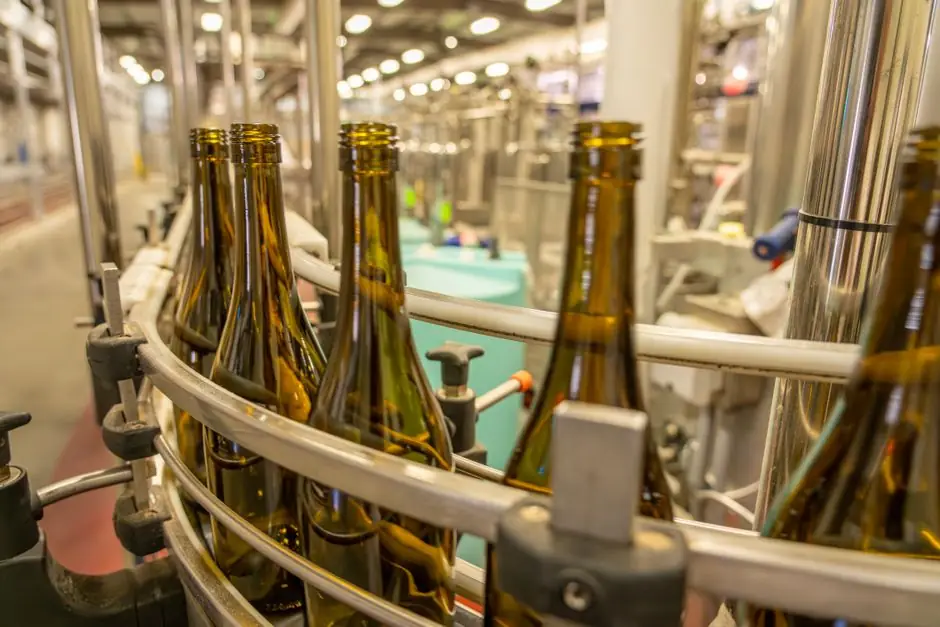
End-of-line packaging automation unifies case erecting, case packing, sealing, robotic palletizing, and stretch wrapping into a single connected cell, replacing the manual bottleneck that sits between finished goods and the shipping dock [S1][S3].
The category spans the equipment that takes shelf-ready product, places it into a shipping case, builds it on a pallet, and contains the load with film, before the truck arrives [S2]. Demand is climbing, from $6.6 billion in 2025 to a projected $9.9 billion by 2034 per USD Analytics, because automated cells lower labor cost, add throughput, tighten compliance, and ship fewer damaged loads [S5].
What an End-of-Line Cell Actually Contains
A complete end-of-line packaging cell integrates product collation, case erecting, case packing, case sealing, print-and-apply labeling, check weighing, robotic palletizing, and stretch wrapping, with conveyors as the connective tissue between every station [S1][S3][S9]. OMNI's component list adds bundling and shrink wrapping to the canonical list, and notes that OEMs increasingly use robotics to maximize flexibility in this stage [S2]. RPMI emphasizes that each system is configured to production volume, layout, and product type, and that a typical integrated line may also include product handling equipment, primary packaging machines, and accumulation tables [S3]. Lantech, writing in January 2026, frames the category explicitly as automating case forming, sealing, and pallet wrapping rather than upstream primary packaging [S7].
Millwood and Smurfit Westrock use the same scope: systems that automate wrapping, sealing, and moving pallets at the final stage of production so loads leave the dock stable, consistent, and traceable [S6][S8].
Selection Criteria: What to Automate First
The first thing to automate is the single biggest constraint on the line, not the whole cell at once, because automating around a bottleneck just moves it downstream [S5]. BMG's build-the-business-case checklist names the usual suspects: case erecting, case packing, sealing, labeling, palletizing, and stretch-wrapping, and asks operations to score each by throughput, cost, and risk before writing the spec [S1].
Pak-Tec's September 2026 buyer's guide makes the same call more bluntly: palletizing and case handling deliver the strongest return on investment when labor, throughput, or product damage are the primary constraints, and a phased plan lets the savings from the first project fund the next [S5]. For a manual end-of-line area, the four cost drivers to size are overtime, turnover in physically demanding roles, retailer chargebacks on damaged loads, and workers' compensation claims tied to repetitive lifting, the last of which U.S. Occupational Safety and Health Administration data links directly to manual material handling [S5].
Case Packing: Speeds, Formats, and What to Match
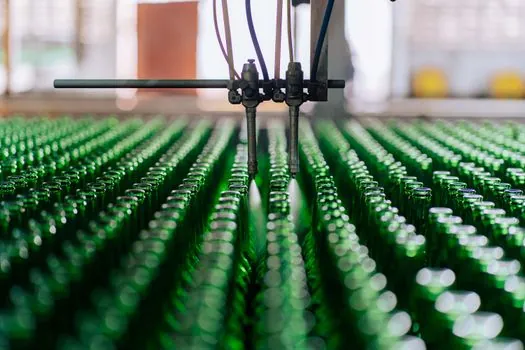
Modern robotic case packers form, load, and seal wrap-around cases at speeds up to 60 cases per minute while maintaining tight tolerances, with end-of-arm tooling that handles bottles, cans, cartons, pouches, and rigid containers through top-load or side-load configurations [S3][S4]. RPMI's systems accept multiple product formats from the same frame, with flexible changeovers for facilities running several SKUs per shift [S3].
Combination systems integrate shrink wrapping with case packing inside one footprint, a configuration Robopac flagged in November 2025 as a way to satisfy different retail pack styles without buying a second line [S4]. For operations stacking trayless water bottles or beer cans, high-speed robotic palletizers run in the same cell and arrange cases at rates exceeding 200 cases per minute using vision-guided pattern adjustment [S4].
Stretch and Shrink Wrapping: Load Containment vs. Film Savings
Stretch wrapping machines and shrink wrappers serve different jobs even though they share floor space. Stretch wrapping contains unit and pallet loads with pre-stretched film, and modern wrappers with film pre-stretch technology reduce plastic consumption significantly compared with manual wrapping methods, which directly cuts both material cost and waste [S4]. Shrink wrapping uses heat to conform a loose film to the load profile and is favored where tight retail packs, tamper evidence, or multi-pack collation matter more than pallet-unit containment [S5].
Robotic wrappers now calculate exact film requirements per load configuration, so the system does not over-apply material on small or partial pallets, and vision systems flag defects before the load leaves the wrapper [S4]. The decision rule cited in Pak-Tec's guide is straightforward: pick stretch for pallet unitization and shipping stability, pick shrink for retail-ready packs, and run both in the same cell only if retail and shipping channels share the line [S5].
Robotic vs. Conventional Palletizing: A Side-by-Side Call
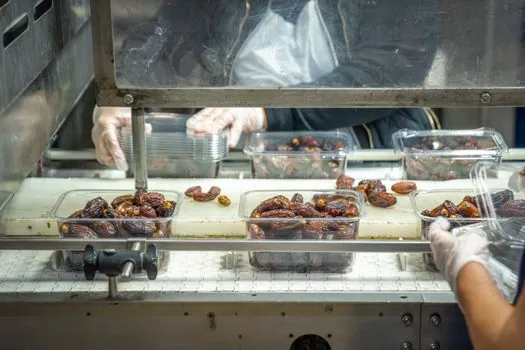
For frequent changeovers and mixed-SKU runs, specify a robotic palletizer, because vision-guided end-of-arm tooling handles multiple SKUs simultaneously and switches between products without extended changeover periods [S4][S5]. For high, steady volume on a single SKU pattern, a conventional or automatic palletizer delivers a lower per-case cost and a simpler maintenance profile, which is why Pak-Tec's guide pairs the two options explicitly to throughput profile rather than to industry [S5].
On the spec sheet, the practical differences come down to footprint (robotic cells are more compact and consolidate case packing, palletizing, and wrapping into a unified system), pattern flexibility (robotic systems accommodate multiple SKUs at once, conventional systems change patterns mechanically), and upstream buffering (robotic cells need tighter conveyor synchronization to avoid starveling the robot) [S3][S4].
Integration, Material Handling, and the Cell-Level ROI
Cell-level ROI comes from connecting the line, not from upgrading one machine in isolation, and that is the rule every integrator in this space repeats [S3][S5]. Conveyors, accumulation tables, and transfer systems are the connective tissue, and they must be sized to keep products moving in sync with the case packer and the palletizer, because product buildup at any transfer point is the most common cause of line stoppage in a high-speed end-of-line cell [S3][S5].
The labor math is also cell-level: automated case packers, sealers, and palletizers allow one operator to manage what several used to handle manually, which both cuts direct labor cost and reduces exposure to seasonal labor shortages on the physically demanding end-of-line roles [S1]. BMG frames the redeployment case in plain numbers for the finance team: redeploy X of Y operators per shift and reduce end-of-line packaging labor cost by Z%, while improving staffing stability [S1].
A practical staging pattern, drawn from the sources above, looks like: phase one, automate the biggest manual bottleneck (usually case packing or palletizing); phase two, connect upstream and downstream conveyors so the cell runs as one system; phase three, add stretch wrapping and labeling into the same flow; phase four, layer in vision-based defect detection and film-usage optimization [S4][S5]. The case packing machine and the stretch wrapper are typically the two anchor purchases, and the rest of the cell is built around them.
Limitations, Failure Modes, and Sourcing
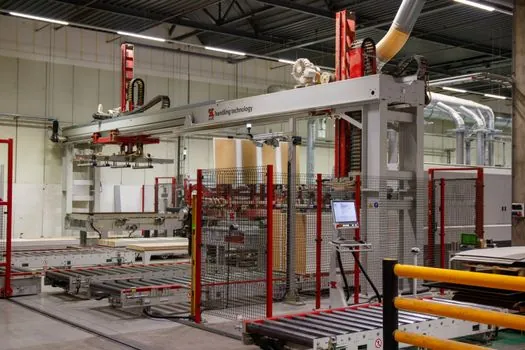
Three failure modes show up across every integrator's checklist: changeover downtime on multi-SKU lines, film waste from mis-calibrated pre-stretch, and pattern errors at the palletizer when upstream case pacing drifts. Vision-guided end-of-arm tooling, dynamic pre-stretch, and synchronized conveyors address each one, but only when specified and tuned together, not as standalone upgrades [S3][S4]. The other recurring constraint is floor space: integrated robotic cells consolidate what used to be separate case-packing, palletizing, and wrapping zones, and that consolidation only works if the existing aisle and dock-door layout can absorb a compact, interconnected footprint [S4].
For buyers comparing vendor claims, two signals to track over the next reporting cycle are: (a) the realized throughput delta between conventional and robotic cells on multi-SKU beverage and bagged-goods lines, which Robopac and Pak-Tec both flag as the deciding metric [S4][S5]; and (b) the spread between pre-stretch film savings advertised by wrapper OEMs and the savings a vision-monitored wrapper actually returns in production, which is the most common over-promise in the category [S4].