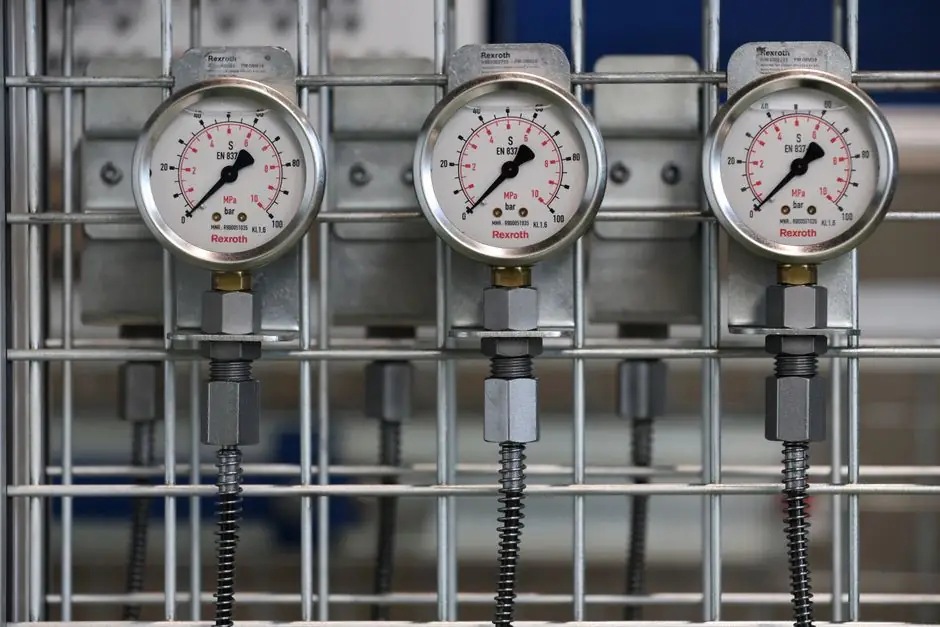
Entry-level EOAT (pneumatic grippers, plastic fingers) lists between $200 and $1,000, while custom-engineered tooling for medical, pharmaceutical, or high-mix assembly commonly exceeds $8,000 per tool [S6][S5].
The wide spread is driven by three variables: tooling material (aluminum vs stainless 316L vs carbon-fiber composite), integration scope (gripper alone vs gripper plus vision and force sensing), and whether the tool is a fixed bolt-on or part of an automatic quick-change system (QCS) [S3][S4].
Cost tiers and where the dollars actually go
Off-the-shelf grippers are the cheapest tier, with pneumatic 2-jaw finger grippers in the $200-$1,000 band and built primarily from molded plastics or stamped aluminum [S6].
Custom EOAT is a different price object: DT Engineering cites design analysis, concept generation, and fabrication as line items, with the engineering effort often matching the hardware cost on small-batch pharmaceutical or medical-device cells [S3].
For higher-tolerance work, material upgrades drive cost: aluminum for standard duty, 316L stainless for washdown and pharmaceutical cleanroom, and carbon-fiber composite where the strength-to-weight ratio is critical and the robot payload budget is tight [S3]. Process tools (welding torches, dispensing nozzles, nut runners with torque control) sit at the top of the range because they integrate manufacturing functions and, in the case of fastener installation, must log torque data for quality records [S3].
Why changeover time breaks the ROI math
Shops running mixed-model production lose more hours to EOAT swaps than to the swap itself: changeover lead time on a fully custom tool has been measured at roughly 20 days from design to first part, and quick-change systems have driven that down to about 3 days while dropping per-tool cost from $8,000 to $500 in published case data [S5].
The economic mechanism is straightforward: a robot arm without fast tool change is pinned to one part number, and the historical response (custom tooling per part) is expensive because each tool carries its own non-recurring engineering [S8].
Tool changers split that cost across many part numbers, which is why Stäubli and other QCS vendors frame EOAT as a multi-tool interface problem rather than a per-part hardware problem [S2]. For deeper math on how changeover minutes translate into OEE gain, see SMED changeover reduction and the OEE math behind it.
Design rules that determine whether a tool is reusable
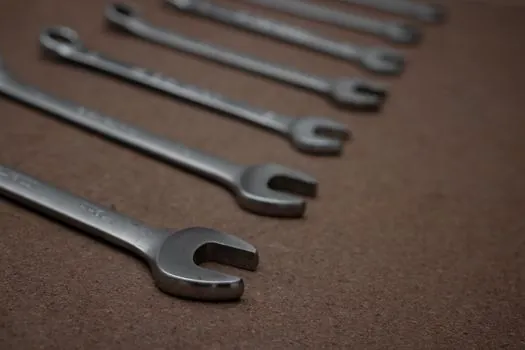
Three design constraints decide if an EOAT can ride on a quick-change platform or if it must stay dedicated: payload budget, datum repeatability, and electrical/pneumatic pass-through count [S3][S4].
Payload is the first gate: total payload equals EOAT weight plus product weight plus any onboard fixtures, and a heavy tool reduces the robot's available product payload, often forcing a step up to a larger and more expensive robot [S3]. Repeatability is the second gate, because a QCS coupling has a published positional repeatability (typically in the 0.02-0.05 mm range for premium couplers) and any tool that relies on compliant locating features will not survive the stack-up.
The third gate is I/O: grippers need compressed air, vision tools need Ethernet and power, force/torque sensors need dedicated analog or bus channels, and every additional pass-through multiplies the cost of the changer body and the harness on the robot side [S2][S4].
EOAT type comparison for changeover-friendly cells
Pneumatic grippers are the cheapest and fastest to actuate but the least controllable in force, which is a problem on delicate medical or electronic parts where grip force must be tuned per SKU [S3][S4].
Electric (servo-driven) grippers cost more and add a servo drive and cable to the EOAT, but they return precise force and position data, which is why they dominate high-mix cells that must validate grip on many part numbers without mechanical re-tuning [S3].
Vacuum grippers are the right answer for flat, smooth, or porous surfaces and are often the lowest-cost way to pick many SKUs, but they need a clean air supply and fail unpredictably on porous or textured parts [S4]. Magnetic grippers are cheap and fast on ferrous parts and need no air, but are useless on aluminum or plastic. Soft/flexible-finger grippers are a growing category that absorbs positional error at the cost of cycle-time speed and grip accuracy on rigid components [S4].
For changeover economics the order from worst to best is: fixed custom gripper (one part, $8,000, 20-day lead time) -> dedicated per-part EOAT on a QCS ($500-$2,000 per tool, 3-day lead time, ~30-second swap) -> adaptive gripper on a QCS with force and vision feedback (one tool, many SKUs, higher per-tool cost) [S5][S4].
Trends that are changing the cost curve
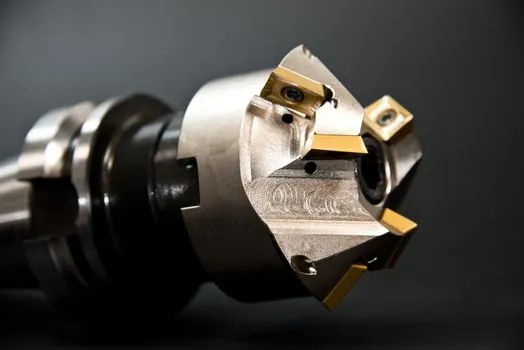
Three shifts are pulling custom-EOAT pricing toward off-the-shelf levels: interchangeable gripper cassettes, integrated vision, and AI-assisted tool selection [S4][S1].
Interchangeable gripper cassettes let a single QCS carry multiple finger sets so that format change is a finger swap rather than a full tool change, which is the design pattern that small and mid-size shops cite as the unlock for daily line switches [S4].
Vision and force/torque sensing are now being integrated into the EOAT body itself, which eliminates separate inspection stations and pushes the "90% of value-added tasks performed by the end effector" figure higher on cells that previously needed post-robot gauging [S3]. AI-assisted tool selection, still early, uses part-recognition to pick the right grip program on the fly, and it is one of the eight design innovations flagged as improving robot handling in current OEM guidance [S1].
Specifications a specifier should pin down
Every EOAT release should ship with: total weight (kg), payload margin (product + fixture + EOAT vs robot rated payload), actuation medium (pneumatic pressure range, electric bus protocol, vacuum level), cycle time at rated load, repeatability, and the I/O map (number of pneumatic ports, M8/M12 connectors, bus type) so that the QCS pass-through can be matched [S3][S4].
For washdown or cleanroom cells, material grade and surface finish must be explicit (316L stainless, electropolished, Ra value) so the EOAT matches the room class, and for medical or pharma cells the torque and force logs must be retained for traceability [S3].
Trackable signals to watch: published QCS repeatability figures and pass-through counts from the major coupler vendors (Stäubli, SCHUNK, ATI), and the share of new EOAT releases that ship with onboard vision rather than relying on an external fixed camera [S2][S4].