
Defense programs specify engineering plastics on a four-axis gate stack: mechanical duty (recoil impulse, drop impact, sustained bearing load), environment (MIL-STD salt spray, fuel and cleaning solvent exposure, temperature swing), compliance (ISO 9001:2015 quality systems, dual-use export controls, OEM-approved supplier status), and process fit (injection molding for high-volume firearm components vs CNC machining for low-volume airframe and naval parts) [S2][S3][S4].
Defense procurement teams treat resin selection the same way they treat alloy selection: a documented property window, a traceable supply chain, and a process capable of holding that window at production rate. The resin families that show up on defense purchase orders, in published defense industry material guides, and on the floor of OEM molding shops, are PEEK (polyetheretherketone), polycarbonate (PC), acetal/POM (polyoxymethylene), PTFE, and filled nylon (PA6/PA66, glass- and aramid-filled), with UHMW-PE and PPSU taking specific wear and high-heat sub-roles [S2][S3][S4].
Property envelope: why defense picks engineering plastics over metals
Engineering plastics give defense buyers a weight saving measured in grams per part on small arms and kilograms per airframe assembly, with the corrosion and shock behaviour that bare aluminium and carbon steel cannot match in field service [S2][S3].
Compared with aluminium and carbon-steel equivalents, polymer firearm components weigh significantly less, do not rust in salt-spray or humid storage, and absorb recoil energy instead of transmitting it to the shooter; the same weight and corrosion logic drives polymer adoption in unmanned vehicle airframes, naval interior hardware, and soldier-electronics housings [S2][S3]. The general engineering-plastic property set behind this is well documented: most engineering plastics are lightweight, chemically stable, do not rust, are good electrical insulators with low thermal conductivity, and process with tight dimensional control [S1]. The combination of low density (typically 1.2–1.5 g/cm³ for PEEK, PC, POM and glass-filled PA66 versus 2.7 g/cm³ for aluminium and 7.85 g/cm³ for steel) and tailored mechanical response is the single largest reason polymer substitution has continued to grow across defense platforms [S1][S2].
Resin-by-resin spec map for defense use
Five resin families carry the bulk of defense plastic spec sheets: PEEK for the hottest, most chemically aggressive duties; polycarbonate for impact-loaded transparent and structural parts; acetal/POM for wear, dimensional stability, and precision-machined mechanisms; PTFE and filled variants for low-friction and chemical-resistant bearings and seals; and glass- or aramid-filled nylon 6/66 for structural housings that need moulded-in ribs and metal-like stiffness [S3][S4].
Typical working envelopes drawn from defense and adjacent industrial references: PEEK continuous service up to roughly 260 °C, with retention of mechanical properties in jet fuel, hydraulic fluid, and de-icing chemicals; polycarbonate impact strength roughly 600–900 J/m notched Izod, optical clarity for windows and sensor covers, and glass-transition near 147 °C; acetal/POM tensile strength roughly 60–70 MPa, low friction and low moisture absorption for triggers, sears, and magazine bodies; PTFE continuous service to about 260 °C, near-universal chemical resistance, and a coefficient of friction near 0.05–0.10 against steel; and glass-filled nylon 6/66 delivering tensile strength in the 100–180 MPa range, with the trade-off of higher moisture pickup and anisotropy across the mould flow direction [S1][S2][S3][S4]. Defense moulders and machine shops commonly hold PEEK, PC, POM, PTFE, and filled nylon on the shop floor as the default engineering-plastic menu, and frequently extend it with UHMW-PE for high-impact wear pads, PPSU for high-heat interior aircraft parts, and PAI for the most demanding bearing and seal duties [S2][S3][S4].
Process gate: injection molding vs CNC machining
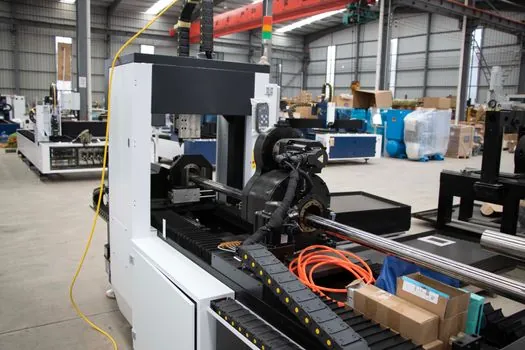
High-volume defense and firearm components run through thermoplastic injection molding because multi-cavity tools can produce thousands of identical parts per cycle with thousandth-of-an-inch dimensional repeatability; low-volume airframe, naval, and prototype parts run through CNC machining of engineering-plastic stock because lot size does not justify mould tooling and the parts need tighter individual control [S2][S3].
The process choice is a hard gate. Injection molding is the right answer for aftermarket and OEM firearm components (sights, grips, rails, buttstocks, magazine bodies) where production volume is in the thousands, where moulded-in ribs and bosses replace secondary machining, and where resin lot-to-lot consistency must be tightly controlled; American Plastics runs thirteen presses under an ISO 9001:2015 quality system specifically to cover this defence and aftermarket firearm workload [S3]. CNC machining is the right answer for low-volume or pre-production defense parts (aircraft interior brackets, naval valve seats, surveillance-housing prototypes, custom security equipment) where each part is unique, where the production run is too small to amortize mould tooling, and where a defense-approved supplier has to be able to trace each part to a bar of certified engineering-plastic stock; Nordic Polytech Group holds Swedish Inspectorate of Strategic Products (ISP) approval to manufacture and supply such components for defense and dual-use applications [S2]. Both paths converge on the same material menu, but the cost-per-part crossover, the inspection regime, and the documentation burden are different. A useful side reference is the marine-service version of this same engineering-plastic selection problem, where HDPE, UHMW, PTFE, and ABS dominate boat and dock duty: engineering plastic selection for marine service.
Environmental and compliance gates
Defense buyers add a second stack of gates that commodity OEM buyers do not have to clear: salt-spray and humidity resistance, exposure to cleaning solvents and propellants, ballistic and fragment-impact performance, and supply-chain compliance under national export-control regimes [S2][S3][S4].
Polymer firearm components pass the corrosion gate by construction, because salt spray, humidity, and cleaning solvents degrade metal finishes but leave engineering plastics intact, which is why molded polymer sights, grips, and housings are now standard rather than the exception in modern small-arms design [S3]. Compliance is the gate that disqualifies the most potential suppliers. Defense moulders need ISO 9001:2015 quality systems and an OEM-approved-supplier path; CNC machine shops need national export-control approval (ISP in Sweden, ITAR registration for U.S. defense articles, and equivalent regimes in other jurisdictions) and the ability to handle dual-use items alongside pure-military work [S2][S3]. A reference comparison of how the same engineering-plastic families are gated for hydrocarbon service is laid out in the oil-and-gas 2026 spec gate map; the property windows overlap with defense, but the test fluids and approval bodies differ.
Comparison: defense resin options on four decision axes

On a four-axis comparison of the main defense plastics, PEEK leads on continuous temperature and chemical resistance, costs the most, and is the only candidate for jet-fuel and hydraulic-fluid exposure above 150 °C; polycarbonate leads on impact and optical clarity, is the default for windows, sights, and transparent sensor covers, and processes easily in both injection molding and CNC machining; acetal/POM leads on dimensional stability and low moisture absorption, is the default for triggers, sears, magazine bodies, and precision sliding mechanisms, but is flammable and has poor UV resistance; PTFE leads on chemical resistance and coefficient of friction (about 0.05–0.10 against steel) for bearings and seals, but creeps under sustained load and is the worst of the group for mechanical strength; glass-filled nylon 6/66 is the lowest-cost structural choice for moulded-in metal-replacement housings, with tensile strength up to roughly 180 MPa, at the price of higher moisture pickup and mould-flow anisotropy [S1][S2][S3][S4].
Putting that on a single criteria table: resin, max continuous service temperature, density (g/cm³), tensile strength (MPa), best-fit defense application. PEEK, ~260 °C, ~1.32, ~90–100, hot hydraulic / jet-fuel / electrical. Polycarbonate, ~115–130 °C, ~1.20, ~55–75, transparent windows, sight housings, sensor covers. Acetal/POM, ~100 °C, ~1.41, ~60–70, triggers, sears, magazine bodies, sliding mechanisms. PTFE, ~260 °C, ~2.15, ~20–30, low-friction bearings, chemical seals, wire insulation. Glass-filled PA66, ~150–180 °C (with heat stabilizers), ~1.30–1.45, ~100–180, structural housings, brackets, rail-system components [S1][S2][S3][S4]. For a broader reference on the base engineering plastic property set behind this table, the encyclopedia entry is the standard starting point.
Where polymer substitution stops in defense
Realistic design rules to keep the engineering-plastic path intact: do not specify polymers in load paths that see direct flame impingement or chamber pressures without a thermal barrier; do not specify unfilled nylon or POM where dimensional stability in the presence of water is required and the part is moulded, because the moisture pickup shifts dimensions; do not specify PTFE for any load-bearing sliding interface under sustained load without a filler or a back-up metal structure, because the cold-flow behaviour will lose preload; and do not specify polycarbonate where flame, smoke, and toxicity (FST) is on the test card without the proper flame-retardant grade, because standard PC will not pass aircraft interior FST [S2][S3][S4]. Inside those limits, the same design rules that have already moved small-arms furniture, drone airframes, and naval interior hardware onto engineering plastics continue to apply to the next generation of soldier electronics, vehicle brackets, and sensor housings. The next trackable signal is the 2026 cycle of OEM defence-purchase specifications: watch for PAI (polyamide-imide) and PPSU grades appearing in new platform specs, and for tighter FST language on polycarbonate grades in aircraft interior call-outs.
For component-level specifications, see plastic pallet, and plastic pipe.