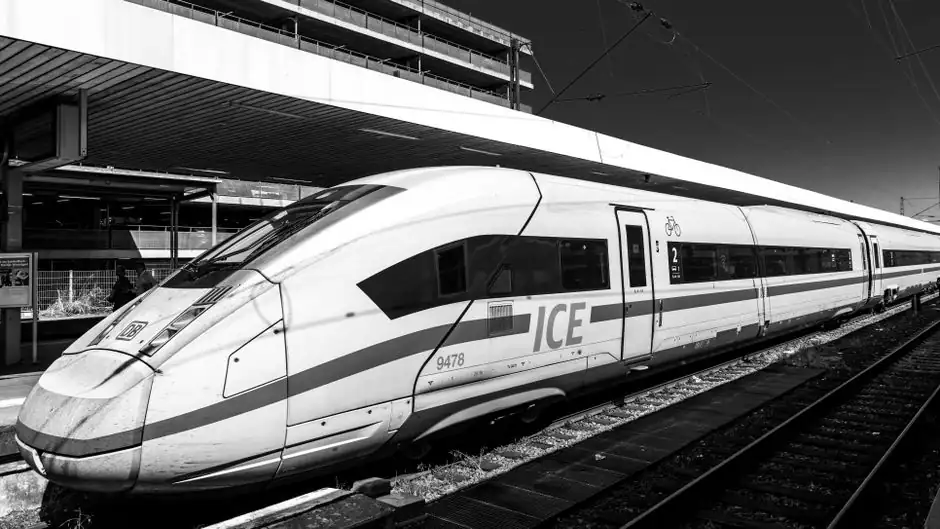
Rail-spec engineering plastics in 2026 are selected against three hard gates: EN 45545-2 hazard level (HL1 to HL3), continuous operating window of -40°C to +150°C across under-carriage and interior zones, and verified flame-retardant or low-smoke formulations of PA66, POM, LCP, PC/ABS and HNBR blends, per established rail OEM material portfolios [S2].
Volume-grade engineering plastics such as nylon, acetal and polycarbonate were developed as metal replacements by companies including E.I. du Pont de Nemours, and the substitution logic that launched the engineering plastics industry continues to extend metals-replacement applications across transportation and industrial sectors [S3].
EN 45545-2 Hazard Levels and Rail Zone Mapping
EN 45545-2 defines three hazard levels, HL1, HL2 and HL3, tied to vehicle category and operational environment, with HL3 reserved for sleeping cars and underground vehicles where the limiting oxygen index, smoke density (Ds,max) and toxic gas indices are tightest. Interior trim, seat shells and ceiling panels typically target HL3 with Ds,max under 300 in the ISO 5659-2 smoke chamber, while under-carriage and bogie covers can usually meet HL2 with the same resin family. [S3]
Specifying engineers should map every plastic part to its hazard level before choosing a grade, because a PA66 that passes HL2 ducting will not automatically pass HL3 ceiling applications. The LCP, modified PPO and FR-grade PC/ABS families in current rail material portfolios carry documented HL2-HL3 dossier data from the compounder, and the dossier (not the generic data sheet) is the document that should be cross-checked during incoming QA [S2].
Continuous Service Temperature Window: -40°C to +150°C
Under-carriage components on EMUs, high-speed trains and metros see a continuous service window that spans roughly -40°C in Nordic or alpine operations to +150°C near brake discs, exhaust paths and pantograph bay enclosures. POM (acetal) holds dimensional stability across most of that band but loses impact strength below -30°C, so low-temperature grades with modified impact copolymer are preferred for external door rollers and guide shoes. [S1]
PA66 GF30 (glass-filled nylon 66) extends the upper ceiling to roughly 150-180°C continuous and is widely used for connectors, cable glands and structural clips under the car body, with HNBR rubber compounds rated -65°C to +150°C specified for sealing elements that sit on the bogie interface [S2]. The temperature window rule of thumb is simple: pick the resin whose published continuous service temperature (UL 746B or ISO 2578) covers the worst-case operating point with at least 20°C margin, otherwise creep and heat-ageing data will quietly fail in service.
Wear, Friction and Load: PA66, POM and LCP
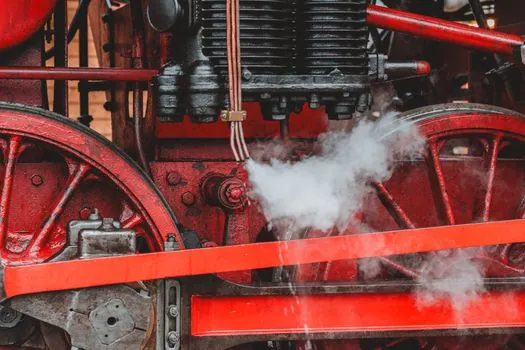
Door rollers, seat sliders, cable troughs and pantograph insulation bushes are the high-wear nodes on a rail car, and the typical 2026 spec map is PA66 for structural housings, POM (acetal homopolymer or copolymer) for unlubricated sliding elements with a coefficient of friction around 0.2-0.3 against steel, and LCP for thin-wall connectors and sensor bobbins that demand flow length above 100 mm at 0.4 mm wall [S2].
For bogie-side wear liners and coupler centring bushes, the industry pattern is PA66 with MoS2 or PTFE filler running against a steel counterface, with PV limit (pressure × velocity) generally capped near 0.1-0.2 MPa·m/s for dry running, which is the binding constraint when the resin choice is finalised. Glass- or carbon-fibre reinforcement raises the PV ceiling but also raises the contact pressure on the metal counterface, so the mating surface hardness needs to enter the calculation rather than just the plastic data sheet.
Flame, Smoke and Toxicity (FST) Requirements
Rail interior parts must satisfy EN 45545-2 R1 (interior) and R6 (passenger seat) test requirements, with Ds,max and the CIT (Conventional Index of Toxicity) values on the ISO 5659-2 chamber being the headline numbers for incoming batch verification. FR-grade PC/ABS blends, modified PPO and low-smoke halogen-free PA compounds are the workhorses in this slot, supplied with a documented HL2 or HL3 dossier that the compounder updates after every formulation change [S2].
For under-floor cable conduits and junction boxes, the same FST rules apply but with a relaxed HL2 ceiling, and PA66 or PBT with halogen-free FR packages is the standard call. A practical QA check is to confirm the lot's CIT number (typically below 0.75 for HL3 interior) is printed on the certificate, not just a generic 'meets EN 45545-2' claim, because generic claims are the first thing to fail in a supplier audit.
Comparison of the Main Resin Families Used in Rail
Across cost, temperature ceiling, wear performance and FST dossier availability, the five resin families rail buyers actually compare look like this in the 2026 market: PA66 (good temperature, moderate cost, broad HL2-HL3 dossier coverage, used in structural and connector parts); POM (excellent wear, narrow -30°C to +100°C sweet spot, limited FST grades, used in sliding parts); PC/ABS FR (good impact and FST performance, mid cost, dominant in interior trim); LCP (very high temperature and flow, premium cost, used in thin-wall connectors and sensor parts); and HNBR or EPDM rubber compounds (broad -40°C to +150°C sealing window, used in bogie and door seals) [S1][S2].
On the four-axis comparison (cost vs temperature vs wear vs FST), PA66 sits in the middle on every axis, PC/ABS FR leads on FST but lags on continuous temperature, POM leads on wear but is bounded by cold brittleness, LCP leads on temperature and flow but loses on raw cost, and HNBR leads only on sealing temperature window. Most rail OEM bills of materials therefore mix at least three of these five in any single car body, with PA66 and PC/ABS FR doing the structural and trim heavy lifting.
Engineering Plastic Selection for Adjacent Industrial Programs
The same resin selection logic that governs rail interiors also drives adjacent industrial programs, and cross-reading helps avoid repeated mistakes. The engineering plastic selection for automotive 2026 spec gates map covers the PA66 and PP compounds that overlap rail connector and interior parts, while the engineering plastic selection for oil and gas 2026 spec gates map is the reference for HNBR and PA66 grades rated to NACE-class environments on the bogie-adjacent hardware. [S1]
For under-floor cable management and palletised spare-part logistics, the pallet rack selection for pharmaceutical distribution spec gates and stack map reference explains how plastic pallets and rack loads interact in maintenance depots, and a broader primer on engineering plastic material families and industrial applications sits in the encyclopedia as the baseline read before any grade is locked in.
For component-level specifications, see plastic pallet, and plastic pipe.