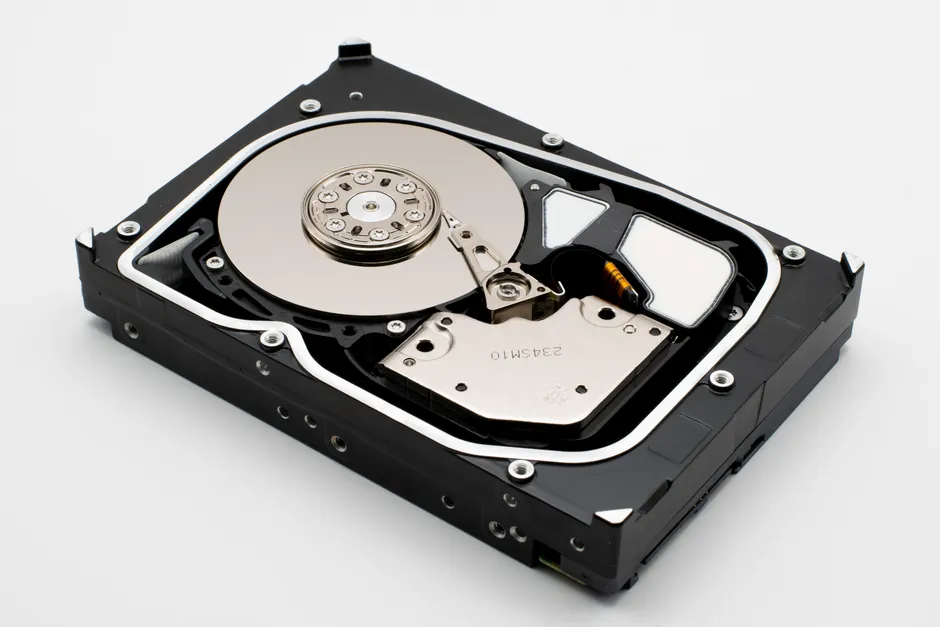
Enterprise nearline HDD capacity for calendar year 2026 is fully allocated across the Big Three, with Seagate CEO Dave Mosley confirming that the company's nearline output is committed through year-end and some long-term agreements with Western Digital's top seven customers already extending into 2027 and 2028 [S2][S7].
The squeeze shows up in three independent measures: TrendForce's late-2025 read put nearline lead times at over 52 weeks, Tom Coughlin's 2026 update logged HDD average selling prices roughly 25% above late-1998 levels, and street prices for ordinary enterprise drives climbed by approximately half over a few months in early 2026 [S2][S4]. Roughly 363 exabytes of the 2,017 EB of HDD capacity forecast to ship in 2026, or about 18%, is demand attributable specifically to AI infrastructure; that share is projected to rise to 43% by 2028 and 58% by 2030 [S2].
Capacity Race to 100TB: Where the Big Three Stand
The three remaining HDD vendors are converging on the same 100TB target from different recording technologies, with helium-filled 3.5-inch platforms common across all roadmaps. Seagate is shipping 44TB HAMR Mozaic 4+ drives in volume to two hyperscale customers as of March 2026, with the Mozaic 4+ platform packing 4.4TB per platter on ten platters using granular iron-platinum superlattice media [S2].
Western Digital is in qualification on 40TB UltraSMR, and Toshiba is offering 30-34TB models, while the Seagate roadmap points to Mozaic 5 at 5TB per platter qualifying in late 2027 or early 2028, a 6TB-per-platter tier following that, and a 10TB-per-platter lab milestone expected by 2028 [S2]. A separate $3.2B R&D commitment underwrites Seagate's stated 100TB-by-2030 goal, and Seagate completed the acquisition of Intevac for $119 million in March 2025, securing the Intevac 200 Lean sputtering equipment used in at least 65% of the world's HAMR platter production lines [S2][S3]. The same helium-plus-HAMR curve is what lets a 3.5-inch enterprise enclosure now ship in 30TB-and-over trim from Seagate's catalog, with 12 Gb/s SAS and SATA 6 Gb/s as the dominant host interfaces [S5].
Supply Chain Map: Twelve Countries, Three Irreplaceable Bottlenecks
A modern enterprise HDD is a palm-sized assembly of rare-earth magnets, ultra-smooth glass platters, nanometer-scale heads, and a helium-sealed enclosure, with every major component traced to a different region of the world [S4]. The three concentration risks that define the 2026 supply picture are read/write heads, helium-filled media sputtering lines, and the precision spindle and voice-coil motor stack, each of which leans on a handful of effectively irreplaceable suppliers in Japan, Ireland, and Southeast Asia [S4].
Coughlin's 2024-to-2029 forecast puts total shipped HDD capacity rising from roughly 1.2 zettabytes in 2024 to more than 7 zettabytes by 2029, while the Q1 2026 HDD Capacity Tracker from Trendfocus projects shipped capacity for that quarter alone above 410 exabytes [S3][S4]. The same global assembly depth that keeps HDD unit cost low in normal years is what turns a 52-week lead time into a multi-year allocation when one node chokes, because there is no second source of comparable scale for the HAMR sputtering toolset or the granular iron-platinum media line [S2][S4].
HAMR vs UltraSMR vs Conventional CMR: A Criteria Comparison
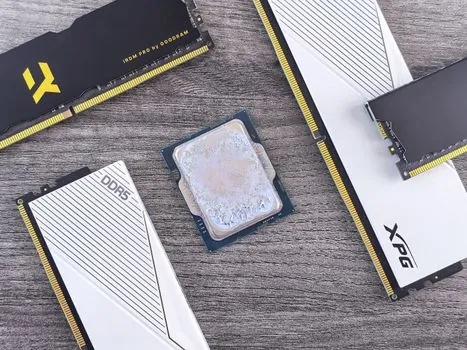
For a buyer selecting an enterprise nearline drive in October 2026, the three competing recording technologies line up against four decision criteria that can be checked at a glance. Areal density and roadmap headroom: HAMR leads, with Seagate Mozaic 4+ at 4.4TB per platter shipping now and 5TB per platter targeted for late 2027 or early 2028 qualification, versus UltraSMR and conventional CMR which inherit PMR and SMR density limits that cap practical single-drive capacity below HAMR's 44TB shipping point [S2].
Host-system compatibility: UltraSMR and CMR drives slot into existing SAS and SATA backplanes with no host change, while HAMR drives ship in the same 3.5-inch SAS or SATA form factor but require firmware-aware management stacks to fully exploit the granular iron-platinum media [S2][S5]. Power and density per rack: helium-filled HAMR and UltraSMR platforms both lower turbulence, with the helium fill (about one-seventh the density of air) enabling thinner platters and lower drag, and the actual drive SKU in Seagate's enterprise catalog at 30TB and over sits in the 3.5-inch 7,200 RPM class on 12 Gb/s SAS or SATA 6 Gb/s [S4][S5]. Supply security and lead time: all three technologies are effectively sold out through 2026, so the choice is not about availability, it is about which vendor can honour a 2027 or 2028 commitment first, with Seagate and Western Digital holding firm purchase orders from their top seven customers already in that window [S2][S4].
Who This Allocation Is For, and Who It Is Not For
Enterprise nearline HDDs at 30TB and above in 2026 are specified for hyperscale cloud providers, AI training data lakes, and large object stores where total cost per terabyte dominates the decision, because the roughly 25% ASP step-up versus 2024 is amortised across a much higher capacity point [S2][S3]. They are not the right fit for low-latency active datasets, where QLC NAND SSDs relieve the pressure by keeping hot data close to the GPUs, with flash and HDDs occupying different layers of the same AI storage stack rather than acting as direct substitutes [S2].
The allocation is also not for organisations that need small volumes in the next 6-12 months: the channel reality is that lead times for enterprise drives have stretched toward two years, meaning a buyer ordering today in the open market should plan for 2027 delivery, and committed capacity goes to the largest customers with multi-year purchase agreements, leaving integrators and mid-sized data centres to either accept the roughly half price step or defer projects [S2][S4][S7]. Engineers planning new power supply and industrial UPS builds around hard-drive-dense racks should also factor that lead time into commissioning dates, because a 1-2 year delivery slip on the storage tier pushes the whole rack handover out by the same window.
Nearline Unit Volume and ASP Trend
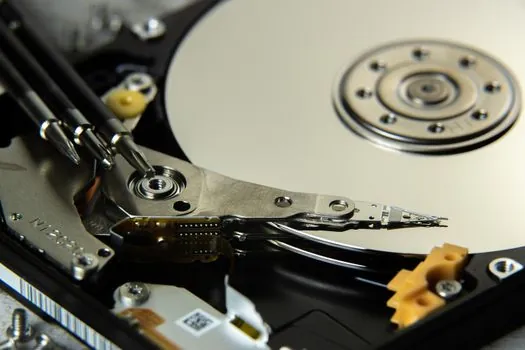
Nearline HDD shipments exceeded 140 million units in 2024, with average capacities rising from 12TB in 2021 to over 18TB in 2025, a capacity gain associated with the industry's shift to helium-filled designs [S6]. The Trendfocus Q1 2026 tracker extends that curve by projecting quarterly shipped capacity above 410 exabytes for the first quarter alone, and Q1 2025 already came in at 361.4 exabytes shipped on 29.7 million drives, with shipments rebounding 6% quarter-over-quarter from Q1 to Q2 2025 and HDD supplier revenue of $5.24 billion in that quarter [S3].
Seagate's fiscal Q1 2026 revenue rose 21% year-on-year, Western Digital's rose 27%, and Western Digital's enterprise nearline revenue alone hit $1.9 billion in a single quarter, up 24% year-on-year, confirming that the volume is real and the pricing is sticky rather than a panic spike [S2][S3]. For engineers, the relevant working numbers are a 12-18 TB average mainstream point in 2024-2025, 30-44 TB at the top shipping point in 2026, and a 50-100 TB corridor expected by 2028-2030, with the supply chain concentration risk unchanged across that whole curve [S2][S4][S6]. A related cost-side signal worth watching for cross-industry planning is how regional stock and offshore lead times for adjacent components are tracking: see engineering plastic compound lead times October 2026 for the same kind of allocation pressure on a different commodity.
Standards, Specifications, and the Sourcing Trail
No single IEC or ISO standard governs HDD interoperability at the level buyers care about in 2026: the relevant references are the SAS-4 (24 Gb/s) and SATA 3.5 (6 Gb/s) interface specs, the SFF-8301 3.5-inch form-factor standard, and vendor-managed recording technologies like Seagate's Mozaic HAMR and Western Digital's UltraSMR, each documented in vendor datasheets rather than in a single industry-wide document [S2][S5]. Buyers should therefore anchor specifications to vendor part numbers and platform documentation, not to a generic industry standard.
The verifiability trail for the supply facts above is the Q1 2026 Trendfocus HDD Capacity Tracker, Tom Coughlin's 2026 industry update, TrendForce's late-2025 lead-time read, and the Seagate fiscal Q1 2026 and Western Digital Q1 2026 earnings prints, with Fusion Worldwide's March 2026 piece flagging the bottleneck, Horizon Technology's June 2026 capacity-race piece documenting the 44TB HAMR shipping point, and IndustryResearch.biz's April 2026 nearline market report pinning the 140-million-unit 2024 shipment number [S1][S2][S3][S4][S6][S7].
Watch two signals over the next two quarters: first, whether the Seagate Mozaic 5 5TB-per-platter qualification slips out of its late-2027-to-early-2028 window, because any slippage pulls the 50TB-plus tier right by the same amount, and second, whether QLC NAND SSD pricing relaxes enough to let hyperscalers re-tier data from nearline HDD back to flash for the warm tier, which would free incremental HDD capacity for the bulk-tier buyers currently sitting at the back of the 52-week queue [S2][S4].
The underlying component specifications are covered under dc power supply.