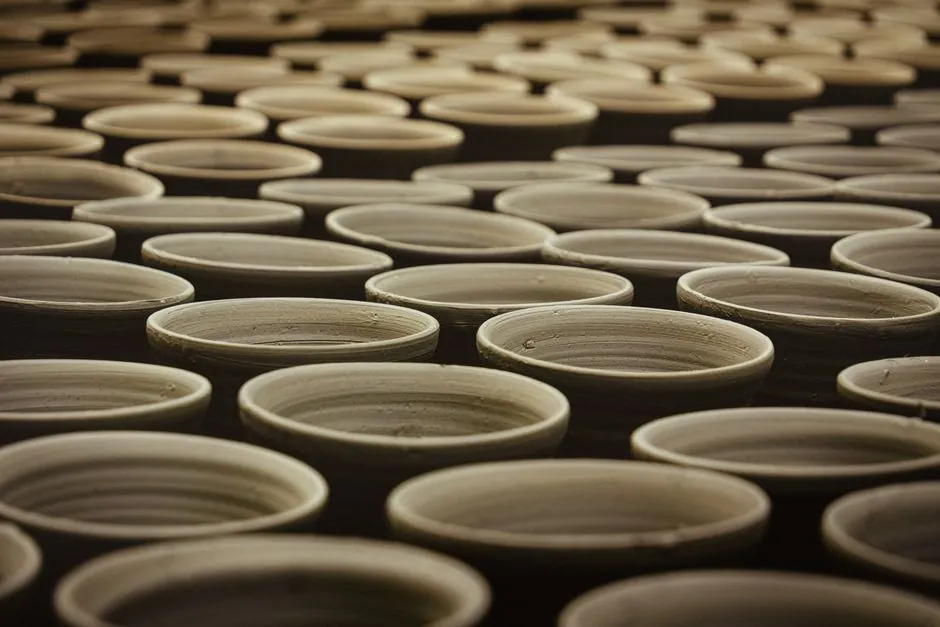
Sinto Advanced Ceramics Europe GmbH added aluminum nitride (AlN) and silicon nitride (Si3N4) to its additive manufacturing materials portfolio in early October 2026, joining an existing line of high-purity oxide ceramics that already included alumina, zirconia, alumina-toughened zirconia (ATZ), and zirconia-toughened alumina (ZTA) [S2].
The first publicly shown parts in the new materials appeared at ESA Industry Space Days 2026: AlN sleeves, a Si3N4 hold-down component, and an AlN heat exchanger, with both materials now offered for development projects, prototypes, and industrial applications [S2]. The expansion reflects a broader shift in the engineering ceramic supply picture in 2026, where non-oxide feedstocks are moving from research curiosities to catalogue items for serial production.
The four structural families engineers actually quote
Among ceramic 3D printing materials, four structural families do the bulk of engineering selection work: alumina, zirconia, silicon nitride, and silicon carbide, each answering a different design question around hardness, fracture toughness, temperature, and printability [S1]. The honest baseline is that ceramics fracture rather than yield, so design is flaw management: strength is statistical, surface condition moves it, and generous radii plus proof-tested coupons are the load path itself [S1].
Five property axes do most of the selection sorting: hardness, fracture toughness, temperature capability, thermal behaviour, and electrical character [S1]. Thermal conductivity alone spans a huge range across the families; some ceramics insulate, while AlN conducts heat better than many metals, with values above 170 W/mK against alumina's much lower conductivity [S5]. Engineers comparing silicon nitride against alumina ceramic and zirconia ceramic should weight the axes their service environment actually loads.
Alumina: the workhorse grade and where it loses
Alumina is usually the first quote: hard, stiff, chemically stable, an excellent electrical insulator, and the most economical of the four families, the material behind insulators, wear parts, labware, and substrates everywhere [S1]. Purity grades matter in practice: 99%+ grades trade cost for cleaner chemistry, higher temperature capability, and better dielectric behaviour, while 92 to 96% grades serve general wear and insulation economically [S1].
On printability, lithography-based ceramic manufacturing has demonstrated printed alumina at over 99% of theoretical density, with four-point bending strength around 427 MPa, property territory comparable to conventionally formed material [S1]. The trade-off is well known: alumina's hardness makes grinding fired parts costly, so near-net green-state or as-fired geometry is especially valuable, and the family falls short of silicon nitride on thermal shock resistance and fracture toughness [S4]. Alumina's electrical insulation strength (>1×10^12 Ω·cm class) keeps it dominant in substrate and packaging roles, while for high-power electronics the thermal bottleneck pushes designers toward AlN instead.
Zirconia: the tough one, with a temperature ceiling
Zirconia is attractive for one headline reason: transformation toughening, where stabilized tetragonal grains expand under crack-tip stress and squeeze the crack closed, giving zirconia the highest fracture toughness and bending strength among monolithic ceramics [S1][S3]. That mechanism is the reason zirconia dominates dental and medical applications, and the reason it shows up where alumina would chip [S4].
The catch is thermal: zirconia's toughening degrades as temperature rises and the tetragonal-to-monoclinic transformation becomes less favourable, so it is generally a room-temperature-or-moderate-temperature material. International Syalons offers multiple zirconia grades to suit specific demanding applications, ranging from biomedical to industrial wear, with the family widely described as the toughest monolith ceramic at room temperature [S3]. Engineers who need both toughness and a temperature ceiling above roughly 800 to 1000°C should look past zirconia toward Si3N4 or SiC, and a silicon nitride data sheet is the right next stop.
Silicon nitride: where thermal shock and strength meet
Silicon nitride retains useful strength at temperatures where alumina and zirconia have already dropped off, with International Syalons publishing a service envelope up to 1450°C in air for Si3N4 and SiAlON grades, and Graf Hartmetall citing strength retention beyond 1000°C in general industrial framing [S3][S4]. The combination of high strength, fracture toughness well above alumina, low density relative to most ceramics, and chemical resistance is what puts Si3N4 into turbine engines, bearings, and molten-metal handling hardware [S3][S4].
Sinto's October 2026 portfolio addition underlines the same profile: Si3N4 is being offered explicitly for "high mechanical strength, good fracture toughness, and strong resistance to repeated temperature changes," with SiAlON variants (where Al and O partially replace Si and N) trading some of that thermal envelope for improved chemical resistance [S2]. On the supply side, silicon carbide remains harder and better in extreme wear, but Si3N4 beats SiC on fracture toughness and impact resilience, so for thermal cycling plus mechanical load Si3N4 is the cleaner choice [S4].
Aluminum nitride: the thermal-management outlier

Aluminum nitride fills a different gap from the three structural families: it combines electrical insulation with thermal conductivity above 170 W/mK, roughly 5 to 10 times the conductivity of an alumina substrate, with a coefficient of thermal expansion in the 4 to 6×10^-6 K^-1 band (20 to 1000°C) that matches semiconductor silicon [S5]. That combination is what makes AlN the substrate of choice for high-density hybrid circuits, microwave power devices, semiconductor power modules, and IGBT packages, where beryllium oxide's similar conductivity is gated out by toxicity and cost [S5].
Sinto's October 2026 addition of AlN to its AM portfolio, with AlN sleeves and an AlN heat exchanger on display at ESA Industry Space Days 2026, marks the first time a major European ceramic AM shop has offered the material alongside its oxide range [S2]. For an engineer picking between engineering plastic substrates, alumina, and AlN on a power-electronics build, the decision almost always comes down to whether the thermal budget can be met at alumina's conductivity, and if not, AlN is the next rung up before moving to BeO or metal-core PCBs [S5].
Criteria-based comparison: how the four families line up
For an engineer weighing the four, a four-axis comparison sorts them quickly. On hardness and wear: SiC leads, followed by alumina, then zirconia and Si3N4 roughly tied [S1][S4]. On fracture toughness and impact resilience: zirconia leads via transformation toughening, Si3N4 next, then SiC, with alumina last [S3][S4]. On temperature capability in air: Si3N4 and SiAlON extend to roughly 1450°C, SiC runs hotter, alumina is solid to the 1500 to 1700°C range in pure grades, and zirconia is the most temperature-limited of the four [S3][S1]. On thermal conductivity: AlN exceeds 170 W/mK, SiC is also high, Si3N4 is moderate, and alumina is the insulator of the group [S5][S1].
Cost and availability still sort the same way they did a decade ago: alumina is the cheapest and most widely stocked grade, zirconia sits a step up, Si3N4 and SiAlON are specialty pricing, and AlN is the priciest of the four, driven by sintering difficulty and purity demands [S1][S3][S5]. For most wear-and-insulation jobs alumina remains the default; for toughness at moderate temperature zirconia wins; for thermal shock plus strength Si3N4 is the cleaner answer; for heat-spreading on a power-electronics package, AlN is the only one of the four that solves the problem. Process control through the full debind-and-sinter chain is what Sinto's R&D head Malte Hartmann flagged as the real gating factor for moving any of these from a powder datasheet to a serial part [S2].
Supply signal and what to track next

The October 2026 addition of AlN and Si3N4 to a major European AM catalogue is the cleanest supply signal in the engineering ceramic market this quarter, and the ESA Industry Space Days 2026 parts suggest space-grade applications are an early beachhead [S2]. Watch for two follow-on signals: first, whether the AlN and Si3N4 process chains at Sinto and competitors reach ISO 9001 / AS9100 aerospace-qualified production volumes, since that is what unlocks serial aerospace and semiconductor-fab orders; second, whether the AlN HTCC and AMB substrate pricing, including the AlN electrostatic chuck and IGBT substrate product lines already shipping from Asian suppliers [S5], tightens as European and US demand absorbs more of the available sinter capacity. Engineers specifying on Q1 2027 builds should request a current Si3N4 and AlN shrinkage and distortion datasheet from any new AM supplier, since debinding and sintering shrinkage is what determines whether a printed ceramic actually meets drawing tolerance, and that is the variable most likely to slip versus powder-only claims [S2].
For related coverage, see Automatic Molding Line Cycle Rate vs Manual Lines: Molds-per-Hour Data and Cost Impact.