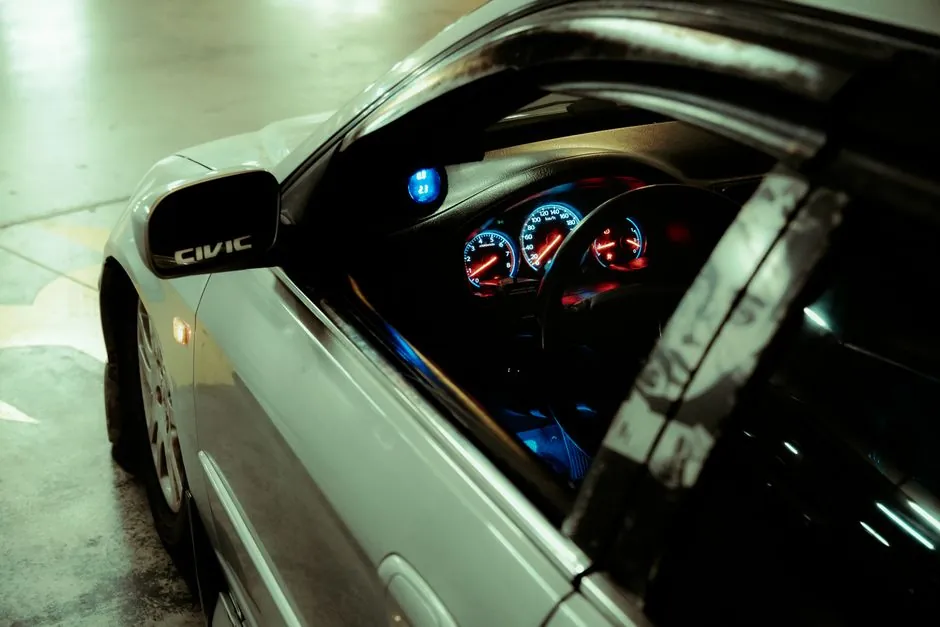
EPDM (Ethylene Propylene Diene Monomer) is the dominant elastomer for automotive sealing systems, spanning door weatherstrips, glass run channels, trunk and hood seals, and the EV-era coolant and battery-enclosure gaskets now reaching +130 °C and above [S3]. Specification pivots on saturated-backbone ozone resistance, ENB-controlled cure kinetics, and the EV transition's elimination of legacy oil/fuel exclusion zones [S3].
A production-grade automotive EPDM compound is built from solid EPDM with high ENB and 55-70 phr ethylene, carbon black (N550/N774), silica, silane coupling agent, ZnO plus stearic acid, antioxidants (RD/MB), accelerators (DM/NS/TAIC), and DCP peroxide, with sulfur as an optional hybrid-cure partner [S3]. Compared with NBR, EPDM is the wrong choice anywhere petroleum or fuel contacts the seal, but the right choice anywhere sunlight, ozone, steam, or glycol coolant does [S4].
Why the Saturated Backbone Sets the Selection Boundary
EPDM is a terpolymer of ethylene, propylene, and a non-conjugated diene, most commonly ENB (5-ethylidene-2-norbornene), with unsaturation confined to the diene side chain so the main chain remains fully saturated [S3]. Because ozone attacks unsaturation preferentially, the saturated backbone is inherently resistant to ozone-induced cracking, the dominant failure mode that destroys NR, SBR, and CR seals in exterior service [S3].
That same chemistry defines the upper temperature window: EPDM compounds are commonly rated for approximately -50 to +150 °C steady-state service, with broader cycling tolerated when the diene and accelerator package are tuned for the application [S1]. For a deeper material primer, see the EPDM rubber reference and the broader industrial rubber context. The trade-off is mechanical: EPDM shows relatively poor dynamic fatigue resistance, wear resistance, and tensile strength under repeated stress, so it is rarely specified for high-dynamic sealing scenarios where CR or HNBR would survive longer [S3].
ENB Content and Ethylene Ratio: The Two Compound Levers
ENB content is the primary cure-rate lever: 8-10 wt% ENB gives faster vulcanization and higher crosslink density, while 3-5 wt% ENB cures slower but delivers better heat aging [S3]. Ethylene content at 55-70 wt% controls crystallinity: higher ethylene improves tensile strength and low-temperature performance but raises hardness and raises the glass-transition temperature, which can bite back in cold-climate door-seal flexibility [S3].
Compression set (CS) is the single most critical long-term sealing parameter, and the crosslink network type dominates CS behavior more than the base polymer does [S3]. A peroxide (DCP) cure typically yields better heat aging and lower compression set than a sulfur-only cure, which is why automotive under-hood and coolant-radiator gasket compounds lean heavily on peroxide or hybrid cure systems [S3]. For procurement specs, the compound line item should call out ENB wt%, ethylene/propylene ratio, CS target at the rated temperature (typically 25% max after 70 h at 100 °C for weatherstrip service), and ASTM D2000 line-callout with ISO 1629 classification [S1].
Material Comparison: EPDM vs NBR vs TPV vs Silicone for Auto Seals
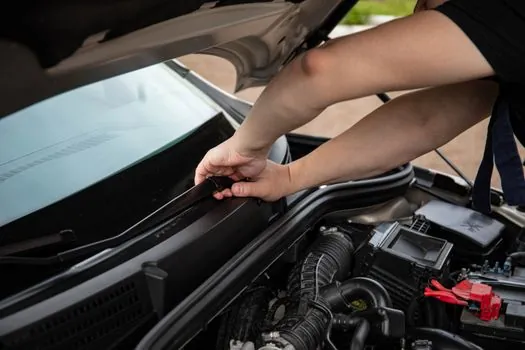
Selection in practice is a four-way decision. NBR handles oil, fuel, grease, and hydraulic fluid (excellent oil/fuel resistance, limited UV/ozone, low steam resistance) and is the default for fuel-system and hydraulic seals [S4]. EPDM handles UV, ozone, steam, water, and glycol coolants (poor oil/fuel resistance, excellent weather/steam, broad thermal range) and is the default for door, window, trunk, and EV thermal seals [S4].
TPV (thermoplastic vulcanizate) is a dynamically vulcanized elastomer that processes like a thermoplastic and skips the cure stage, which shortens cycle time and improves recyclability, but raw TPV compound cost is typically higher than EPDM [S2]. High-temperature silicone spans roughly -60 to +230 °C and tolerates engine-bay radiant heat, but it is a different cost stack and is not the default weatherstrip material [S1]. Engineers comparing EPDM vs TPV for sealing typically find TPV preferred where recyclability and injection cycle time matter most, and EPDM preferred where long-term weather and compression-set performance dominate [S2]. For an NBR-side view of the same decision, the NBR selection for energy equipment: ACN, hardness and service band reference lays out the oil/fuel-side criteria.
EV Thermal Management: -40 to +130 °C Cycling and Glycol Compatibility
EV adoption is pushing EPDM into a new operating envelope, with battery-enclosure and coolant-loop seals seeing wide temperature cycling (commonly -40 to +130 °C and above) and direct contact with glycol-based coolants [S3]. The EV transition actually expands EPDM's addressable application set, because the loss of engine oil and fuel contact zones removes the historical exclusion criteria that kept EPDM out of powertrain sealing [S3].
The flip side is that outgassing, formerly a minor concern, now matters for HV connector and battery-enclosure seals where condensables can plate on electronics or optics [S3]. Specification should call out the coolant formulation (OAT vs HOAT vs traditional silicate), the peak sustained temperature, and the CS target at that temperature, not a generic "automotive-grade EPDM" line [S3]. Production lines also need to absorb more EPDM-intensive subassemblies, so equipment pairing matters; the slewing bearing selection for automotive production lines reference covers the rotating-fixture side of the same factory footprint.
Processing Routes: Injection vs Compression vs Transfer Molding
EPDM is a traditional rubber that requires curing, so it cannot skip the vulcanization step the way TPV can, and the choice of molding process has a direct effect on cycle time, flash, and unit cost [S2]. Injection molding of EPDM suits high-volume weatherstrip and gasket runs, with tighter dimensional control and less flash than compression molding, but tooling cost is higher [S6].
Compression molding is the legacy workhorse for lower-volume or larger-cross-section EPDM parts, while transfer molding is the middle path used where insert loading or geometry prevents clean compression molding [S6]. For an EPDM-to-silicone or EPDM-to-CR crossover view on molding, the silicone rubber reference and the plastic-rubber hybrid entry cover the adjacent material families. Whichever route is selected, the cure schedule (time, temperature, press tonnage) must be matched to the ENB content and accelerator package to hit the target CS and tensile set [S3].
Where EPDM Is the Wrong Choice
EPDM is explicitly not recommended for petroleum-based environments, fuel systems, hydraulic oil contact, and grease-exposed service, where NBR, HNBR, or FKM (Viton) should be specified instead [S4]. A common industrial failure mode is using EPDM in an oil-contaminated environment; the polymer swells, loses mechanical integrity, and leaks well before its rated service life [S4].
EPDM is also a poor choice for high-dynamic, high-wear sealing interfaces such as reciprocating rod seals under high side load, where its fatigue and wear resistance trail CR, HNBR, and polyurethane [S3]. Selection should always start from the fluid-exposure list, the temperature window, the UV/ozone exposure, and the dynamic-duty cycle, in that order, before the material is locked in. The nitrile rubber reference documents the oil/fuel-side alternative, and the additive manufacturing material entry covers the rapid-prototyping path for elastomeric gasket geometry.
Track the next revision of ASTM D2000 line-callouts for EPDM under-hood grades, the move to low-outgassing EPDM formulations for HV battery enclosures, and OEM decisions on TPV retrofit for weatherstrip subassemblies where recyclability targets are binding.