EPDM is the most widely specified elastomer for outdoor construction sealing, with a typical operating range of -50°C to +150°C and a saturated polymer backbone that resists UV, ozone, and weathering [S1][S2].
For roofing membranes, window and door gaskets, expansion joints, and HVAC weatherstripping, EPDM outperforms nitrile, neoprene, and silicone on cost while delivering comparable or better weatherability in non-oil service [S4][S5]. The core engineering task is matching grade (ENB type, ethylene content, durometer) to climate band, joint movement, and the chemical environment it will actually see on site.
Why the Polymer Backbone Drives Construction Suitability
EPDM's saturated main chain contains very few double bonds, which is the molecular reason it survives years of UV and ozone exposure without the surface cracking that plagues natural rubber and standard NBR [S1][S3]. EPDM compounds can be formulated to comply with ASTM D2000 line-callout specs and ISO 1629 classification, which is the procurement-grade language engineers need for OEM and contractor submittals [S1].
Two structural variables control field performance. Ethylene content drives tensile strength and low-temperature flexibility: higher ethylene raises hardness and lowers cold-flex, while lower ethylene improves low-temperature brittleness resistance. The diene term (commonly ENB, ethylidene norbornene) controls cure rate and is what makes the rubber sulphur-vulcanisable; EPDM grades are often classified as ENB-fast, ENB-slow, or DCPD-type based on the diene monomer used. Specifying these variables, not just "EPDM 70 Shore A", is the difference between a gasket that lasts 20 years and one that tears at the corner during the first cold snap.
Material Comparison: EPDM vs NBR vs Silicone vs Santoprene TPV
The decision matrix for construction gaskets lines up across four axes: weather/UV, temperature span, oil resistance, and unit cost. EPDM wins the first axis, loses the third, sits in the middle on temperature, and is the lowest-cost option of the three thermoset rubbers [S2][S3][S4].
Side-by-side on the criteria that matter most on a construction site:
- EPDM: UV/ozone excellent, water excellent, oil/fuel poor, service range roughly -50°C to +150°C, lowest cost among the three thermoset rubbers [S1][S2][S4].<br>- NBR (Nitrile, Buna-N): UV/ozone limited, water moderate, oil/fuel excellent (proportional to acrylonitrile content), service range narrower at the low end, comparable or higher cost than EPDM [S3][S4].<br>- Silicone: UV/ozone excellent, water good, oil/fuel good, service range -80°F to 450°F (-62°C to ~232°C), highest cost [S2].<br>- Santoprene TPV (vulcanised EPDM particles in a polypropylene matrix): weather/UV comparable to EPDM, recyclable, processes on thermoplastic equipment for faster cycle time and co-moulding with rigid plastics, but historically priced above commodity EPDM [S5].
For most exterior building-envelope applications, the EPDM-vs-silicone call is settled by budget and continuous high-temperature exposure; EPDM caps out around 150°C while silicone keeps flexibility past 200°C, and silicone is normally 2-3x the unit price [S2]. For projects that need oil resistance in any quantity (mechanical-room floors, parking-deck expansion joints above service bays, rooftop equipment curbs with grease drip), NBR is the only defensible choice; EPDM in petroleum service swells and loses seal load within months [S3][S4].
Construction Applications and Matching Grade

Roofing membranes are the single largest EPDM construction use case and have been for decades; the material's UV, ozone, and steam resistance is exactly what a single-ply exposed membrane needs [S1][S5]. Window and door gaskets, curtain-wall glazing wedges, and expansion-joint profiles are the next tier, where the -50°C low-end flexibility keeps seals compliant through freeze-thaw cycles without losing compression set [S1][S2].
HVAC and electrical-enclosure seals round out the construction use list: EPDM handles steam, hot water, and the polar fluids (glycol, alcohols, ketones) that show up in chilled-water and refrigerant service, while standard NBR does not [S3][S4]. For selection of automotive EPDM grades (radiator hose, weatherstrip, EV coolant loop), see the related spec map at EPDM Rubber Selection for Automotive Manufacturing.
Selection Criteria Engineers Should Lock Down Before Ordering
Durometer (Shore A), tensile, elongation, and compression set are the four mechanical numbers to put on the data sheet. For most construction gaskets, 60-70 Shore A is the working band; drop to 50-60 for large-movement expansion joints and climb to 70-80 for glazing wedges that need high clamp load [S1].
On the chemistry side, confirm three things in writing from the compounder: (1) ENB level or diene type, because this controls cure rate and therefore mould cycle time; (2) ethylene/propylene ratio, because it sets low-temperature flexibility and hardness; (3) carbon-black loading and any plasticiser migration notes, since oil-based plasticisers can bleed onto adjacent porous substrates like concrete or natural-stone cladding. For potable-water or plumbing-penetration seals, insist on WRAS, NSF/ANSI 61, or local-equivalent certification, and for roofing membranes request the ASTM D4637 or D4811 line-callout references in the submittal.
Failure Modes and Constraints to Build Into the Risk Register
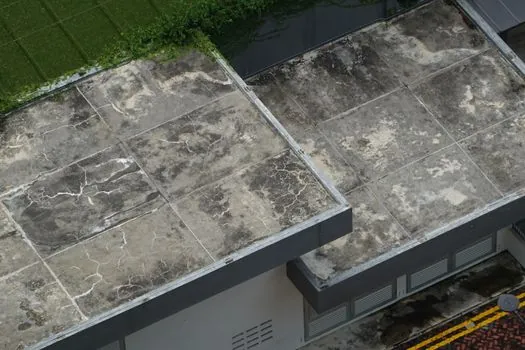
The single most common field failure in construction EPDM is chemical incompatibility, not weathering. EPDM swells and softens in petroleum oils, gasoline, diesel, and most hydrocarbon solvents; in those services it must be replaced with NBR or FKM [S3][S4]. The second is sustained high-temperature creep above 150°C in dark-coloured profiles (roof parapet, south-façade glazing), which can push the polymer past its upper service limit; silicone is the substitute there [S2].
Mechanical failure modes are equally predictable. Compression set beyond 25-30% means the gasket has taken a permanent set and lost seal load, typically after years of clamped service; specifying a low-compression-set EPDM grade (or a foam-EPDM profile with a denser skin) is the mitigation. Tear propagation at corners and notches is a design issue, not a material issue; the cure is generous corner radii and avoiding sharp edges in the retainer groove. For waterproofing under mechanical equipment that vibrates, pair EPDM with proper isolation and verify that any adhesives or mastics used are silicone-compatible, because many construction sealants are silicone-based and the bond line is the actual leak path.
Standards, Documentation, and Procurement Checklist
For submittals, reference ASTM D2000 (line-callout system for rubber products), ISO 1629 (elastomer nomenclature and classification), and ASTM D4637 / D4811 for EPDM sheet and single-ply roofing membrane, and require the compounder to supply a lot-traceable certificate of analysis with durometer, tensile, elongation, and specific gravity [S1]. For potable-water service, the third-party certification (WRAS, NSF/ANSI 61, KTW) must be on the submittal, not promised later. For more on the elastomer families and where EPDM sits in the broader rubber landscape, see the industrial rubber and EPDM rubber reference pages.
Trackable signals to watch over the next procurement cycle: whether the project specifies a UL 94-listed flame-retardant EPDM grade (increasingly required on interior curtain-wall and HVAC gaskets under the 2024 IBC fire-provisions amendments), and whether the compounder confirms ENB-fast grade availability against your mould-cycle target, since the global EPDM supply has tightened twice in the last 18 months and fast-cure ENB lots carry the longest lead time.
Component reference pages worth checking: construction tools.