
Liquid epoxy resin (LER) and bisphenol-A diglycidyl ether (DGEBA) supply chains are entering H2 2026 with feedstock-side friction concentrated in chlorine specification, not headline monomer output, as downstream buyers chase verifiable saponifiable and total chlorine numbers per ISO 21627-2 and ISO 21627-3 [S1][S3].
The 2026 backdrop combines ISO/TC 61/SC 12 standards confirmed in their 2025 systematic review [S1], regional petrochemical stress around Braskem and US tariff exposure under Section 232 and Section 301 [S2], and a Chinese export base turning out reference grades such as E-54 (826) at industrial scale [S4]. For purchasing teams, the binding constraint is no longer resin tonnage but the chlorine envelope of the chosen grade and its proof documentation.
Chlorine spec framework: what ISO 21627-2 and -3 actually measure
BS EN ISO 21627-2:2003 covers easily saponifiable chlorine, while ISO 21627-3:2009 (Edition 2, 6 pages, CHF 44) defines total chlorine as the sum of saponifiable organic chlorine and inorganic chlorine, published 2009-09-08 and confirmed 2025-06-30 in its most recent systematic review [S1][S3]. Both methods sit under ISO/TC 61/SC 12, ICS 83.080.10, and are the cited test basis when a datasheet quotes a parts-per-million or weight-percent chlorine limit [S1].
The distinction matters in coating, electrical laminate, and adhesive grades because saponifiable chlorine correlates with epichlorohydrin residue and reactive side-products that drive viscosity drift and corrosion on copper, while inorganic chloride drives ionic conductivity and water-treeing risk in insulation systems. Procurement specifications typically dual-call both methods rather than relying on a single number, since total minus saponifiable flags inorganic contamination that survives cure and shows up in humid-aged dielectric testing.
Feedstock chain pressure in 2026: petchem stress, not resin scarcity
The dominant 2026 upstream signal is not a global epoxy shortage but a petrochemical-chain squeeze concentrated in the Americas, where Braskem's court-granted 60-day payment suspension, S&P's downgrade to 'D', and Fitch's downgrade to 'C' have pushed PE buyers in Brazil to qualify alternative suppliers as a precaution [S2]. Braskem Idesa is separately weighing a Chapter 11 filing in the US after restructuring talks with bondholders broke down, and a new CEO, Gustavo Sergi, has been installed to lead the unit through the crisis [S2].
The parallel trade channel matters because US Section 232 (steel, aluminum, autos, furniture) and Section 301 (wood, plastics, footwear) tariff exposure has triggered Brazil's R 18.5 billion ($3.6 billion) "Sovereign Brazil III" credit line through BNDES to cushion working capital and capital-goods purchases for affected chemical producers [S2]. For epoxy buyers, the practical read-through is that epichlorohydrin and bisphenol-A logistics from LatAm upstream will carry higher working-capital cost and longer quote validity windows through H2 2026, even when physical volumes remain available.
Reference grade reality: E-54 (826) and electrical-laminate outlets

Chinese export catalogs continue to surface reference LER grades such as E-54 (826), a moderate-viscosity DGEBA-type resin with an epoxy equivalent typically in the 184-194 g/eq band, used as a baseline for casting, potting, and laminate formulations [S4]. These grades are paired with transformer and motor flexible laminates — for example, epoxy-resin prepreg DMD laminates for oil-immersed transformers — that ship against published thickness and dielectric data sheets rather than bespoke spec contracts [S5].
For electrical insulation applications in particular, the value chain runs from chlorine-controlled LER through B-stage prepreg and finished DMD laminates, which is why a single chlorine drift upstream translates directly into humidity-aged dielectric loss and partial-discharge margin downstream. Buyers specifying oil-immersed transformer insulation should request both ISO 21627-2 and ISO 21627-3 reports per lot, not just a vendor certificate of conformance, because the test methods are inexpensive relative to a field failure [S1][S3][S5].
Selection criteria: matching grade to chlorine envelope
The decision matrix for 2026 sourcing is best built around four criteria, and three of them are chlorine-related. (1) Total chlorine per ISO 21627-3:2009 — the primary datasheet number; (2) easily saponifiable chlorine per ISO 21627-2:2003 — the reactive residue proxy; (3) inorganic chloride implied by (1) minus (2) — the corrosion and conductivity risk driver; (4) epoxy equivalent and viscosity band, which set reactivity and processing window [S1][S3].
For electrical-grade casting and impregnation, low-inorganic-chloride LER (total Cl typically specified below ~1500 ppm, saponifiable Cl below ~0.3% by weight, with the exact envelope negotiated) is the common reference, while general-purpose coatings can tolerate wider saponifiable chlorine limits when cure schedule is adjusted. Field-applied civil and marine coatings usually accept higher saponifiable numbers in exchange for lower cost, but require amine or polyamide hardeners tolerant of residual Cl. The wrong match — for instance, a high-saponifiable grade in a copper-rich PCB laminate — produces surface insulation resistance drift within weeks of humidity exposure.
Comparison: ISO 21627-2 vs ISO 21627-3 — when to call which
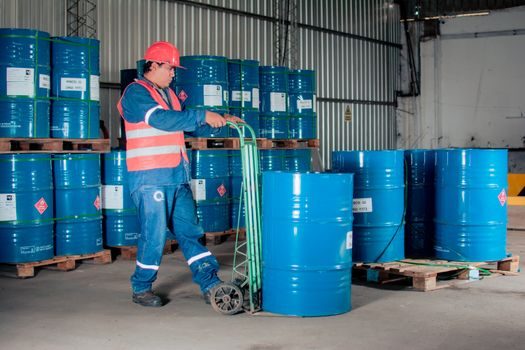
Side by side, ISO 21627-2 isolates the easily saponifiable (reactive, organic) chlorine fraction, whereas ISO 21627-3 captures total chlorine as the sum of saponifiable organic plus inorganic chlorine, with ISO 21627-3 confirmed current in 2025 and ISO 21627-2 still distributed as BS EN ISO 21627-2:2003 [S1][S3]. Procurement documents may reference ISO 21627-3:2009 for the determination of total chlorine content in epoxy resins, and ISO 21627-2:2003 for the determination of easily saponifiable chlorine content.
Operationally, this means a single test report is rarely sufficient; a two-method datasheet is the difference between a defensible chloride spec and a vendor's marketing number. The methods are also inexpensive relative to downstream electrical testing, which is why most large electrical OEMs and Tier-1 transformer plants have internalized the dual-test requirement as a purchasing gate rather than a quality afterthought.
Who this market is for — and who it is not
Buyers who should pay close attention to 2026 epoxy chlorine specs are electrical-equipment OEMs (transformers, motors, switchgear), electronics-grade potting shops, and high-performance coating formulators whose warranty terms depend on ionic contamination, since each of these is exposed to in-service corrosion or dielectric drift if chlorine slips. Conversely, buyers of commodity construction epoxies — tile adhesives, general civil mortars, DIY repair pastes — typically do not need dual-method chlorine documentation and can source on viscosity, epoxy equivalent, and price alone, accepting wider saponifiable-Cl bands without field risk. [S1]
The 2026 cost-of-quality math is straightforward: a dual-method ISO 21627-2/-3 certificate adds a small line-item cost per lot but eliminates the dominant failure modes in copper-adjacent and humid-aged applications, while saving nothing for purely structural applications. Sourcing teams who cannot draw that line end up either overpaying for unnecessary testing on commodity grades or under-testing on electrical grades and absorbing field returns later.
Limitations and failure modes the spec sheet will not catch
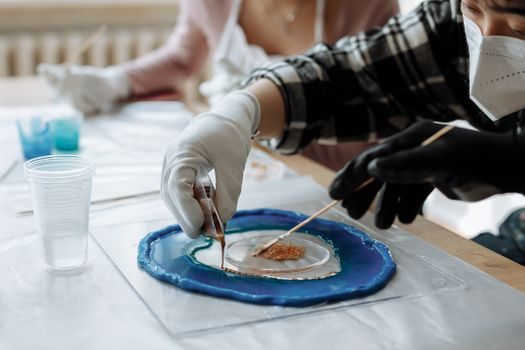
Even with ISO 21627-2 and ISO 21627-3 in hand, the 2026 supply chain still carries failure modes that chlorine numbers do not reveal. Viscosity drift in transit, batch-to-batch epoxy equivalent variance, and storage-temperature abuse (above ~25-30 °C) can degrade a compliant resin before it is decanted, and the standard does not address aging. Braskem's regional upstream stress, the 60-day payment injunction, and the parallel Braskem Idesa Chapter 11 risk also mean quote validity windows and alternative-supplier qualification work need to start earlier than the 2025 baseline, even if headline tonnage stays flat [S2].
On the materials side, electrical laminates built from DMD prepreg inherit any chlorine drift from the parent resin into the B-stage and finished insulation, and the failure mode there is partial discharge and humidity-aged dielectric loss, not visible corrosion [S5]. Sourcing teams should treat chlorine numbers as a necessary but not sufficient condition, and pair them with incoming viscosity, epoxy equivalent, and humidity-aged electrical testing on first-article lots from any new supplier.
Sourcing posture for H2 2026
The trackable signals into Q4 2026 are Braskem's progress with creditors after the 60-day standstill window, Braskem Idesa's Chapter 11 decision, and the operational uptake of Brazil's R 18.5 billion "Sovereign Brazil III" credit line through BNDES, each of which will reset epichlorohydrin and bisphenol-A logistics [S2]. On the standards side, ISO 21627-3:2009 is in its 2025-confirmed current stage and stable, while ISO 21627-2:2003 continues as the saponifiable-Cl reference; no revision dates are signalled in the published life-cycle records [S1][S3].
For background on how chlorine-controlled resins fit into the broader polymer-to-end-product chain, see the aramid fiber upstream-to-end-product spec map, and for the parallel supply tightening that has been hitting performance fibers through H1 2026, see the aramid fiber allocation and spec risk brief. Resin fundamentals, curing behavior, and electrical-insulation applications are covered in the synthetic resin encyclopedia entry.
For the relevant spec sheets and selection criteria, see resin sand line, and dc power supply.