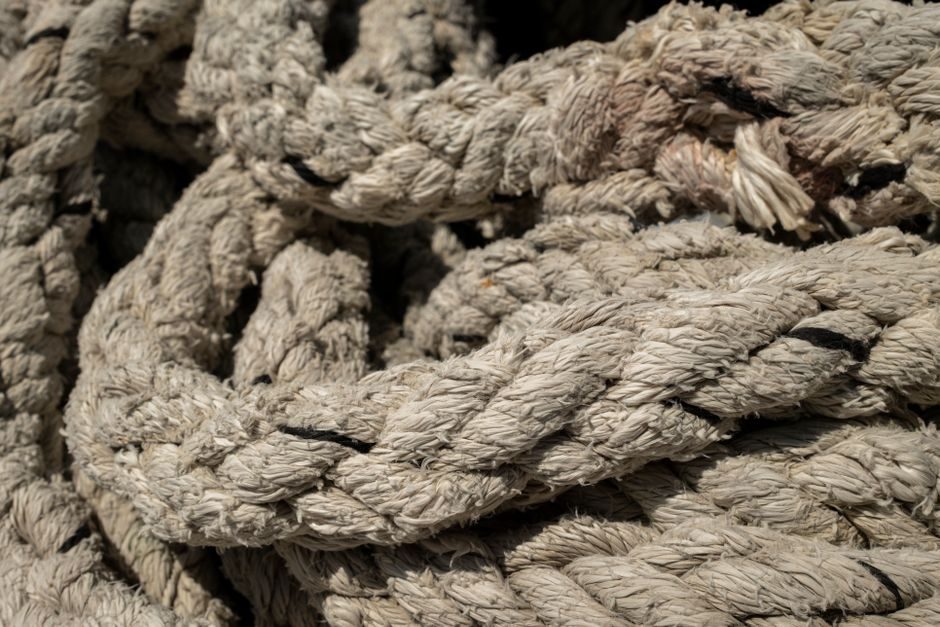
Aramid fiber supply chains split into two distinct polymer families: para-aramid (PPTA-class) used where tensile modulus and ballistic performance dominate, and meta-aramid (MPIA-class) used where flame, heat, and electrical insulation dominate [S1][S2]. The DirectIndustry industrial-manufacturer index lists 8 aramid-fiber manufacturers offering 19 catalog products under that single category, indicating a fragmented-but-deep supplier base rather than a commoditized single-source market [S1].
The upstream side runs from petrochemical monomers (p-phenylenediamine + terephthaloyl chloride for para-aramid; m-phenylenediamine + isophthaloyl chloride for meta-aramid) through low-temperature solution polymerization, dry-jet wet spinning, and post-treatment drawing, with continuous filament, staple, chopped, and pulp grades produced as separate SKUs [S3]. The downstream side converts those SKUs into sewing thread, woven and knitted fabric, non-woven webbing, rope, paper, and friction or composite intermediates, each with its own performance and certification profile [S3].
Upstream Polymer and Spinning Stages
Para-aramid polymerization is run in strongly acidic solvent systems (NMP/calcium chloride or concentrated sulfuric acid) and spun via dry-jet wet spinning into a coagulant bath, with draw ratios and washing steps driving the final filament tenacity and modulus [S1]. Meta-aramid is typically produced by solution polymerization in DMAC and spun into a water/glycerol coagulant, then drawn and heat-set to lock the crystallinity needed for thermal stability rather than for ballistic-grade strength [S2]. The dyed-yarn study published in Fibre Chemistry 56 (2024) confirmed that periodic high-temperature aqueous conditions with dispersed and cationic dyes give workable color yields on meta-aramid without destroying fiber properties [S2].
Filament, staple, and chopped grades are not interchangeable downstream: filament yarn feeds technical-textile weaving and sewing thread lines, staple feeds spun-yarn and non-woven lines, and chopped fiber (typically 1–12 mm cut length) feeds friction, gasketing, and thermoplastic-compound lines [S3]. Para-aramid pulp, a fibrillated short-fiber form, is sold specifically as a reinforcement for gaskets, friction papers, and aramid paper honeycomb, where high surface area matters more than filament length [S3].
Downstream Conversion: Fiber to Technical Textile
DirectIndustry's catalog entries show five mainstream downstream fabricators named: Teijin (Teijinconex meta-aramid, dope-dyed variants), Yantai Tayho Advanced Materials, Sinoara Advanced Materials, Markforged (Kevlar-reinforced 3D-print composite fiber), Mitsubishi Chemical Carbon Fiber and Composite (HMT301 roving for tape/fiber placement), and TESPE (heat-resistant technical textiles using aramid, CarboPan, PBO, and fiber-steel blends) [S1]. This shows the downstream side covers additive-manufacturing composite feedstocks alongside classical woven textiles, with the same base fiber feeding both routes.
Suzhou Nuomis (NUOMIS) deep-processing in Wuzhong District, Suzhou lists 8 product families: para/meta filament fiber, chopped fiber (including Technora and impregnated grades), staple fiber, spun yarn (blended, meta, para), sewing thread (with stainless-steel para hybrid), fabric (woven, knitted, non-woven, mesh), rope, webbing, and aramid paper [S3]. Such vertical depth at a single Chinese processor confirms that converting raw polymer into 10+ value-added SKUs is a standard, repeatable model rather than a niche play.
Application Families and Their Spec Drivers
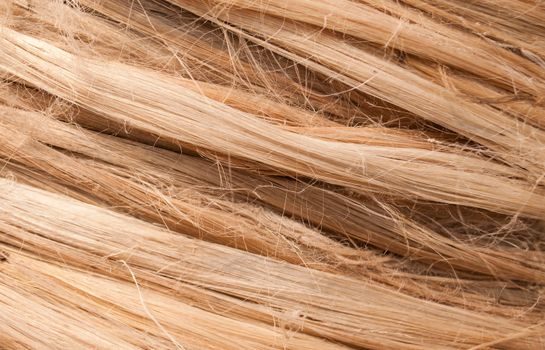
Five application families dominate aramid downstream demand: (1) ballistic and cut-protection, where para-aramid tenacity and energy absorption drive spec; (2) flame-resistant textiles and electrical insulation, where meta-aramid LOI and dielectric strength drive spec; (3) friction materials (brake pads, clutch facings), where chopped para-aramid pulp replaces asbestos; (4) gaskets and seals, where pulp's high-temperature stability and fibrillation matter; (5) composites, where continuous filament or roving feeds prepreg, tape laying, and 3D-print composite printing [S1][S3].
Spec-driver comparison across the four main aramid product types:
- Para-aramid filament: highest tensile strength and modulus, primary feed for ballistic woven fabric, ropes, and sewing thread; cost premium over meta grades [S3].
- Meta-aramid filament: lower tenacity but high LOI (~28–30%) and continuous-use temperature near 200 °C, used for flame-resistant woven/knitted fabric and insulation [S2][S3].
- Para-aramid pulp (fibrillated): high surface-area reinforcement, the standard asbestos substitute in gasket and friction paper; spec driven by freeness, surface area, and thermal stability [S3].
- Chopped aramid fiber (1–12 mm): feeds thermoplastic compounding and friction press-molding; spec driven by cut length, surface treatment, and moisture regain [S3].
Processing Constraints Buyers Hit
Meta-aramid's high glass-transition behavior means conventional disperse-dyeing needs carrier chemistry and elevated temperatures; Samsonova, Trofimova and Diankova (Fibre Chem 56, 179–182, 2024) confirm that dispersed and cationic dye classes are the workable options in aqueous media, with periodic high-temperature exposure required to drive sorption kinetics [S2]. That same property — thermal stability — is what makes meta-aramid attractive for fireproof and electrical insulation fabrics downstream, but it also means standard textile-finishing equipment has to be derated or specialty-equipped [S2][S3].
Para-aramid's UV sensitivity and difficulty of cutting/finishing are the recurring downstream complaints; UV-protected grades and aramid/glass hybrid weaves are the standard mitigation, with TESPE and similar converters offering these as standard catalog items [S1]. Stainless-steel/para-aramid hybrid sewing thread exists specifically because pure para-aramid thread is hard to knot-seal and cut on industrial sewing lines, a downstream workability constraint that the market has already engineered around [S3].
Sourcing Signals and Standards Posture
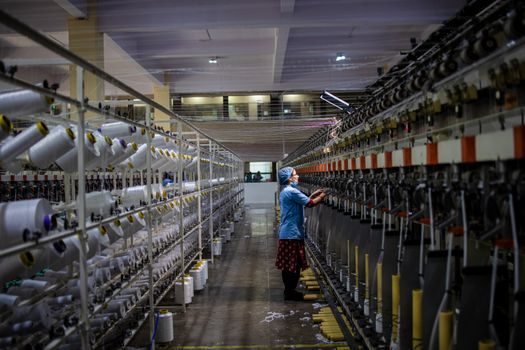
Specifying aramid in regulated end-uses (ballistic, aerospace, fire service) requires chain-of-custody documentation back to the polymer batch, not just the fabric roll, because para-aramid performance varies with draw ratio and post-treatment [S1]. Where buyers compare [para-aramid vs meta-aramid] grades, the decision rule is mechanical-energy applications for para, thermal/electrical applications for meta, with the upstream polymer route (PPTA vs MPIA) driving the downstream conversion window [S2][S3].
Wind's dual-chain industrial database covers 5,154 industries and 160,000+ upstream-downstream relationships, a useful reference for buyers who need to map where aramid sits between monomer supply and end-product OEM [S5]. Antidumping-duty optimization in upstream-downstream complete-dynamic-game analysis (Peng et al., 2009, CNKI) remains a recurring reference for trade-policy modelling on aramid and similar specialty fibers [S4]. For complementary engineering context, the Fixed Gas Detector Selection for Oil and Gas Facilities spec map covers an adjacent hazardous-area industrial buyer, and the Copper Production Capacity Planning: Cathode Tonnage, SX-EW Bottlenecks, and Tankhouse piece shows the same upstream-downstream mapping discipline applied to a different commodity chain.
Trackable signals for the next quarter: (a) any new para-aramid pulp capacity announcements from Chinese deep processors beyond NUOMIS's 8-family SKU set; (b) revised meta-aramid dye-fastness data building on the Fibre Chem 56 baseline, since that paper's "periodic high-temperature" route is still semi-experimental; (c) expanded carbon fiber / aramid hybrid roving catalogs from Mitsubishi-style composite feedstock makers [S1][S2][S3].
Detailed specification references: concrete fiber, and fiber converter.