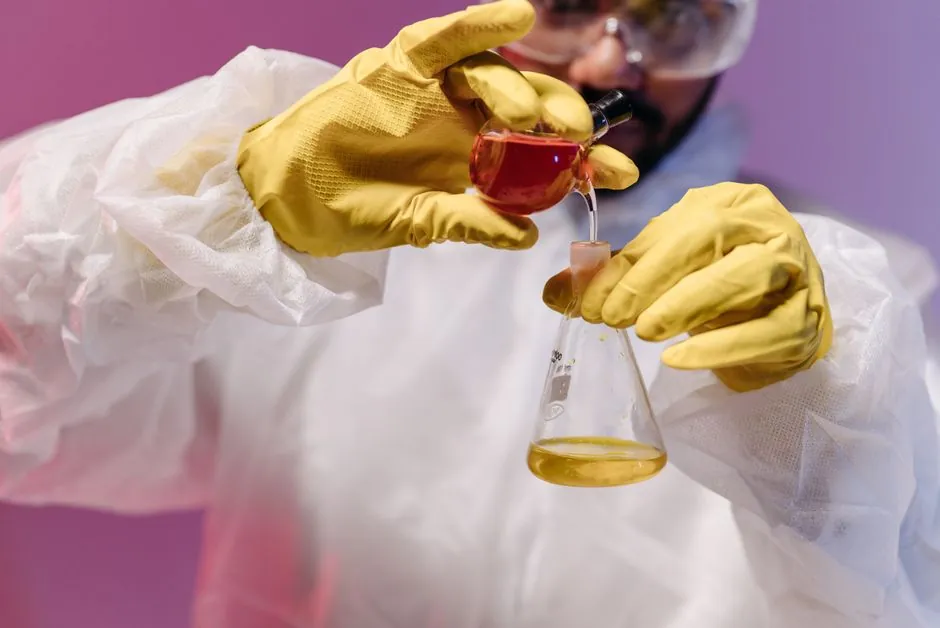
Epoxy-body pH electrodes stay the cheap, tough default for routine aqueous work, but their polymer shell softens and chemically degrades well before the glass membrane does, capping most units at roughly 80 °C (176 °F) and disqualifying them in many inorganic/organic solvent baths [S2].
PVDF (polyvinylidene fluoride) bodies are a different class of housing: published Kynar® PVDF chemical-resistance data put continuous service generally good to pH 12 and selectively up to pH 13.5, with continuous-use temperatures quoted by manufacturers that allow them to ride alongside the pH glass bulb in hot process lines [S7][S9]. Picking between them is a three-axis decision: sample pH range, continuous operating temperature, and mechanical risk on the probe.
Where the two housing materials actually differ
On a ph meter bench, the body is what the operator grabs; in a skid, it is what survives the chemistry. Epoxy is a thermoset polymer prized for impact absorption: it lets the glass bulb sit recessed inside the body, which means the probe can be rested on a beaker bottom, used as a stirrer, or dropped without immediately cracking the membrane [S5]. That same polymer, however, is the weak link at the chemistry interface. Vendor guidance for epoxy-body combination electrodes is explicit: "impact resistant and ideal for rough handling, but should not be used at higher temperatures or for inorganics" [S2]. "Higher temperatures" in this class is anything above the 80 °C ceiling most datasheets print, and "inorganics" covers the strong acids, bases, and oxidizers that swell or hydrolyse the epoxy matrix over time.
PVDF is a semi-crystalline fluoropolymer: it is mechanically tougher than PTFE at room temperature, takes more pressure, and resists a much broader chemical envelope. Arkema's Kynar® literature, which is the underlying reference for most PVDF housing datasheets, lists general chemical resistance up to pH 12 across the family and up to pH 13.5 for selected grades [S7]. Independent resin guides echo the same envelope and add the high-purity and low-permeability properties that make PVDF a default wetted part in semiconductor and pharmaceutical service [S8][S9].
Decision matrix: epoxy vs PVDF, criterion by criterion
Side-by-side, the four criteria that drive the purchase order are temperature, chemistry, mechanical risk, and cost. The lines below pull from published guidance rather than bench folklore, so a specifier can defend each choice in a procurement review. [S1]
Continuous operating temperature: epoxy bodies cluster around an 80 °C (176 °F) maximum on datasheets, with glass-body electrodes taking the high-temp duty up to 100-110 °C (212-230 °F) [S2]. PVDF homopolymer is rated by resin manufacturers for continuous service substantially above that envelope, which is why the same housing material is used on Yokogawa's SC42 conductivity line for hot corrosive service [S1]. If the sample line runs above 80 °C and still needs a polymer housing, PVDF wins on paper.
Chemical resistance envelope: PVDF covers dilute hydrochloric, dilute phosphoric, acidic wastewater, mining leachates, and most strong oxidizers short of fuming nitric acid and free chlorine, which is exactly the envelope Yokogawa calls out for its PVDF SC42 body [S1]. Epoxy tolerates aqueous buffers, biological media, TRIS, photographic solutions, beer and wine, and similar "lab-friendly" matrices; it is not specified for concentrated acids, strong bases, or aggressive organic solvents [S2][S5]. The Kynar® pH 12 / pH 13.5 boundary is the cleanest numerical rule of thumb in print for where PVDF is the safer pick [S7].
Mechanical risk: this is the one axis where epoxy wins outright. The recessed-bulb epoxy design turns the body into a shock absorber, so field probes, teaching-laboratory probes, and any probe handled by students default to epoxy; Thermo Fisher's teaching-application guidance is explicit on that point, and Camlab's Epoxy-Tough line is built around the same idea [S4][S5]. PVDF is mechanically tougher than PTFE, but it is still a fluoropolymer: it does not forgive a drop onto a concrete floor the way an epoxy-bodied probe does [S8].
Cost and lead-time: epoxy is a commodity thermoset and the cheaper of the two to mould, which is why sealed epoxy-body combination electrodes are the default "starter" SKU at every major lab supplier [S2][S6]. PVDF is a higher-cost resin and the finished probe typically sells at a premium, especially in double-junction or flat-surface configurations. Procurement should not treat this as a "buy the cheap one" decision: a single failed epoxy probe in a hot NaOH line costs more than the price gap on five PVDF replacements.
Sample-type fit: which body goes with which application
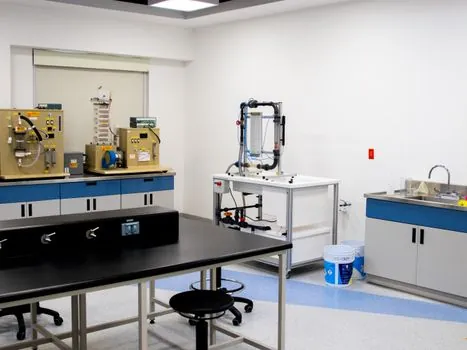
Epoxy body is the correct pick for general aqueous buffers, biological and TRIS samples, food and beverage matrices (beer, wine, photographic solutions, dairy), education and teaching labs, and any field application where the probe will be dropped, knocked, or rested on a vessel bottom [S2][S4][S5]. The polymer also lets the bulb sit recessed, so the probe doubles as a stirrer in routine titrations [S5]. Within the epoxy family, the configuration splits further: sealed/gel-filled designs are maintenance-free and the cheapest, refillable designs last longer because the reference can be topped up, and double-junction references are mandatory whenever silver-reactive species (bromides, iodides, cyanides, sulfides, heavy metals) are in the matrix [S5].
PVDF body is the correct pick for chemical manufacturing streams with dilute mineral acids, acidic wastewater and industrial effluents, mining and metal-finishing baths, pharmaceutical and semiconductor high-purity loops, and any process line that runs hot or carries oxidizers that would attack an epoxy shell [S1][S7][S8]. Independent chemical-resistance guides describe PVDF as "very suitable for applications that require excellent chemical resistance, a high degree of purity and superior mechanical properties" [S9], which is a clean match for the same envelope Yokogawa's SC42 sensor literature lists for its PVDF body [S1].
There is a third body class to keep on the bench, even though it is not in the headline comparison. Glass bodies (typically pH-sensitive glass) are specified where temperature pushes past 100 °C or where the chemistry includes strong solvents that PVDF or epoxy cannot handle; they tolerate 100-110 °C continuous service and clean up easily after aggressive samples [S2]. The cost is fragility.
Standards, ratings, and the failure modes the datasheet does not print
For laboratory pH work, the dominant reference framework is the electrode-and-meter system as a whole rather than a single mandatory housing standard, and the chemical reagent matrix dictates body choice more than any housing certification does. What does show up on the data is the operating envelope: epoxy at ≤80 °C, glass at 100-110 °C, PVDF with chemical resistance to pH 12 (general) and pH 13.5 (selected grades) per Kynar® literature [S2][S7]. Pressure is a separate constraint: sealed epoxy-body combination designs are typically rated for service up to about 100 psig (roughly 6.9 bar) without external pressurization, which is enough for most lab and light-skid duty but not for high-pressure process lines [S5].
The failure modes are predictable once the envelope is understood. Epoxy failures look like: reference drift after weeks in hot NaOH, softening of the body at the wetted seal, and sudden loss of slope when the polymer absorbs solvent and the junction chemistry shifts. PVDF failures look like: peroxide or fuming-nitric attack above the pH 12-13.5 envelope, and mechanical cracking under sharp impact (less than epoxy, more than glass). Glass failures look like: obvious mechanical fracture of the bulb, but otherwise the longest service life when chemistry and temperature stay inside the envelope [S2][S7].
Storage and conditioning are part of the spec. Epoxy-body sealed probes are shipped wet in pH 4 / KCl storage solution; letting the bulb dry out is the single most common cause of "dead on arrival" complaints and is independent of the body material [S5]. For double-junction epoxy designs, choosing a refillable KCl fill or a polymer gel changes the contamination tolerance but does not change the body's chemical envelope, so the same temperature and chemistry rules still apply [S2][S5].
Selection rule, one line, then a sanity check
Use this single rule: pick the body whose published continuous temperature and pH envelope both sit outside the worst-case sample, then re-evaluate only if the probe is going to be dropped. In practice, that means epoxy for routine aqueous / biological / teaching work below 80 °C, PVDF for hot or chemically aggressive process lines inside the pH 12 (or selected pH 13.5) boundary [S2][S7], and glass where temperature exceeds 100 °C or where the chemistry exceeds both polymer envelopes [S2]. Procurement can then justify the price premium on PVDF by the avoided replacement cycle in concentrated acid or oxidizer service, where epoxy shells measurably outlast the datasheet only when the chemistry is forgiving [S1][S5].
Cross-check the pick against three concrete numbers before signing the PO: sample pH against the PVDF envelope (≤12 general, ≤13.5 selected) [S7]; continuous temperature against the body ceiling (80 °C epoxy, 100-110 °C glass, higher for PVDF per the resin maker) [S2][S7]; and the mechanical environment, since a probe that lives on a laboratory bench has no business being epoxy-bodied if it rides on a vibrating skid, and a probe that lives in fuming HCl has no business being anything but PVDF or glass [S1][S5]. A useful adjacent reference when a probe is being mounted next to a flow cell is the sensor-body philosophy on conductivity probes, where the same PVDF-versus-PTFE split is laid out for the Yokogawa SC42 family [S1]. Engineers weighing polymer-body probe lifetime against a more rugged measurement chain can also benchmark the mechanical-decision logic used in unrelated polymer-on-metal wear trade-offs such as Si3N4 vs SiC immersion heater tubes, where the same envelope-versus-impact logic drives the final call. For an in-house spec, document the chosen body, the chemistry envelope, and the temperature ceiling in the same line of the chemical material datasheet; that is what an auditor will look for, and it is what catches the next replacement-procurement cycle.