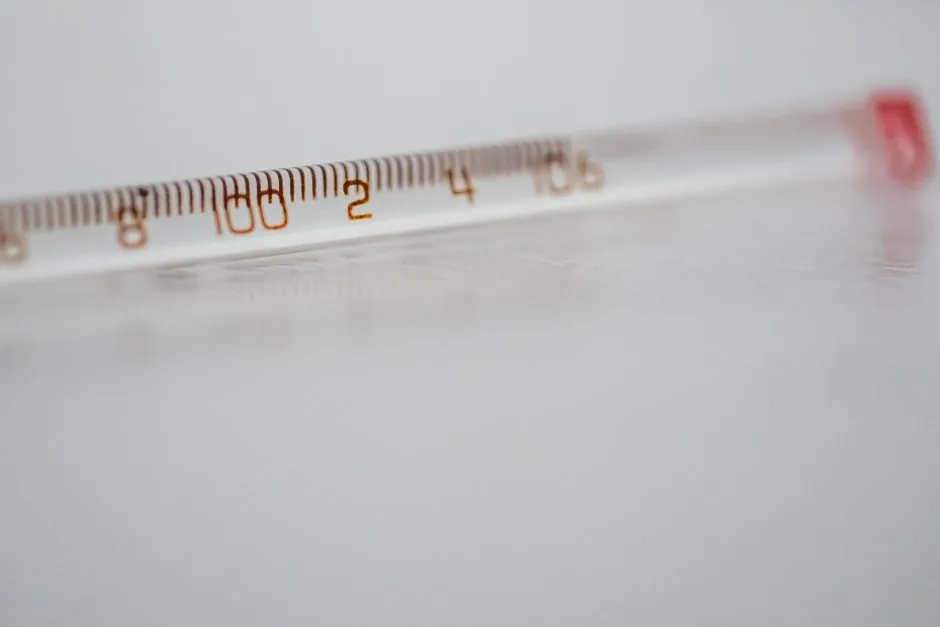
EN 13190:2001 is the European standard that defines requirements and tests for industrial dial indicating thermometers, covering gas-expansion (GE), liquid-expansion (LE) and bimetallic-strip (BM) sensing methods across nominal sizes 40–160 mm and a temperature envelope of -100 °C to +700 °C [S4].
Two accuracy classes are defined: Class 1 applies to nominal sizes 63–160 mm and Class 2 to sizes 40–160 mm, and the printed class on the dial is only guaranteed when the process temperature stays inside the marked measuring range [S2][S4][S6].
Class 1 vs Class 2: nominal size, error band, who uses which
Class 1 carries roughly half the limits of error of Class 2 over the same measuring range, which is why process-grade bimetal thermometers (e.g. WIKA TG54, nominal sizes 63/80/100/160 mm) are declared as "Class 1 per EN 13190" rather than Class 2 [S2][S8]. Class 2 is the typical fit for smaller case sizes, for less critical local indications, and for utility / OEM skid panels where the cost premium of a Class 1 case and larger bimetallic coil is not justified.
EN 13190 also binds the stated accuracy to the measuring range, not the full scale range: a thermometer with nominal range 0…100 °C and a measuring range 10…90 °C must stay within ±1 °C on Class 1 and ±2 °C on Class 2 across that measuring band [S5]. Outside the measuring range, but inside the nominal range, error is not certified to the printed class.
Limits-of-error reference table across the EN 13190 spans
The limits of error are tabulated by nominal range and measuring range. Three representative bands illustrate the structure: for the 0…100 °C nominal / 10…90 °C measuring range, Class 1 is ±1 °C and Class 2 is ±2 °C; for 0…300 °C nominal / 30…270 °C measuring range, Class 1 is ±5 °C and Class 2 is ±10 °C; for 0…700 °C nominal / 100…600 °C measuring range, Class 1 is ±10 °C and Class 2 is ±15 °C [S5]. The rule of thumb that follows: as the measuring span widens, the absolute error in °C widens, but the error as a percentage of span stays roughly comparable.
For sub-zero spans the same ±1 °C / ±2 °C pattern appears, for example at the -30…+50 °C nominal / -20…+40 °C measuring range, where the tighter window keeps absolute error small enough for HVAC, chiller and cold-chain service work [S5][S4].
Design conditions that hold the class on a real installation
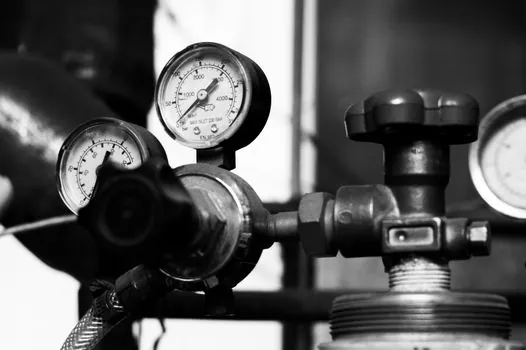
EN 13190 accuracy is only valid inside the marked measuring range; outside it, the printed class is not guaranteed, which is why WIKA marks the limits with two triangular indices on the dial [S2]. Process thermometer datasheets and selection guides also warn that the certified class only holds at reference ambient conditions: for gas-actuated instruments, WIKA guarantees EN 13190 Class 1 at an ambient of 23 °C ± 10 °C, and that guarantee is harder to maintain as the gas volume inside the stem shrinks [S3].
Bimetal thermometers are far less sensitive to ambient drift and can be specified down to about -50 °C external temperature, with unfilled instruments covering a scale range of -70 °C to +600 °C and silicone-oil-filled (vibration-damped) versions limited to a process maximum of +250 °C at the probe [S3]. Sizing rules that protect the published class are concrete: stem diameter at least 8 mm and active gas-filled sensor length at least 100 mm for a gas-actuated instrument, with insertion length and stem diameter both maximised for a bimetal unit [S3].
Comparison: bimetal vs gas-actuated dial thermometer under EN 13190
Both families sit under EN 13190, but they trade off differently. Bimetal (BM) is the cheaper, mechanically simpler workhorse: ambient-insensitive, scale range -70 °C to +600 °C unfilled, +250 °C with silicone oil, vibration-sensitive unless filled, and a robust fit for the chemical, petrochemical, oil and gas, power and water/wastewater process industries [S2][S3]. Gas-actuated (GE) reaches further in both directions, -200 °C to +700 °C, but is sensitive to ambient drift, which is why the EN 13190 Class 1 guarantee is qualified to 23 °C ± 10 °C ambient and to a minimum gas volume in the stem [S3].
In practice, choose bimetal when ambient swings are large or the process sits inside -70 °C to +600 °C, and when IP65 hermetically sealed stainless cases (304 standard, 316/316L optional) with a dished, anti-parallax dial are needed for harsh, vibration-prone service [S2]. Choose gas-actuated when the process goes below -70 °C or above +600 °C, when stem geometry and gas volume can be dimensioned to the published minima, and when the ambient around the case can be kept near 23 °C [S3]. Both technologies share the same Class 1 / Class 2 framework under EN 13190, so the choice is dominated by temperature envelope, vibration and ambient, not by accuracy class [S2][S3][S4].
Where EN 13190 accuracy classes do not apply
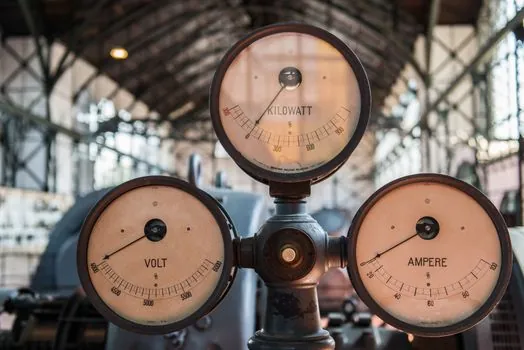
EN 13190 explicitly excludes thermometers for medical use and dial thermometers fitted with electrical limit contact devices, and it covers only circular-scale instruments for industrial use, with square-form instruments covered only for the non-case / non-scale / non-pointer clauses [S4]. For process control loops that need a 4–20 mA or HART output rather than a local dial reading, the relevant instrument family is the pressure transmitter or industrial temperature transmitter, not the EN 13190 dial thermometer.
EN 13190 also is not the standard to cite for resistance thermometers (Pt100/Pt1000) or thermocouples, which carry their own accuracy framework (class AA, A, B, C for RTDs and class 1, 2, 3 for thermocouples under IEC 60751 and IEC 60584) [S7]. If a remote or non-contact reading is needed instead, the appropriate comparison is an infrared thermometer, and for in-line pipeline temperature with local indication, many plants mount an EN 13190 bimetal dial alongside a thermowell that also services a transmitter.
Common specification traps when ordering to EN 13190
Three failure modes show up repeatedly. First, specifying the nominal range, e.g. 0…100 °C, but assuming the printed class covers the entire nominal range, when in fact the class is only guaranteed inside the measuring range, which the supplier narrows to roughly two-thirds of nominal [S2][S5]. Second, ordering Class 1 on a 40 mm or 50 mm case, when EN 13190 restricts Class 1 to nominal sizes 63–160 mm; the same 40 mm case can only be declared Class 2 [S4][S6]. Third, ignoring stem geometry: an undersized stem or short active length on a gas-actuated instrument can push the real error above the EN 13190 Class 1 envelope, even though the dial still says Class 1 [S3].
Material and protection choices also affect what "in spec" really means on site. Stainless 304 is the standard case, with 316/316L available for more aggressive media, IP65 ingress protection is typical for the hermetically sealed case, and the window can be instrument glass, laminated safety glass or shatterproof polycarbonate, with a dished dial geometry to suppress parallax reading errors [S2]. For applications with high vibration, silicone-oil case filling is the standard mitigation, at the cost of the +250 °C probe-temperature ceiling noted earlier [S2][S3].
Verification, calibration, and traceability
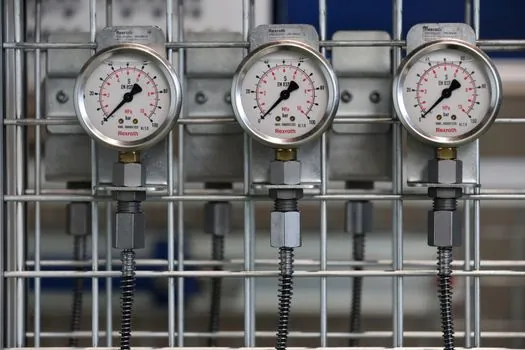
Because EN 13190 is a performance standard, not a calibration standard, the limits of error it publishes are the pass/fail thresholds that a calibration must be checked against. NIST Handbook 105-6 covers thermometer specifications and tolerances for weights-and-measures work and is a useful reference for traceability on liquid-in-glass and related field standards, even where the underlying instrument is an EN 13190 dial rather than a glass-stem thermometer [S1].
A practical routine: compare the as-found reading against a reference at three points (typically 0 °C ice bath, an ambient point, and a high point near the top of the measuring range), confirm each point sits inside the Class 1 or Class 2 limit drawn from the EN 13190 table for that nominal / measuring range combination, and re-zero on the rear of the case if a small systematic offset appears [S2][S5]. When the application is a flow meter line or a reactor jacket where temperature drives another instrument's compensation, keeping the dial thermometer inside its EN 13190 class is part of protecting the accuracy budget of the whole loop, and is why many plants retain the local dial even after adding an electronic transmitter.
Trackable signals for the next planning cycle: the EN 13190:2001 standard entered a review-enquiry / decision-to-confirm stage starting 2022-06-08 with a completion date of 2026-09-30, so any 2026-Q4 publication of a confirmed or amended version is the next node to watch [S4]. Watch also for any re-issued CEN/TC 141 datasheets or updates to OEM model lines (such as the WIKA TG54 family, last published as data sheet TM 54.02 ∙ 10/2025) that restate limits of error against the reconfirmed text [S2][S4].
This topic is covered further in Luffing Jib vs Fixed Jib Crawler Crane: A Spec-Driven Selection.