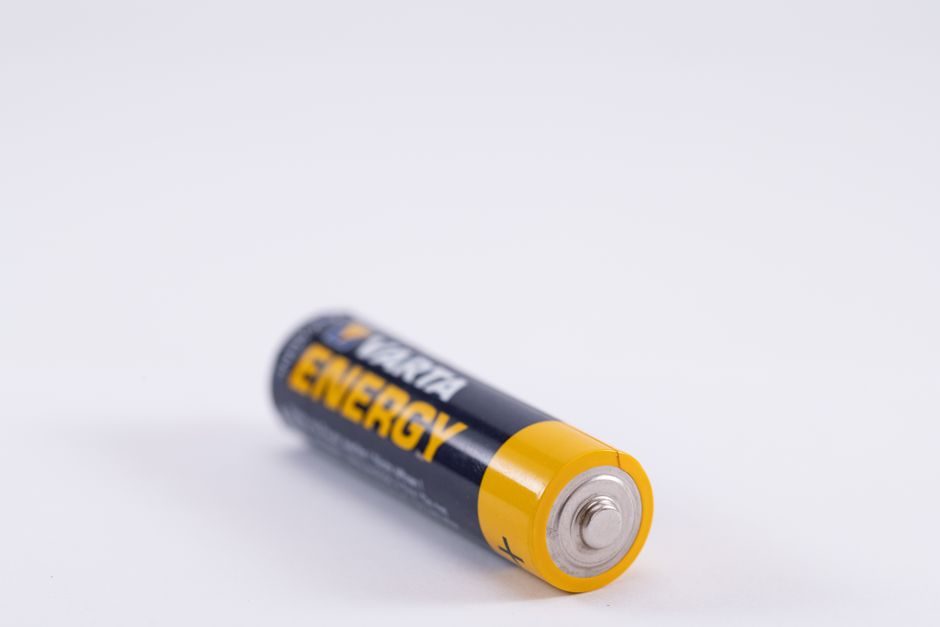
China hosts roughly three-quarters of global lithium-ion cell manufacturing capacity in 2026, with installed cell-output nameplate above 1,800 GWh/yr across CATL, BYD, EVE, CALB, Gotion and SVOLT, while ex-China capacity (US/EU/Korea/Japan combined) sits in the 600-700 GWh/yr band [S2][S3].
South Korea's three majors — LG Energy Solution, Samsung SDI and SK On — together account for the bulk of the non-Chinese NCM cell supply and dominate the pouch-format high-nickel segment built around nickel-cobalt-manganese-aluminium (NCMA) chemistries [S3]. The IEA's Global EV Outlook 2025 reported that on a manufacturing-capacity basis China held about 75% of the world's total, the US 7%, Europe 6%, Korea 5% and Japan 2%, with the remainder distributed across Thailand, Indonesia and India.
Country-level capacity bands, nameplate versus usable output
Nameplate (theoretical) capacity and actually-produced volume diverge significantly in this industry, and procurement teams should plan against the smaller figure, not the larger one. Industry trackers including Benchmark Mineral Intelligence and SNE Research put 2025 global cell output at roughly 1,200-1,300 GWh against a nameplate in the 2,500 GWh/yr range, giving a utilisation factor in the 50% band — the gap is dominated by LFP lines, where Chinese utilisation is closer to 60-70% while US/EU new lines run nearer 30-40% in their first two years [S3]. Korea's NCM lines track higher, in the 70-85% range, because the equipment, cell formats and chemistry are mature.
Within Europe, Germany and Hungary are the two largest nodes: CATL's Erfurt plant in Germany, LG's Wrocław site in Poland, and Samsung SDI's Göd and Iváncsa sites in Hungary together represent the core of the EU's planned 2026 output. Northvolt's Swedish Skellefteå line, the only European giga-scale integrated cell producer, has continued to operate at reduced output in 2025-2026, which is a useful negative reference for any specifier comparing European suppliers [S2].
Chemistry split: LFP overtakes NCM on unit volume
Lithium iron phosphate (LFP) overtook nickel-cobalt-manganese (NCM) on global unit shipment volume in 2022 and has widened the lead since, accounting for roughly 45% of EV cells shipped in 2025 versus about 40% for NCM chemistries, with the residual 15% spread across NCA, LMFP (lithium manganese iron phosphate), sodium-ion and solid-state pre-production [S3]. The cost-band data is the decision-relevant figure: in 2025, an LFP cell pack at the cell level priced in a $80-95/kWh band in China, while a comparable NCM523 pack held a $95-115/kWh band and NCM811/NCMA a $110-135/kWh band [S3].
Sodium-ion is the chemistry to watch for low-cost entry trims and two-wheeler / micro-EV use; CATL's first-generation sodium-ion cell launched at ~160 Wh/kg energy density, about 20-25% below contemporary LFP, and CATL, BYD and HiNa Battery are running small giga-scale sodium lines in 2025-2026 [S3]. ProLogium Technology secured US$326 million in 2021 to expand its global EV battery production capacity [S1].
Cell form factor: prismatic, pouch, cylindrical
Cell format and country mix are tightly correlated. China is dominated by prismatic cells, which fit the LFP chemistry and the in-house pack designs of OEMs like BYD and the Tesla Model 3 / Model Y China build. South Korea's LG, Samsung SDI and SK On specialise in pouch cells, which suit NCM/NCMA and the high-energy-density packaging demanded by Korean and European OEMs. Japan is the home of the cylindrical 18650/21700 cell, where Panasonic and Tesla's joint Nevada line are the largest installed cylindrical base; the new 4680 format from Tesla and the corresponding 4695/46105 from Panasonic are entering volume production in 2025-2026 [S3].
The decision matrix for an OEM buyer in 2026 therefore reads: (1) chemistry preference — LFP for low cost and safety, NCM/NCMA for energy density; (2) form factor — prismatic for pack design simplicity and integration, cylindrical for fast-assembly modules, pouch for premium pack energy density; (3) regional content rules, which increasingly drive the choice of cell nationality. EU battery passporting under the 2023 EU Battery Regulation is already pulling procurement towards European-built cells where the regulation's recycled-content, carbon-footprint and due-diligence thresholds apply [S2].
Material and mineral upstream exposure
Indonesia is now the largest mined-nickel producer and the dominant origin for Chinese nickel sulphate; the Philippines, Russia, Australia and New Caledonia round out the major nickel-laterite feed. For LFP, the lithium input is the same, but cobalt and nickel are removed; for sodium-ion, lithium is replaced by sodium carbonate, of which China is the dominant producer. [S1]
Procurement teams should also know that raw cathode active material (CAM) and anode active material (AAM) capacity is similarly concentrated: China holds about 75% of pCAM (precursor cathode active material) capacity and roughly 90% of synthetic graphite AAM capacity, which is one of the structural reasons a Chinese cell is typically 20-30% cheaper on a like-for-like chemistry basis [S3]. In a sourcing context, this is why LFP-related articles such as the lithium battery price bands for 2026 consistently show pack cost moving with the lithium-carbonate and graphite-spot reference prices, while NCM/NCMA cost also tracks the nickel-sulphate and cobalt-sulphate benchmarks.
Constraints, failure modes and the 2026 pinch points
The 2026 pinch points for the global cell industry are not chemistry — they are plant-execution and equipment-availability. US Inflation Reduction Act (IRA) Section 45X production credits of $35/kWh on cells plus $10/kWh on modules have materially compressed this gap, but the credit qualification rules mean that any non-FEOC (foreign entity of concern) — read Chinese — ownership or licensing in the supply chain disqualifies the credit, which shapes the available buyer-supplier set [S2].
For a sourcing decision in 2026, the practical advice is to plan around 2027-2028 commissioning for any non-Chinese greenfield cell capacity [S2][S3].
Standards, traceability and audit anchors
Battery sourcing decisions in 2026 are increasingly governed by documentary standards rather than purely by performance. The US does not yet have a federal battery passport, but California's SB-615 is operational from 1 April 2025 and is materially aligned with the EU passporting model; the IRA Section 30D clean-vehicle credit's FEOC rules, effective from 2024 with enforcement from 2025, control which cells qualify a vehicle for the $7,500 point-of-sale credit [S2].
Standards to anchor specs against: IEC 62660-1, -2, -3 (performance, reliability and safety tests for lithium-ion cells for propulsion), IEC 62619 (large-format industrial lithium cells), ISO 12405-1, -2, -4 (testing of packs and systems), IEC 62133-2 (portable cells), SAE J2464 (abuse testing), SAE J2953 (cell-level performance), UN 38.3 (transport), UL 1973 (stationary storage), UL 9540 / UL 9540A (energy storage systems and thermal-runaway fire propagation), and ISO/TS 16949 / IATF 16949 quality systems for cell vendors supplying automotive OEMs. For safety testing at the cell, module, pack and system level, these are the documents auditors will request, and absence of a current test report against the relevant IEC or UL standard is a hard fail in supplier qualification for any Tier 1 automotive program [S3].
The 2026 reality is that cell capacity continues to outstrip cell demand on a nameplate basis, which has held average cell prices in a downtrend for most of 2023-2025, but the regional split is widening: Chinese cell prices are anchored by LFP and graphite; ex-China cell prices remain meaningfully higher and are increasingly protected by local content rules rather than by raw-material economics. The two trackable signals to watch for the back half of 2026 are the US Treasury's enforcement of the IRA 30D FEOC rules, and the ramp of SK On's Hungary and LG's US-JV (with Stellantis) lines — both will move the non-China capacity share materially. For related downstream reference, the mold base price and steel/cavity cost levers and die-casting die buying guide articles sit adjacent to the casting and tooling side of a cell-pack enclosure program and are worth bookmarking alongside this capacity map.
For component-level specifications, see pressure transmitter, flow meter, and industrial valve.