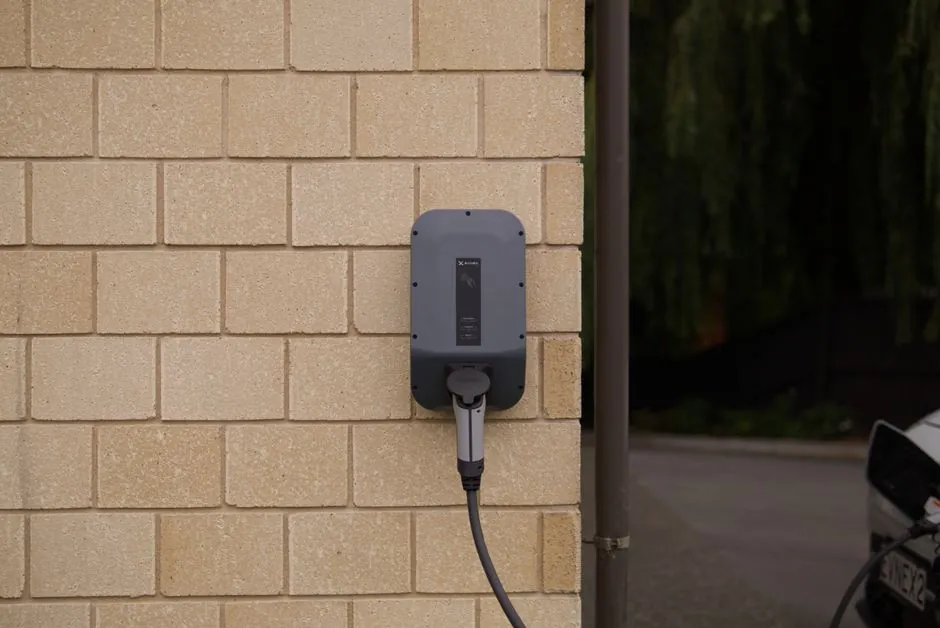
ChargePoint held over 9% of the global EV charging station market in 2025, making it the single largest vendor by share, with the top five players (ChargePoint, ABB, Siemens, Schneider Electric, Delta Electronics) collectively holding 35% [S1]. The same report valued the 2025 market at USD 50.7 billion and projects a rise to USD 65.7 billion in 2026 at a 22.4% CAGR through 2035 [S1].
Concurrently, other 2026-published estimates converge on a similar order of magnitude but differ in scope: Mordor Intelligence puts the 2025 market at USD 36.13 billion, rising to USD 43.66 billion in 2026 at a 20.85% CAGR to 2031 [S4], while Market Research Future frames 2025 at USD 25.5 billion expanding to USD 29.1 billion in 2026 toward USD 95.2 billion by 2035 [S6]. The spread reflects whether analysts include service revenue, network-software, and behind-the-meter workplace chargers inside the hardware figure, a recurring source of confusion in vendor share tables.
2025 Market Share: Top 5 Concentration at 35%
The top five EV charging station manufacturers captured 35% combined market share in 2025, with ChargePoint as the single leader above 9% [S1]. The remaining 65% is split across a long tail that includes Tesla (operating its own closed-loop Supercharger network), regional Asian OEMs, and energy majors such as Shell that have entered the segment by reallocating capital from petroleum sites to high-power chargers [S4].
Market concentration is rated medium by Mordor Intelligence, consistent with a top-5 figure of around one-third and no single vendor above the low double digits [S4]. For a procurement officer, that means competitive bidding is feasible across most geographies, but single-source risk remains for legacy NACS/Tesla-connector sites and for proprietary OCPP back-ends that lock operators to one software vendor.
Segment Sizing: DC, Commercial, and Passenger Cars Dominate
By charger type, DC fast charging stations captured 77.95% of 2025 revenue and are projected to grow at a 53.10% CAGR to 2031 [S4]. Coherent Market Insights takes a different cut and reports fast chargers at 51.7% segment share for 2026 [S5]. The disagreement is again definitional: one counts DC revenue against total charger revenue, the other counts all "fast" (Level 2 plus DC) units against total. What is consistent across both: DC hardware is the high-growth slice of the pie.
By application, the commercial segment is set to lead at 62.7% share in 2026, driven by fleet electrification and depot charging [S5]. By vehicle type, passenger cars generated 88.45% of 2025 charging station revenue [S4], although commercial vehicles are forecast to expand at a 52.20% CAGR through 2031, a faster trajectory than passenger cars as last-mile delivery and light-duty fleet electrification scale. The CCS connector standard led with 35.95% revenue share in 2025, while wireless charging posted a 37.90% CAGR through 2031 [S4].
Regional Distribution: Asia-Pacific at 49.6%–60.1%, Europe Fastest Growing
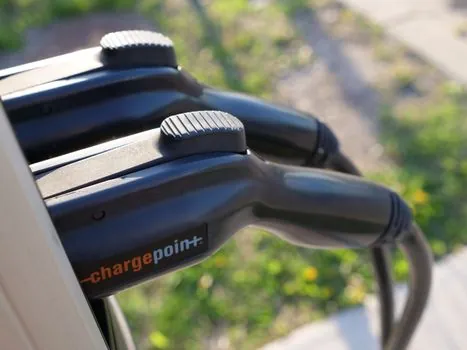
Asia-Pacific dominated the 2025 EV charging station market with a 60.10% share, per Mordor Intelligence [S4], while Coherent Market Insights reports a 49.6% Asia-Pacific share for 2026 [S5]. Europe is forecast to post the fastest regional CAGR at 40.50% through 2031, ahead of all other regions [S4].
Policy is the binding floor under both regional shares. The EU's AFIR mandates public fast-charging pools of at least 400 kW every 60 km on TEN-T core network roads by 2025, scaling to 600 kW by 2027 [S1]. In the U.S., the USD 5 billion NEVI Formula Program funds a national corridor network along interstates [S1]. In China, deployment is on track to reach 12.3 million cumulative charging stations by 2030 [S5], which alone would re-anchor any global vendor share table. For comparison context on the broader e-mobility supply chain that feeds these stations, see the EV Traction Motor Demand 2026-2030: Volume, Value and Topology Shifts coverage, which traces upstream drivetrain volume.
Competitive Dynamics: Tesla NACS Opening and Standard Convergence
About 50% of all North American fast-charging ports are Tesla-operated, a concentration that creates a single-vendor dependency risk for operators and fleets until NACS-to-CCS adapter coverage stabilises [S5]. Tesla's decision in 2024 to open the Supercharger system to other brands is forcing the rest of the market to a common connector standard, with ripple effects on OEM sourcing specs.
ABB, Siemens, Schneider Electric, and Delta Electronics sit at the other end of the buyer relationship, selling directly to utility and retail network operators rather than to private consumers. ChargePoint's positioning is hybrid: it both manufactures AC and DC hardware and runs a network-software platform, with the October 2025 launch of the "ChargePoint Platform" smart commercial solution aimed squarely at fleet depot charging [S5]. For adjacent powertrain context on how this segment relates to broader electrification procurement, the E-Axle Competitive Landscape 2026: Topologies, Tier 1s, and Patent Signals article maps the Tier 1 supplier overlap with these same charging infrastructure buyers.
Decision Criteria: Hardware vs Network-Software vs Service Revenue
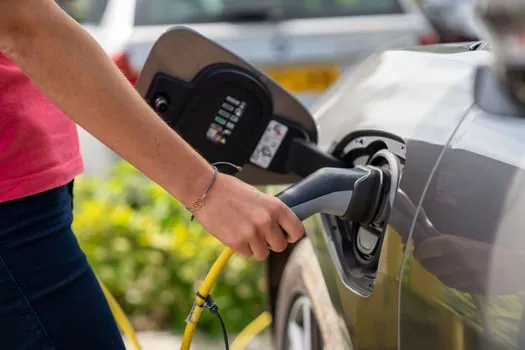
A practical comparison for procurement teams weighs the top three vendor archetypes against four criteria: hardware breadth, network-software lock-in, service revenue share, and geographic reach. ChargePoint leads on network-software and AC/DC breadth, but trails Tesla on installed fast-charging port count. ABB and Siemens lead on grid-integration hardware and utility-grade reliability but offer less consumer-facing software. Delta Electronics and Schneider Electric lead on power electronics cost per kilowatt but have smaller North American service footprints. Tesla leads on installed fast-charging port count in North America but historically closed its network to non-Tesla vehicles until mid-2024. [S1]
Across public sources, the consensus 2025 ranking is: 1) ChargePoint (above 9%), 2) ABB, 3) Siemens, 4) Schneider Electric, 5) Delta Electronics, with Tesla and Shell as the two most consequential non-listed players by installed port count [S1][S4]. The vendor set intersects with adjacent infrastructure categories such as flow meter deployments for utility billing at DC fast-charge sites, and pressure transmitter demand at hydrogen-refuelling stations that increasingly share forecourt space with EV chargers.
Use Cases and Failure Modes
Three use cases carry most of the 2025–2026 deployment volume: highway corridor fast-charging under NEVI/AFIR mandates, commercial fleet depot charging, and retail destination charging. Each maps to a different vendor archetype. Highway corridors favour ABB, Siemens, and Tesla for high-power DC and grid-tied engineering. Fleet depots favour ChargePoint, Schneider Electric, and Delta Electronics for smart-load management and OCPP-compliant software. Retail destinations favour ChargePoint and Schneider Electric for AC Level 2 hardware and SaaS billing. Hydrogen station operators running parallel H2 dispensing must also specify industrial valve selections compatible with high-cycle cryogenic service, a cross-domain spec often handled by the same EPC. [S1]
Documented failure modes in 2025–2026 deployments include grid-capacity bottlenecks at highway sites (driving battery-buffered and solar-integrated charger designs), demand-charge economics that erode operator margins in lower-utilisation markets, and connector-standard fragmentation between NACS and CCS during the transition window [S4][S5]. The latter is the single biggest spec risk for new procurement, since locking to a connector that loses OEM support within the 10-year asset life triggers mid-life retrofit costs.
Trackable Signals Through 2026
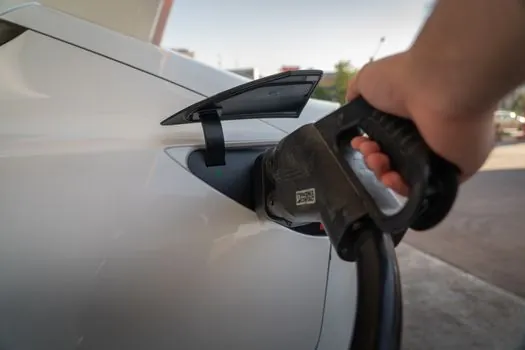
Three signals are worth monitoring through the remainder of 2026 to update the vendor share table. First, the EU AFIR 600 kW corridor compliance deadline for 2027 will force procurement awards before mid-2026 in most member states, lifting ABB and Siemens European order books. Second, North American NACS-to-CCS interoperability certification progress will determine whether Tesla's 50% fast-charging port share starts to fragment as multi-brand vehicles gain access. Third, China's path to the stated 12.3 million cumulative charging stations by 2030 will be the dominant volume variable, and any annual installation figure above 3.5 million units in 2026 would push the global hardware market past the upper bound of the USD 65.7 billion GMI 2026 estimate [S1][S5].