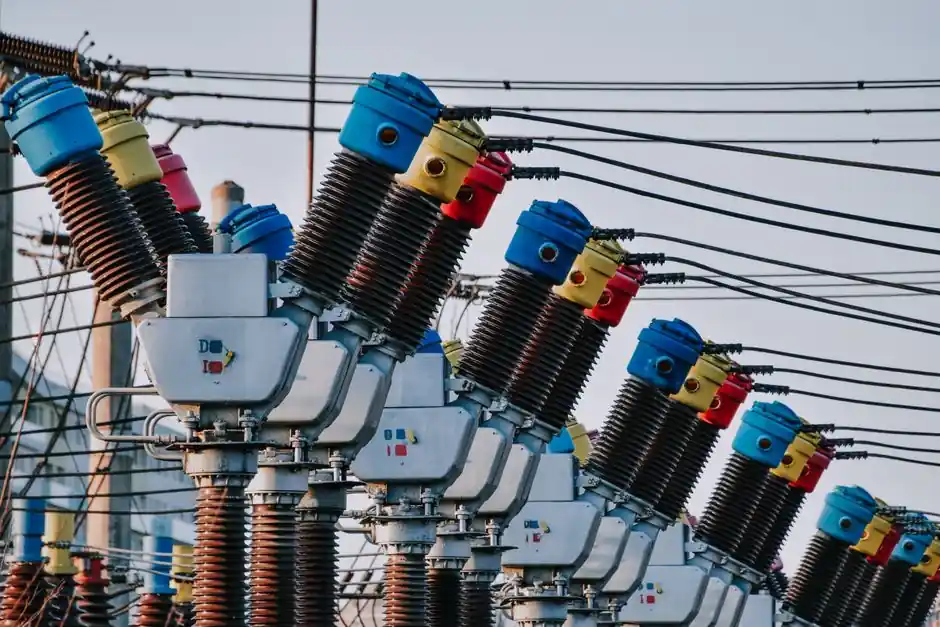
The global EV wiring harness and connector market is projected to grow from $8.53B in 2025 to $29.43B by 2035 at a 12.83% CAGR, with the high-voltage connector sub-segment tracking from $3.17B (2025) to $11B (2035) at 13.3% CAGR [S1][S3].
Passenger BEVs accounted for 85.85% of the wiring harness and connector market in 2025, and high-voltage battery harnesses are expected to remain the largest application category through 2035 due to insulation, shielding, sealing, and thermal demands [S1].
800V Architecture and the Spec Shift Driving Connector Demand
OEM transition to 800V BEV platforms is the single largest spec driver, with Phoenix Contact launching a 1000V HV plug family for EV battery modules in March 2025 and Amphenol securing a January 2025 contract with a leading European OEM for 800V HV connector systems [S3].
TE Connectivity and Rosenberger announced a June 2024 co-development partnership for a modular HV connector platform targeting 800V BEV modules, signalling industry-wide standardisation pressure on shielding, HVIL timing, and secondary-lock geometry [S3]. The transition is forcing connector suppliers to deliver higher current density in smaller packages, with cooling (liquid or air) identified as the likely fifth-generation differentiator beyond shielding, HVIL, and secondary unlock [S4].
HV Connector Generations: From Metal Shells to Cooled Plastic
First-generation HV connectors evolved from industrial metal-shell designs without HVIL, typified by the legacy Amphenol HV series; second-generation parts added HVIL and moved to plastic housings; third-generation parts added 360-degree shielding with the 800-series form factor; fourth-generation parts add a secondary mechanical unlock, with the 280-series as a reference design [S4].
HVIL is a low-voltage signal loop that opens before the HV power contacts disengage, with the interlock-to-power contact timing defined by the contact length differential between the HVIL pin and the main power pin [S4]. For wiring protection, cable materials commonly spec'd into EV harnesses include Silicone, XLPO, XLPE, PVC, TPU, and PA, with high-temperature compounds rated up to 200°C and shielding options (braided or aluminum) available for single- and multi-core cables up to 120 mm² [S5].
Terminal Geometry: Stamped Square vs Machined Round
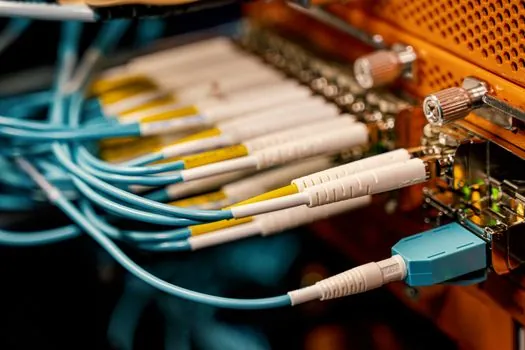
Square terminals use stamping with lower piece-cost but higher tooling investment, and dominate sub-40A signal/auxiliary circuits; some high-current Japanese and American OEM programs (including Tesla and Toyota per the cited industry guide) also use square terminals [S4].
Round terminals use machined contact technology with higher piece-cost but lower tooling cost, and are represented by parts such as the TE HVA800 series in high-current HV powertrain links [S4]. Across the broader market, the named supplier base includes TE Connectivity, Amphenol, Molex, Rosenberger, Glenair, Lear, Phoenix Contact, JAE, Sumitomo Electric, ept GmbH, SAFHolland, Delphi Technologies, Parker Hannifin, and Hirose Electric [S3].
Harness-Level Selection Criteria: Material, Shielding, and Sealing
High-voltage battery harnesses lead application share because pack integration demands tight tolerance on insulation, EMI shielding, sealing (typically IP67/IP6K9K), routing precision, vibration endurance, and continuous thermal performance under cyclic load [S1].
OEM sourcing priorities now list mass reduction, material cost control, assembly simplification, and automation-friendly modular harness formats as parallel requirements, pushing suppliers toward aluminum conductors, compact terminals, and flexible harness geometries [S1]. For related power-electronics supply dynamics, see the EV charger power module SiC and 30 kW stack coverage and the EV battery pack localisation rules and cost drivers analyses.
Comparison: Connector Options on the Decision Criteria That Matter
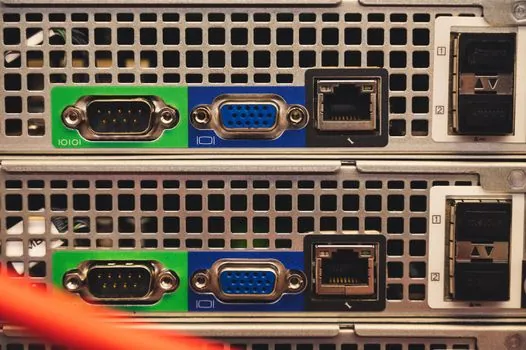
Stamped square terminals win on cost and lead-time for sub-40A auxiliary HV links, but machined round terminals (e.g. HVA800-series) are the default for the high-current battery-to-inverter loop where vibration and contact reliability dominate tooling amortisation math [S4].
First/second-generation metal- and basic-plastic HV connectors are still acceptable for legacy 400V service and aftermarket replacement, while fourth-generation 280-series parts with secondary unlock are the safer specification for new 800V production where finger-safe disconnect under fault conditions is required [S4]. Volex and BizLink both market vertically integrated HV harness programs covering wire extrusion, shielding, connector overmoulding, and PCBA-level build-to-print assembly for OEM and off-highway EV programs [S5][S7].
Regional Supply Map and Asia-Pacific Lead
Asia-Pacific is the dominant regional hub for EV HV connector and harness supply, with the cited market analysis flagging substantial investment in China, Japan, and South Korea for both OEM demand and connector manufacturing capacity expansion [S3].
Global connector suppliers named in the same report include TE Connectivity, Amphenol, Molex, Rosenberger, Phoenix Contact, Sumitomo Electric, JAE, Hirose, and Delphi Technologies, alongside harness-tier players Volex and BizLink that pair in-house wire extrusion with connector overmoulding [S3][S5][S7]. This regional concentration matters for procurement because HVIL timing, shielding effectiveness, and sealing validation are typically performed at the regional Tier-1 level, and lead-time compresses materially when sourcing is co-located with the assembly plant [S1][S3].
What This Means for Specifiers and Procurement
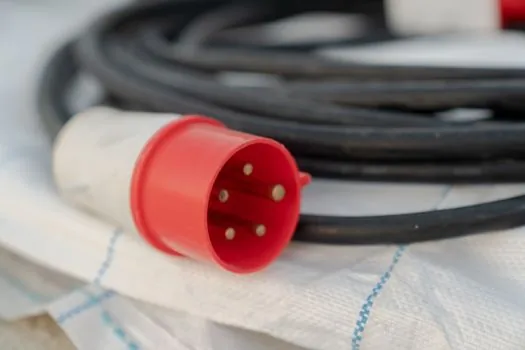
For new 800V BEV programs, specifiers should default to fourth-generation HV connector geometry with secondary mechanical unlock, HVIL timing tied to a documented contact-length differential, and 1000V-rated plugs where pack voltage headroom is needed [S3][S4].
Procurement teams should qualify at least two suppliers across stamped-square and machined-round terminal families to hedge tooling lead-time, and validate that cable compounds (Silicone, XLPO, XLPE) are rated for the local under-hood thermal envelope up to 200°C [S5]. Two trackable signals through 2026: (1) further fifth-generation connector launches integrating liquid or air cooling for high-power charging loops, and (2) additional zonal-architecture OEM nominations reshaping HV harness topology away from point-to-point runs toward zone controller-fed sub-harnesses [S1][S4].
For component-level specifications, see high voltage tester, fall arrest harness, and medium voltage vfd.