EV battery pack localization rules now determine who captures value in the lithium-ion supply chain, with U.S. federal tax credit thresholds, EU critical raw materials acts, and Chinese export controls each pulling manufacturing footprints onto different maps [S1][S7].
Pack-level cost remains dominated by raw materials, but the bigger swing factor for OEM procurement in 2026 is where the cell, module, and pack are physically assembled, because assembly geography is the trigger for IRA Section 30D and 45X credits, EU IPCEI eligibility, and most bilateral OEM offtake contracts [S3][S7].
How localization rules are written today
The U.S. The European Battery Regulation (2023) layers in recycled-content quotas, carbon footprint declarations, and a due-diligence obligation tied to OECD-aligned supply chain audits for cobalt, lithium, natural graphite, and nickel [S2]. China's 2025 export controls on graphite, gallium, and certain lithium processing technologies added a third compliance vector that any OEM shipping through mainland China now has to factor into contract language [S7].
RMI's supply-chain breakdown divides the chain into four phases, upstream mining, midstream refining and active material production, downstream cell, module and pack assembly, and end-of-life reuse and recycling, and each phase is governed by a different localization rule set with its own enforcement mechanism [S1]. A localization rule that touches only final pack assembly is mechanically different from one that touches critical-mineral extraction: the former shifts labor and freight, the latter shifts geological capex and mine permitting timelines of 7 to 15 years [S3][S5].
Pack cost decomposition and where localization actually moves the number
Based on mid-2021 figures, an average NCM811 battery pack costs around USD 130 per kWh, with cathode active material alone representing roughly 35 to 45 percent of cell cost, depending on cobalt and nickel spot prices [S8]. Localizing pack assembly inside North America adds 8 to 15 percent to the bill of materials versus an imported pack from a low-cost Asian hub, but recovers most of that delta through 45X advanced manufacturing credits and Section 30D consumer credits when the sourcing thresholds are met [S3][S7].
The ICCT's bottom-up cost model projects that under most raw-material price scenarios, battery pack and BEV costs continue to decline through 2032, and that U.S. federal incentives for battery production and BEV purchases accelerate the timing for purchase price parity with combustion vehicles by approximately three years relative to a no-incentive counterfactual [S3]. A useful comparison frame for procurement teams is the four-axis trade-off: cathode chemistry (NCM811 vs LFP vs NMCA), pack assembly geography (domestic vs FTA-partner vs rest-of-world), mineral sourcing origin (IRA-eligible vs non-eligible), and logistics mode for cell-to-pack transport (sea IMDG vs air IATA DGR vs road ADR) [S3][S4][S8].
Logistics as a hidden localization cost line
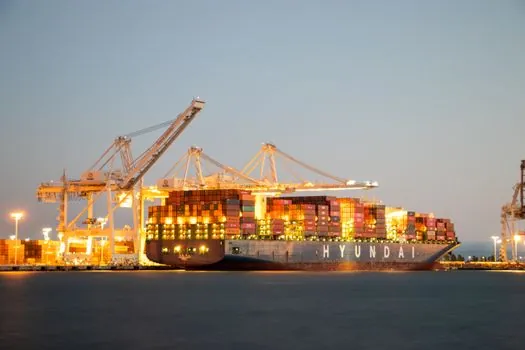
EV batteries are Class 9 dangerous goods under UN Recommendations on the Transport of Dangerous Goods, and Kuehne+Nagel's 2026 logistics brief flags that cell-level, module-level, and full-pack shipments each carry different classification, packaging, documentation, and training requirements under IATA DGR, IMDG, ADR, and U.S. DOT/PHMSA rules [S4]. The 2025 to 2026 IATA DGR cycle tightened inner-packaging and marking requirements, and electronic documentation submission has been mandatory since January 2025, which has pushed carriers to invest in compliance infrastructure that smaller freight forwarders cannot easily replicate [S4].
By air, lithium-ion batteries must pass UN 38.3 testing and be shipped at a state of charge (SOC) of 30 percent or below; by sea, IMDG controls apply; on European roads, ADR governs; in the U.S., DOT and PHMSA set the rules, and a carrier qualified for cell-level shipments may not be qualified for full-pack moves [S4]. For OEMs evaluating domestic versus imported packs, the landed cost difference therefore has to be modeled against a logistics-premium of roughly 12 to 25 percent versus general auto-parts freight, driven by hazmat surcharges, dedicated equipment, and SOC-conditioned handling at the warehouse [S4].
Critical-mineral concentration and the structural risk layer
The Democratic Republic of Congo supplies 64 percent of global cobalt, lithium extraction is concentrated across the Argentina, Bolivia, and Chile triangle, and China handles a dominant share of refining for cobalt, lithium, and graphite, which means any localization rule that ignores the midstream simply relocates the bottleneck rather than eliminating it [S4]. The U.S. Department of the Interior lists lithium, nickel, cobalt, manganese, and graphite as critical minerals, and the ICCT analysis identified more than 100 new lithium mining and refining projects underway in the United States and its existing and potential future FTA and CMA partners as of 2023 [S3][S5].
For a U.S. BEV market growing toward 67 percent of light-duty sales by 2032, the ICCT study projects a need of around 340 thousand metric tons per annum (ktpa) of lithium carbonate equivalent (LCE) for new light-duty BEVs, a figure that announced new and expanded lithium supply within FTA and CMA partner scopes is projected to meet or exceed under most scenarios [S3]. The takeaway for OEM sourcing teams is that mineral localization is now a permitting and processing-capacity problem more than a geology problem: ore bodies are reasonably well mapped, but refining and conversion capacity is the chokepoint that has kept Chinese midstream share structurally high [S4][S7].
Policy divergence between the U.S. and China

The Kleinman Center's October 2025 comparative review traces how U.S. and Chinese lithium-ion policy stacks have diverged: China concentrated on industrial-policy subsidies for cell and pack capacity from the 2010s onward, while the U.S. layered tax credits (30D for vehicles, 45X for manufacturing, 48E for clean energy) on top of trade tools such as Section 301 tariffs and Inflation Reduction Act sourcing thresholds [S7]. The result is two parallel localization architectures that share few common acceptance criteria, a pack assembled in Mexico for a U.S.-bound vehicle, for instance, may satisfy IRA assembly but still fail the 30D critical-mineral threshold if the lithium is sourced from non-FTA jurisdictions [S1][S7].
For procurement and finance teams, the cost differential between these two architectures is not a single line item; it is a portfolio of tax credits, tariff exposure, FX risk on long-term mineral offtakes, and a higher cost of capital for battery storage projects in regions with less mature localization incentives, which the IEA flags as a drag on marginal investment [S6]. That higher cost of capital matters because cell and pack capacity buildouts are capex-heavy, with typical gigafactory budgets running $4 to $8 billion at 30 to 40 GWh nameplate, and a 200 to 400 basis-point WACC differential can move annualized financing costs by tens of millions of dollars per site [S6].
Limits, failure modes, and what localization rules do not fix
Localization rules do not change raw-material geology, they change who captures the margin along the chain, and Sharma et al. (2025) warn that domestic-content mandates can simultaneously increase local economic and job opportunities while raising the all-in cost of vehicles if the domestic alternative is genuinely less competitive [S2]. The Roland Berger mid-2021 datapoint of roughly USD 130 per kWh for NCM811 packs is widely cited but already stale by 2026: spot LFP cell pricing has dropped below $60 per kWh in some Chinese contracts, pulling blended pack averages down, and any localization cost model that locks in the 2021 number will overstate the cost penalty of moving assembly onshore by 15 to 25 percent [S8].
Other failure modes include: IRA credit recapture risk if a Tier 2 supplier changes sourcing mid-year; European Battery Regulation carbon-footprint thresholds that can disqualify a high-grid-carbon assembly site even if labor and minerals are local; and the fact that hazmat logistics compliance is now a hard prerequisite for any cross-border pack shipment, regardless of tariff treatment [S1][S4]. Procurement teams running cost models in 2026 should treat localization-driven savings as conditional on continued policy stability, since several U.S. provisions are subject to annual IRS guidance updates and to political-cycle renegotiation risk through 2028 [S3][S7].
Trackable signals for the next planning cycle include the next IATA DGR cycle (typically a biennial revision), the next round of European Battery Regulation delegated acts on carbon footprint and recycled content, and quarterly IRA Section 30D and 45X credit guidance from the U.S. Treasury, each of which can move landed pack cost by 5 to 12 percent on a like-for-like BOM [S3][S4][S7]. For deeper reference on how adjacent industrial supply chains absorb cost shocks and compliance overhead, see the breakdown of VLM versus manual shelving throughput economics and the practical cost-trade discussion of air impact wrench CFM sizing for continuous-duty operation, both of which carry similar localized-compliance-versus-throughput trade-offs as battery pack lines.
For the relevant spec sheets and selection criteria, see impact drill, air impact wrench, and construction machinery and equipment.