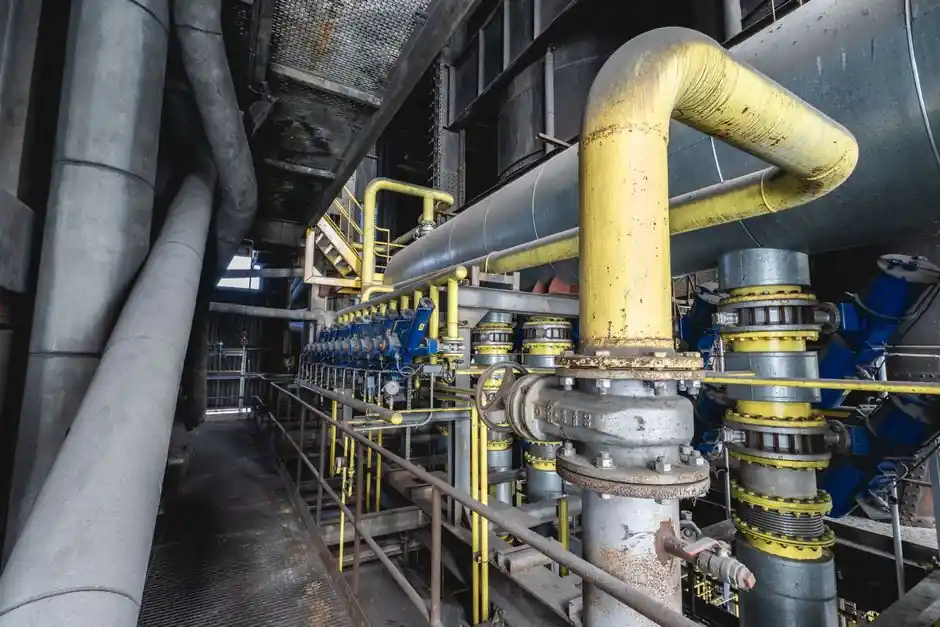
Ex p can protect standard equipment inside large enclosures by purging 5 to 10 enclosure volumes and maintaining at least 0.5 mbar positive pressure, making it a strong alternative to heavier explosion-proof construction [S4].
The decision depends on enclosure size, internal equipment, access frequency, hazardous-area classification, and the independent protection required for wiring and cable entries [S1][S7].
What Ex p and Ex d Protect
Ex d, commonly called explosion-proof in North America and flameproof within ATEX and IECEx practice, contains an internal ignition source and relies on flamepath construction to prevent flame propagation [S1].
Ex p uses compressed air or inert gas to remove a flammable gas or vapor and prevent its entry, thereby separating internal ignition-capable equipment from the surrounding explosive atmosphere [S2][S3]. In gas applications, the enclosure is purged until residual gas concentration is below the lower flammable limit before positive pressure is established and power is enabled [S3].
Ex p is not a complete substitute for a hazardous-area design. Associated wiring and cable must also be protected by pressurization or another suitable method, including explosion-proof conduit or intrinsic-safety barriers [S7].
Decision Criteria: Installation and Lifecycle
Ex p generally provides the lower-cost, lighter and more accessible route when ordinary electrical equipment must be housed in a large control panel, variable-frequency-drive cabinet, PLC enclosure, analyzer package, SCADA panel or motor system [S5][S8].
Ex d is better suited to compact apparatus that can be certified as a complete piece of equipment, particularly where the installation does not justify a purge-control system, pressure supply and enclosure designed for sustained positive pressure [S1]. The detailed installed-cost tradeoffs are covered in Explosion-Proof Electrical Installed Cost: Decision Guide.
Neither method should be selected from cabinet cost alone. The enclosure must suit the area classification, and the protection concept must extend through interfaces such as cable glands, conduits, vents and penetrations rather than stopping at the cabinet door [S4][S7].
Ex p Operating Sequence and Controls
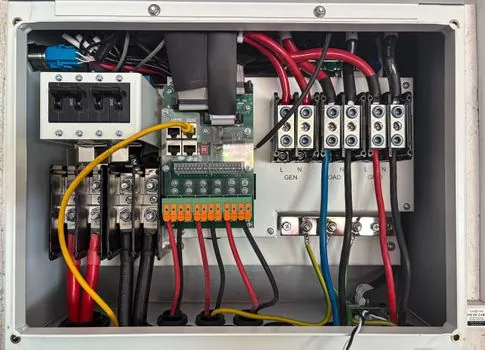
A typical Ex p sequence flushes the enclosure with clean air or inert gas, removes flammable gases or vapors, establishes positive pressure, and removes power if pressure is lost [S5]. The enclosure is normally purged with 5 to 10 volume changes, with regional acceptance criteria cited as 5 air changes in Europe and 10 in North America [S4].
Power cannot be applied until purging is complete and the specified positive pressure has been achieved. If the purge cycle fails through inadequate flow or insufficient duration, or if enclosure pressure falls below the specified value, Zone 1 equipment requires power removal; Zone 2 equipment may instead provide an alarm [S4].
A Purge Control Unit measures flow and pressure and must fail safe [S4]. The enclosure also needs sufficient physical integrity to withstand impact and overpressure, unrestricted internal gas flow, and environmental protection described in the research as at least IP40 with no openings greater than 1 mm [S4].
Where Each Method Fits
Ex p is appropriate for large control panels, VFD cabinets, PLC and automation systems, SCADA integration, offshore and industrial skids, and electrical equipment that is too large or highly powered for practical explosion-proof enclosure construction [S5][S8]. It is also useful where technicians require frequent access to internal components [S5].
Ex d is appropriate where a compact assembly needs an equipment-based explosion-protected enclosure and its flamepath, joints and surface-temperature construction can be assessed as one certified unit [S1]. Purge systems remain unsuitable where the gas supply, enclosure leakage, purge sequencing and shutdown response cannot be assured throughout the hazardous-area duty cycle.
For the principal option comparison, Ex p ranks first for large-enclosure cost, light weight and maintenance access, but requires more supporting infrastructure and active pressure monitoring. Ex d ranks first for compact equipment and integrated certification, but its enclosure can be heavier, more expensive and less convenient for frequent access [S5].
Certification and Sourcing Constraints
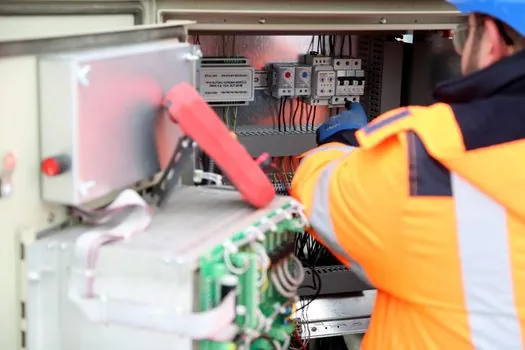
Ex p design and verification must address the applicable hazardous-area framework, including IEC 60079-2 for pressurized enclosures and NFPA 496 for purged and pressurized electrical enclosures [S3]. Ex p systems are also used in Class 1, Division 2 and ATEX Zone 2 applications, with selected Zone 1 use possible [S5].
ATEX and IECEx cover equipment intended for use in the European Economic Area and international markets, while NEC-based Class and Division systems apply in North America [S1]. Flameproof and explosion-proof terms are not interchangeable without qualification because their regional test procedures differ, even though the underlying containment concept is similar [S1].
Enclosure materials, surface temperature, static effects from non-metallic parts and the possibility of venting incandescent particles must be reviewed. The referenced guidance calls for a spark arrestor where such particles could escape [S4].
Limits That Can Defeat the Concept
Loss of purge flow, incomplete purge duration or loss of positive pressure are functional failure modes for Ex p, not merely maintenance issues [S4]. A system that cannot verify purge completion, maintain pressure and remove power under the applicable classification is not equivalent to a certified Ex p installation [S3][S4].
Ex d shifts the problem from gas-flow reliability to mechanical integrity. The enclosure must contain an internal explosion without transmitting flame or unacceptable pressure to the surrounding hazardous area, and the protected equipment must remain within its certified temperature and installation limits [S1].
For ordinary plant applications, the practical split is straightforward: specify Ex p for large, open, frequently serviced assemblies with a dependable compressed-air or inert-gas supply; specify Ex d for compact, factory-configured equipment where certified containment offers the simpler installation basis.