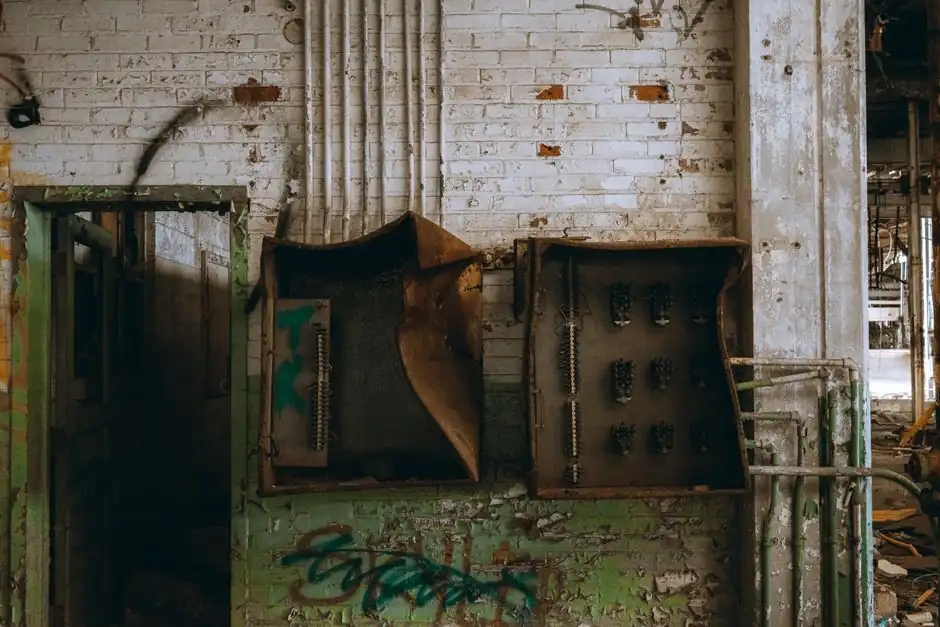
Specifying an explosion-proof junction box starts with three hard locks: hazardous area classification, certification mark, and a box sized to NEC 314.28 pull-and-splice rules for conductors 4 AWG and larger [S5]. Material and IP are then chosen to the chemistry, not the other way around [S1][S4].
The two governing systems are the IEC/ATEX Zone model (Zone 0, 1, 2 for gas, Zone 20, 21, 22 for dust) and the NEC Class/Division model (Class I Div 1, Class I Div 2, Class II Div 1, Class II Div 2) [S1][S2]. Each rating must be paired with a gas group and a temperature class, since an enclosure certified for methane (Group IIA) is not automatically approved for hydrogen (Group IIC) [S2].
Area classification comes first, certification second
Zone 0 denotes a flammable atmosphere present continuously or for long periods, Zone 1 denotes presence likely during normal operation, and Zone 2 denotes presence only briefly under abnormal conditions; dust mirrors this with Zones 20, 21, 22 [S1][S2]. The NEC equivalent collapses that into Class I Division 1 (normal or frequent presence) and Class I Division 2 (abnormal or short-term presence) [S2]. Pick the zone, then the matching Ex marking, not the reverse: a Zone 1 box in a Zone 0 location is non-compliant regardless of material quality [S3].
Gas group and temperature class travel with the zone. Typical gas groups are IIA (propane), IIB (ethylene), and IIC (hydrogen/acetylene), while temperature classes T1 through T6 cap surface rise from 450 °C down to 85 °C [S2]. For hydrogen service, only IIC and T6-classified enclosures are acceptable, and that constraint alone eliminates a large slice of the aluminium catalogue.
Material: cast aluminium, stainless steel, or GRP
Three families dominate the market: cast aluminium, stainless steel (typically 304 or 316), and glass-reinforced polyester (GRP) [S1][S3][S4]. Cast aluminium wins on weight and thermal conductivity, which helps heat dissipation, but underperforms in chloride, sour-service, or coastal atmospheres. Stainless steel 316 is the default for offshore decks, chemical plants, and washdown food lines; 304 is acceptable indoors or under cover. GRP is non-sparking, lightweight, and resistant to many acids, but its mechanical impact rating and continuous-temperature ceiling are lower than metal, so it is rarely used in Zone 0 or where the enclosure sees heavy mechanical abuse [S3][S4].
NIOSH-cited industrial data referenced in vendor guidance puts corrosion-related failures at roughly 25% of all industrial equipment failures, which is the reason a spec often downgrades aluminium to 316 SS the moment chloride exposure enters the picture [S1]. Material choice also feeds the earthing/grounding lug sizing: a larger stainless enclosure needs a correspondingly larger internal/external grounding boss to keep the fault path impedance inside the certification envelope [S3].
IP rating and environmental envelope
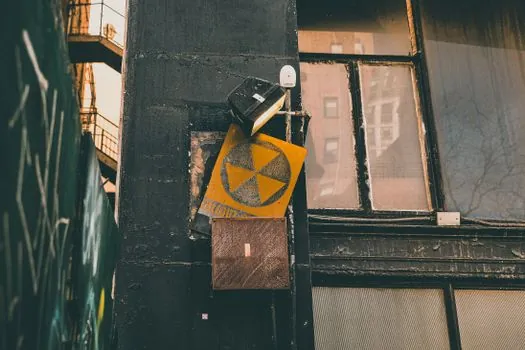
IP66 is the practical baseline for most outdoor hazardous-area junction boxes; it certifies total dust ingress and protection against powerful water jets [S4]. IP65 covers dust-tight and low-pressure water jets, while IP67 adds temporary immersion (typically 1 m for 30 min) and IP54 is only dust-protected, not dust-tight, which rules it out for Zone 21/22 dust environments where fine powder can bypass the gasket [S4].
Beyond the IP code, outdoor service adds UV resistance on GRP lids, gasket material compatibility with the prevailing chemicals (silicone, EPDM, or Viton), and ambient temperature range, which is commonly −40 °C to +60 °C for Ex e and Ex d enclosures, with some tropicalised units rated to +80 °C [S3]. Skipping the UV rating on a GRP box used in a Middle East refinery is one of the fastest ways to lose the NEMA 4X equivalence in five years instead of fifteen.
Sizing the box: NEC 314.28 box-fill, not enclosure area
Box sizing for hazardous areas follows the same NEC 314.28(A) logic as ordinary junction boxes once you are past the Ex marking [S5]. For straight pulls, the box length must be at least eight times the trade diameter of the largest conduit entering the box, so a 2-inch raceway demands at least 16 inches of straight-run length [S5][S7]. U-pulls, angle pulls, and splices each carry their own multiplier under 314.28(B), and these calculations are applied per conductor 4 AWG and larger, not per cable jacket [S5].
The often-missed rule is that hazardous-area enclosures must also leave working space for terminations, not just pull room. In practice, that means the chosen internal volume should comfortably fit the planned terminal blocks plus roughly 30% spare space for future conductors or instrument loops, because retrofitting a larger Ex d box after cable glanding is finished typically means a hot-work permit and a re-certification [S3][S4]. An explosion-proof distribution box downstream of the junction box follows the same volumetric logic but adds busbar clearances and creepage distances dictated by its rated voltage.
Who should NOT pick the cheapest aluminium option
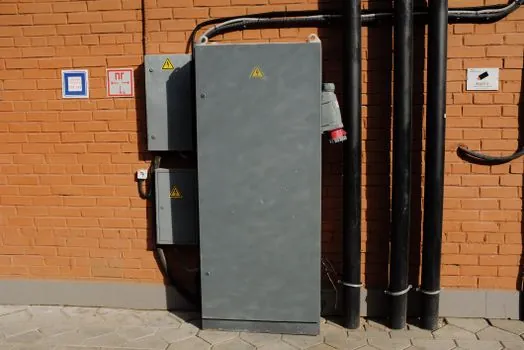
Cast aluminium is the wrong pick for offshore platforms, sour-service hydroprocessing, and any site with routine salt-spray or H2S exposure; the corrosion tax shows up as thread pitting on flame paths, which destroys the Ex d certification regardless of how the rest of the enclosure looks [S1][S4]. Stainless steel is also the safer call for cleanrooms, pharmaceutical lines, and food plants where the disinfectant chemistry attacks aluminium quickly.
GRP is the wrong pick for Zone 0, for any location with high mechanical impact risk (forklift traffic, dropped tools, drilling rigs), and for service temperatures above roughly 80 °C continuous; a stainless or aluminium build will outlast it there by a wide margin [S3]. And any enclosure without an Ex d flame path, an Ex e increased-safety terminal, or a documented Ex tb rating should be excluded from Zone 1/21 service outright, regardless of how the marketing brochure reads.
Comparison: enclosure material against four decision criteria
Cast aluminium scores well on weight and cost, middling on corrosion resistance, and well on thermal conductivity. Stainless steel 316 scores well on corrosion and mechanical impact, poorly on weight, and high on cost. GRP scores well on corrosion and weight, poorly on temperature ceiling and mechanical impact, and low on first cost. Across the same matrix, IP66 plus an ambient range of −40 °C to +60 °C is available in all three, but only stainless and aluminium typically carry the −55 °C Arctic-service rating, and only stainless reliably carries NEMA 4X for years in chlorinated washdown [S3][S4]. A spec that ignores the impact-rating column tends to buy the wrong box for loading docks and drilling floors.
Certifications, cable entry, and the small print
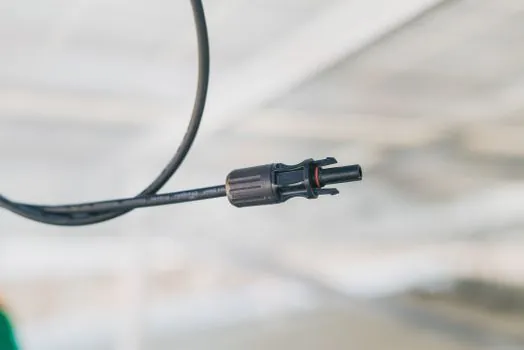
ATEX is mandatory inside the European Union, IECEx is the global scheme, and UL/CSA govern North America; many modern enclosures carry all three marks on the same nameplate [S3][S4]. The certificate number must be checked against the exact zone, gas group, and ambient temperature band, not just the family. Cable entry is through certified glands (Ex d or Ex e as applicable) on machined flat gland plates, and the gland plate drill pattern must support the planned cable cross-section without exceeding the manufacturer's published maximum entry count [S3].
Maintenance features worth specifying up front include hinged covers with captive screws, removable gland plates on at least two faces, an internal/external grounding lug, and a nameplate that survives the enclosure's rated service life rather than a paper sticker [S3][S4]. Buyers comparing junction boxes against broader hazardous-area kits should also weigh how the same vendor handles explosion-proof light and explosion-proof button families, since common certification marks across the bill of material reduce the documentation load at audit time. For a deeper look at spec-driven picks, see the parallel walkthrough on How to Choose an Explosion-Proof Junction Box: Spec-Based Selection.
Next trackable signal: confirm whether the chosen enclosure carries IECEx Ex d IIB+H2 (hydrogen) coverage when the area classification touches Group IIC, and verify the flame-path machining tolerance against the latest IEC 60079-1 certificate rather than the legacy datasheet. A second useful check is to ask the vendor for the box's tested ambient range in writing; a stated −20 °C rating on the catalogue often quietly drops to 0 °C once the certificate is read, and that single number can rule out an entire winter-shutdown project.