Explosion-proof and anti-static equipment are not interchangeable: explosion-proof devices contain an internal ignition so it cannot reach the surrounding flammable atmosphere, whereas anti-static equipment prevents the spark from forming in the first place by bleeding charge to ground [S2][S4].
Both fall under hazardous-area protection programmes, but they answer to different standards (ATEX 2014/34/EU, IEC 60079 series, EN 1149-5, IEC 61340-5-1) and different ignition models, which is why selection needs to start from the zone classification and the ignition source, not from the product catalogue [S4][S5].
Ignition model: containment vs charge dissipation
Explosion-proof (Ex d) enclosures are designed so that if flammable gas or dust enters the housing and ignites, the flame path cools below the auto-ignition temperature of the surrounding atmosphere before it reaches the outside [S2]. Anti-static PPE and tooling take the opposite approach: surface resistivity is held in a band that lets charge leak away fast enough to stay below the minimum ignition energy of the atmosphere, typically quoted at 0.2 mJ for many common solvent vapours and dust clouds [S1][S5].
EN 1149-5 protective clothing neutralises charge through conductive grid yarns woven into the fabric; the standard is explicitly a PPE standard aimed at stopping sparks on the wearer, and the protection is graded by surface resistance and charge decay time rather than by an enclosure pressure rating [S5]. For an engineer, the mental shortcut is: Ex d = "let it ignite, but trap it"; anti-static = "never let it ignite" [S3][S6].
Standards stack: ATEX/IECEx on one side, EN 1149/IEC 61340 on the other
In the UK and EU, equipment placed on the market for use in potentially explosive atmospheres must carry the Ex marking plus a UKCA or CE mark under the Equipment and Protective Systems Intended for Use in Potentially Explosive Atmospheres Regulations, which implement ATEX Directive 2014/34/EU [S4]. The supporting test and design standard is the IEC 60079 series (with BS EN 60079-17 covering inspection and maintenance intervals), and most IECEx certificates are accepted alongside ATEX for non-EU markets [S4].
Anti-static and ESD workwear run on a parallel track. EN 1149-5 covers anti-static garments whose job is to protect the wearer from spark discharge, while IEC 61340-5-1 governs ESD-protective materials whose job is to protect components on a production line; the two are not equivalent, and a garment meeting IEC 61340-5-1 is not automatically EN 1149-5 compliant because the grid spacing, charge decay, and flame-retardancy requirements are different [S5]. An anti-static equipment specification should therefore cite the EN 1149 series for clothing and IEC 61340-5-1 for ESD-protected assembly tools, not one standard covering both [S5].
Zone classification drives the equipment choice, not the other way round

ATEX/IECEx zones grade how often an explosive atmosphere is present: Zone 0/20 (continuous), Zone 1/21 (intermittent), and Zone 2/22 (rare or short-duration), and each zone restricts which protection concept is acceptable [S4]. For Zone 1, Ex d (flameproof) and Ex e (increased safety) are common for junction boxes, motors, and lighting; for Zone 0, Ex ia (intrinsically safe) is normally required because energy is limited below ignition thresholds at the source [S3][S6].
Anti-static controls layer on top of, not instead of, the Ex-rated hardware. HSE's DSEAR-aligned guidance lists earth bonding of conductive parts and antistatic work clothing and footwear as separate ignition-prevention measures, sitting alongside sealed or de-energised electrical equipment [S4]. A practical spec for a Zone 1 solvent filling room, for instance, can require an explosion-proof distribution board, Ex d lighting, and EN 1149-5 coveralls for operators in the same procurement package, because each line attacks a different leg of the ignition triangle [S4][S6].
Decision matrix: which equipment fits which hazard
Four criteria usually separate the options in a buying decision: ignition threat, zone, mobility of the operator, and what is being protected (people vs product). On those axes, explosion-proof enclosures score on fixed electrical assets in Zone 1/21, intrinsically safe devices on low-energy instruments in Zone 0/20, anti-static clothing on mobile workers in any flammable atmosphere, and ESD-controlled materials on electronics assembly where a 100 V human-body discharge can destroy a chip long before it can ignite a solvent [S3][S5][S6].
Anti-static clothing is generally the lower-cost layer and is widely specified for refinery, paint-shop, and grain-handling operators, but it does not address hot-surface or electrical-spark ignition from energized equipment, so it is paired with, not substituted for, Ex-rated hardware [S1][S4]. For an engineer deciding where to spend budget first, the rule of thumb from the HSE guidance is to de-energise or seal the equipment where possible, then apply zoning, and only then layer anti-static controls on personnel [S4].
Use cases, limitations, and common spec errors
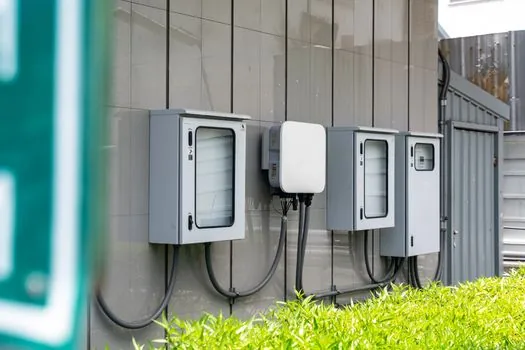
Explosion-proof equipment's main limitation is weight and footprint: Ex d enclosures are heavy, the flame-path machining is precision work, and any field modification (extra conduit entries, swapped terminals) usually invalidates the certificate until re-tested, which is why most plants standardise on a small set of pre-certified explosion-proof families rather than mixing vendors per circuit [S2][S4]. Maintenance must follow BS EN 60079-17 intervals and be done by competent personnel, and bolts, gaskets, and thread engagements are checked rather than assumed serviceable [S4].
Anti-static equipment's main limitation is human factors: charge builds fastest on insulating layers under clothing, on synthetic undershirts, and on personal items like phones, so an EN 1149-5 outer coverall over a cotton T-shirt is acceptable, but the same coverall over a fleece mid-layer can defeat the protection, and the spec needs to call out acceptable under-layers and footwear resistivity [S1][S5]. Another recurring error is using ESD (IEC 61340-5-1) garments in flammable atmospheres; ESD is designed to protect components, not to prevent sparks, and most ESD fabrics are not flame-retardant, so they are the wrong pick for refinery or solvent work [S5]. For more context on how anti-static rules interact with the broader PPE selection, the heat detector selection spec map shows how zoning logic carries across to fixed gas and fire detection hardware.
Procurement checklist and trackable signals
A clean spec for hazardous-area PPE and electrical gear should name the zone, the gas or dust group (IIA/IIB/IIC or IIIA/IIIB/IIIC), the protection concept (Ex d, Ex e, Ex ia, Ex tb), the anti-static standard (EN 1149-5 for clothing, IEC 61340-5-1 for ESD tooling), and the maintenance standard (BS EN 60079-17), with the ATEX/IECEx certificate numbers called out per line item [S4]. A short quotation worth keeping in the file: HSE's DSEAR-aligned guidance states that equipment in potentially explosive atmospheres must be "specially designed and constructed so that the risks of ignition are eliminated or reduced" through sealing, power reduction, or de-energisation on fault [S4].
Trackable next signals to watch are the IEC 60079-0 / 60079-1 maintenance cycles recorded under BS EN 60079-17, the EN 1149-5 charge-decay test reports on incoming garments, and the DSEAR risk-assessment review dates for each Zone 1/21 area, all of which are auditable and should appear in any explosion-proof button or control-station certificate pack. For sites planning operator-side upgrades in 2026, pairing an Ex-rated controls refresh with an EN 1149-5 clothing rollout, then closing gaps with warning sign buying guide zoning callouts, is the lowest-risk way to keep both standards aligned without over-spending on either side.