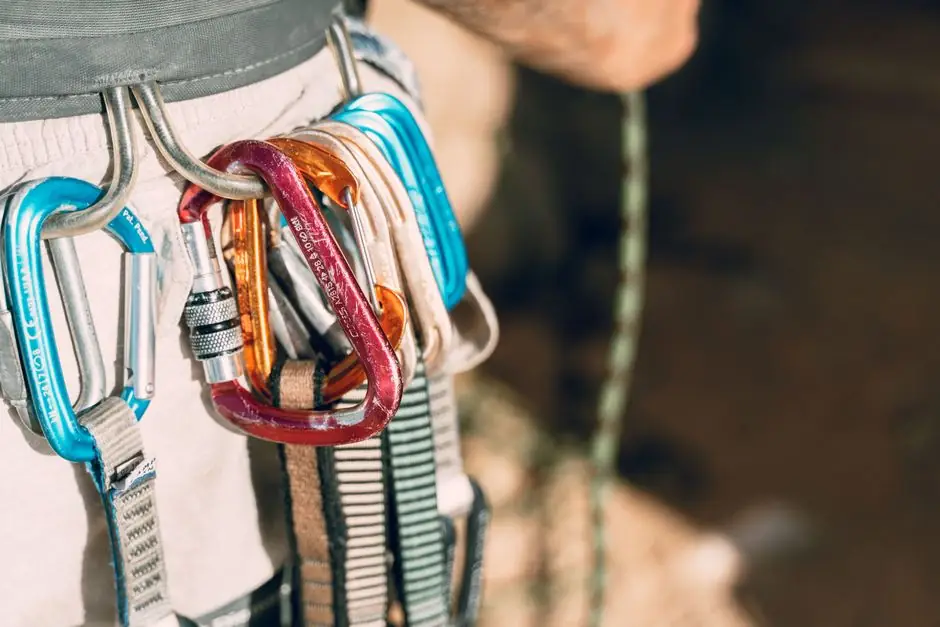
For production roofers and framers carrying tools throughout the workday, an integral system such as the Super Anchor 6151 eliminates a second waist layer and keeps bags attached to the harness frame [S1].
The 6151 combines a Type A/P full-body harness with gray tool bags, supports up to 310 lb including tools, and provides dorsal fall-arrest plus side work-positioning attachment points [S1].
Decision criteria: stability, capacity, and harness interference
A standalone tool belt scores well for modularity because bags can be removed or exchanged, but it introduces a second waist interface. A separate tool belt worn over a harness rides badly and can block the positioning D-rings.
An integral harness scores better for tool stability and fewer interference points. The All-Pakka bags mount to the harness frame so the harness and bags work as one rig instead of as a separate waist belt. The 6151 is intended for production roofers and framers who carry their tools on the harness all day.
The comparison is direct: an integral system provides better attachment stability and lower harness interference, while a standalone belt provides greater bag modularity and easier removal. Capacity, not bag placement alone, decides whether either configuration is acceptable.
Integrated harness capacity and fall-clearance limits
The Super Anchor 6151 is rated for fall arrest, fall restraint, and work positioning at a maximum user capacity of 310 lb including tools and equipment [S1]. Its polyester webbing has a tensile strength of 6,000 lb, while its D-rings have a strength of 5,000 lb.
The 6151 has a maximum harness stretch of 14 in. The 6151 is rated for a user capacity of 310 lb including tools.
The 6151 is offered in S, M, L, LL, and XL sizes.
Standalone tool belt: acceptable only with controlled interference

A separate tool belt is practical when the task has limited tool demand, the worker can transfer tools to a ladder, lift, bucket, or other designated location before climbing, and the belt cannot contact harness hardware [S5]. One respondent said they hang needed tools from the ladder, railing, lift, or building structure rather than wearing them.
The key failure mode is interference. A standalone belt must not obstruct the dorsal or side attachment points, prevent the harness from lying correctly, alter adjustment and closure, or place rigid tools against the worker during a fall [S1][S5].
Standalone belts are therefore appropriate for low-tool tasks, controlled platforms, or workers who remove the belt before exposure to a fall hazard. They are poor choices for continuous climbing with multiple tools where the belt can migrate or interfere with rated attachment points.
Use cases by work pattern and fall exposure
Choose an integral system for production roofers, framers, and other users who carry tools on the harness all day [S1]. The 6151 combines a gray Tri-Lam3 padded frame and quick-connect buckles with gray All-Pakka tool bags that mount to the harness frame so the harness and bags work as one rig.
Choose a standalone tool belt for intermittent work where tools can remain at ground level or in a secured bucket, or where an integral harness would add unnecessary mass. Electrical work on ladders is one example where a worker may carry no more than a small number of tools and secure the belt or bucket to the ladder, lift, or structure rather than wearing it during a fall [S5].
Neither option is suitable when it compromises the harness. Full-body harnesses are preferred for fall arrest over body belts because they provide better body support and force distribution [S6]. The tool-carrying method must preserve that function, not treat the harness as a convenient bag hanger.
Standards, component verification, and purchasing checks

The 6151 is identified as compliant with ANSI Z359.11-21 under Intertek report 11-2024, OSHA 1926.502, and CSA Z259.10-18. These identifications apply to the stated model, configuration, and manufacturer instructions, not to every harness sold with a tool belt [S1].
For procurement, require the model designation, harness size, intended use rating, user-capacity limit including tools, attachment-point layout, webbing strength, D-ring strength, and certification documentation.
Do not infer approval from the words “tool belt” or “integrated.” Verify that the complete harness and connector combination is certified, that the manufacturer permits the proposed loading arrangement, and that the selected size fits the wearer. Product selection is only one part of a complete personal fall-arrest system, which also includes an approved anchor, connector, and any lanyard or self-retracting lifeline.
For a related evaluation of full-body harness comfort, see Select a Padded Full-Body Harness for Suspension Comfort.
Before issue, document the wearer’s size, maximum permitted combined mass, tool count, attachment points, adjustment checks, and 14 in harness stretch where the 6151 is used. Replace any system that cannot retain its tools without blocking a rated D-ring, distorting fit, or introducing rigid impact hazards.