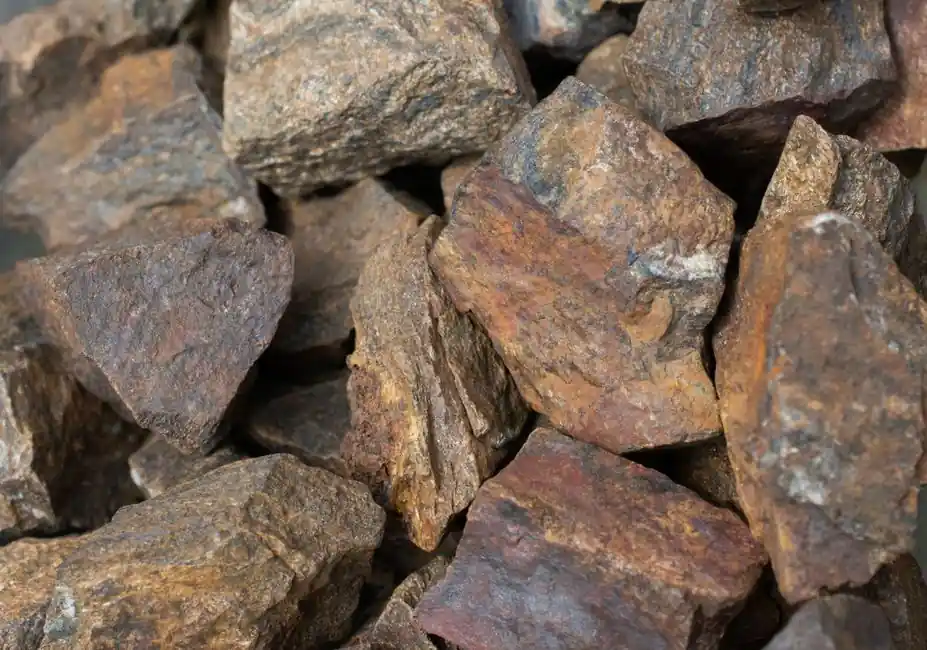
Global ferrochrome demand is forecast to climb from USD 22.83 billion in 2025 to USD 30.61 billion by 2032, a 4.28% CAGR, with over 80% of output flowing into stainless-steelmaking [S1]. A separate forecast pegs the 2026 market at USD 22.77 billion rising to USD 48.25 billion by 2035 on accelerated decarbonization spending [S6].
South Africa supplied 3.3 Mt of 2024 global production of 17.5 Mt and holds over 72% of world chromite reserves, the structural anchor for any 2026-2030 supply model [S1]. Asia-Pacific collectively accounts for over 60% of ferrochrome demand, with China, India, and Japan as the principal pull markets [S1].
Product Grades: HC FeCr Still Dominates, LC and MC Tied to Specialty Alloys
High-carbon ferrochrome (HC FeCr) represents over 70% of global ferrochrome output, the workhorse grade for standard 300-series stainless-steel production [S1]. The remaining mix splits among medium-carbon (MC FeCr), low-carbon (LC FeCr), micro-carbon, and silicon-chrome alloy for specific steel chemistries [S2].
For 2026-2030 buying, the grade split matters because each category ties to a different chromium content window: stainless steel typically targets 10% to 20% Cr in the final melt, and the FeCr grade chosen sets how much carbon trimming is needed downstream [S1].
End-Use Pull: Stainless-Steel Tonnage Sets the Demand Curve
Global stainless-steel production reached 50 million tons in 2024, and the stainless-steel sector continues to drive the ferrochrome consumption curve [S1]. Automotive, construction, and consumer-goods sectors are the three largest stainless-consuming verticals, each with different chromium-intensity requirements.
The decision a procurement engineer faces is whether to lock HC FeCr tonnage against long-dated stainless order books (lower unit cost, higher carbon penalty in melt shop) or to shift toward LC FeCr for 304L/316L-heavy product mixes (higher unit cost, lower downstream decarburization load). For 2026-2030, China remains the single largest consumption node, followed by India and Japan, with Asian auto and construction cycles setting the marginal demand [S1][S2].
Process Technology: EAF Adoption Cuts Energy Intensity, Reshapes Site Economics
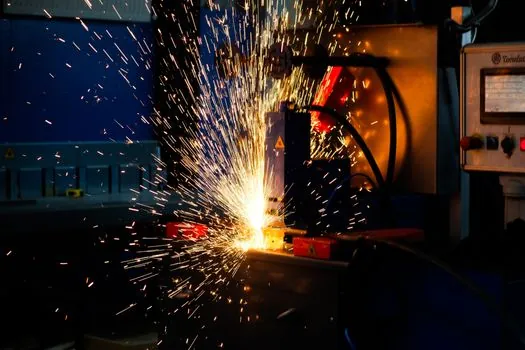
Electric arc furnace (EAF) adoption has improved ferrochrome production efficiency by 12%, and carbon-neutral technologies have cut CO₂ emissions by up to 67% in 2025 relative to baseline smelting routes [S1]. The thermodynamic floor is fixed: ferrochrome smelting requires sustained 2,800°C operating temperatures, and electricity remains the dominant cost line for any FeCr furnace economics [S1].
The 2026-2030 implication is that producers with low-cost power (South African off-take from Eskom grid-mix, Kazakh captive power, Indian captive coal-power plants) will retain structural cost leadership, while European and Chinese smelters face rising pressure to retrofit closed-furnace and biocarbon reductant lines to stay inside tightening CO₂ caps. Outokumpu has committed USD 45 million to a low-carbon ferrochrome pilot plant, signaling that the decarbonization capex wave is now a strategic procurement question for buyers screening suppliers [S1].
Supply Concentration: South Africa, Kazakhstan, Turkey, India Anchor the Curve
South Africa, Kazakhstan, Turkey, and India are the four largest ferrochrome producers, ranking directly on domestic chromite reserve depth [S1]. South Africa alone holds over 72% of global chromite reserves, a 3.3 Mt 2024 supply contribution, and roughly 19% of 2024 world production [S1].
For 2026-2030, this concentration means any disruption (load-shedding, rail bottlenecks on the South African ore-to-port corridor, Kazakh export duty changes, Indian captive-power coal allocation shifts) can move the global FeCr benchmark price faster than marginal demand changes. Buyers running just-in-time stainless supply chains should treat South African load-shedding schedules and Kazakh railway throughput as primary supply-risk inputs, not secondary news.
Forecast Spread: USD 30 Billion to USD 48 Billion by 2030-2035

The published 2026-2030 forecast band is wide. Maxima Market Research models USD 30.61 billion by 2032 at 4.28% CAGR [S1]; Business Research Insights projects USD 22.77 billion in 2026 rising to USD 48.25 billion by 2035 [S6]; SkyQuestt forecasts USD 34.22 billion by 2033 at 6.4% CAGR from a 2025 base of USD 20.83 billion [S3].
The divergence is mostly a function of (a) assumed stainless-steel tonnage growth, (b) assumed Chinese consumption trajectory, and (c) how aggressively carbon-cost premiums get passed through to FeCr unit prices. Procurement teams writing 2026-2030 offtake contracts should build scenarios at both the 4.28% CAGR and the 6.4% CAGR endpoints, because the USD 8 billion gap between SkyQuestt's 2033 number and Maxima's 2032 number will change offtake commitment sizing by mid-single-digit percentages.
Buying Spec Considerations for 2026-2030
Particle size distribution matters for bulk-handling and furnace feed systems: standard HC FeCr lumpy is 10-100 mm, while fines (below 10 mm) typically price at a discount of mid-single-digit USD per Cr unit [S2].
For mid-cycle procurement decisions, the ferrochrome buyer's spec map lays out the grade-by-application matrix in detail. Adjacent alloy categories, including ferrosilicon sourcing from China, also feed stainless melt shops and follow overlapping supply-risk patterns in Inner Mongolia and Ningxia.
For 2026-2030, the three trackable signals to watch are: (1) South African Eskom load-shedding stage announcements and their impact on FeCr export volume; (2) Chinese stainless-steel crude output monthly prints, which set the marginal Asian FeCr demand; and (3) EU CBAM Phase 2 reporting thresholds for ferrochrome imports, which will re-price low-carbon LC FeCr against standard HC FeCr from 2026 onward.
Spec-level background on the components involved: pressure transmitter, flow meter, and industrial valve.