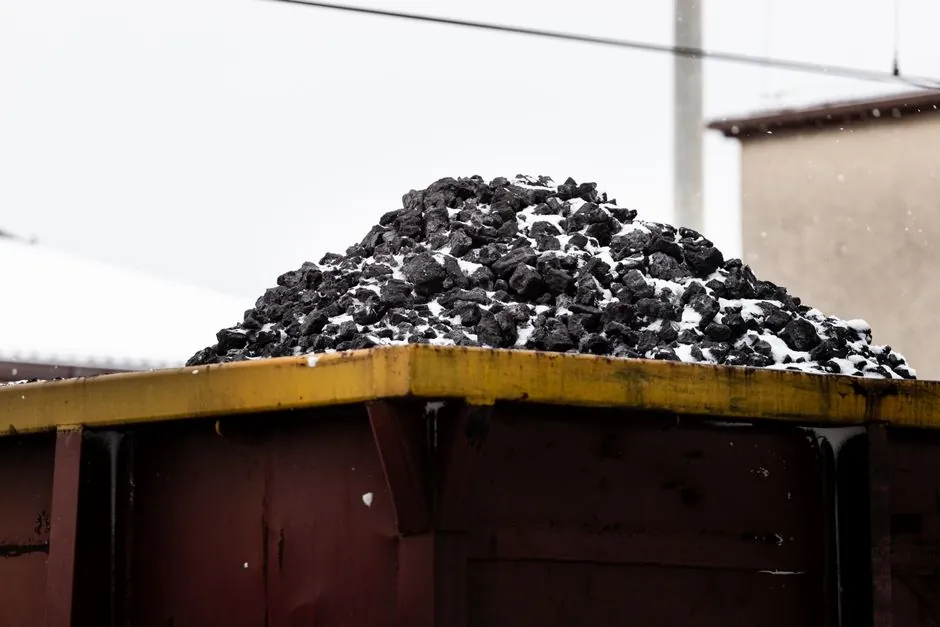
Chinese ferrosilicon output reached 9.8 million metric tons in 2025, with over 65% exported and Inner Mongolia plus Ningxia accounting for roughly 50% of national capacity [S5].
For most steelmaking and foundry buyers, the working grade is FeSi75 (Si ≥75%, Al ≤1.5%, C ≤0.20%, P ≤0.04%, S ≤0.02%), supplied in 10–50 mm natural lump, 0–3 mm granule, or 100–200 mesh powder [S3][S4].
Grades, Chemistry and What the Numbers Actually Mean
Ferrosilicon is an iron-silicon ferroalloy smelted in an electric submerged-arc furnace from quartz, coke and steel scrap, then sold in five commercial grades: FeSi45, FeSi65, FeSi70, FeSi72 and FeSi75 [S3].
For FeSi75 the published spec is Si 75% min, Al 1.5% max, Ca 1.0% max, Mn 0.5% max, Cr 0.5% max, P 0.04% max, S 0.02% max, C 0.2% max; FeSi72 relaxes Al to 2.0% max while keeping the same P/S/C ceilings; FeSi45 is the low-silicon ductile-iron inoculant grade at 45–47% Si [S3][S4]. Two lots with the same Si headline can still differ in Al or Ca enough to change ladle behaviour, so every PO should pin each impurity column individually rather than reference a grade name alone [S3].
Particle Size, Form and Application Match
Standard Chinese export sizing runs 10–50 mm and 10–100 mm natural lump, 50–100 mm block, 0–1 mm, 1–3 mm and 3–8 mm granules, and 100 or 200 mesh powder for refractory and welding consumable feeds [S3][S4].
Steelmaking typically draws 10–50 mm lump for ladle addition; ductile iron inoculation uses 1–3 mm or 3–8 mm granules; magnesium-reduction and dense-medium plants lean on 0–3 mm fines or milled powder [S3][S4]. For foundries weighing inoculant response, pairing the grade pick with a pressure sensor on the cooling line and a calibrated flow meter on the FeSi feeder is the cheapest way to keep the silicon yield repeatable batch to batch.
Regional Clusters, Capacity and 2026 Lead Times
Inner Mongolia (Baotou, Hohhot, Ordos) holds about 28% of national output on coal-fired power, Ningxia (Shizuishan, Wuzhong) about 22%, Qinghai (Xining, Golmud) about 18% on hydropower, and Yunnan (Qujing, Zhaotong) about 15%, with Guangxi, Shanxi and Sichuan filling the rest [S5].
Reported ex-works 2025 prices span USD 980–1,050/MT in Inner Mongolia, USD 1,000–1,080/MT in Ningxia, USD 1,050–1,120/MT in Qinghai, with 7–10 day inland transit from Inner Mongolia plants to Tianjin port and 8–12 days from Ningxia [S5]. The practical sourcing rule: standard 75% Si lots come from Inner Mongolia or Ningxia for cost; low-Al, high-purity niche lots (often matched against EN or JIS steel standards) come from Qinghai or Sichuan where hydropower supports longer refining arcs [S5].
Supplier Quality Signals to Verify Before PO
A workable Chinese FeSi mill test certificate should report Si, Al, Ca, Mn, Cr, P, S, C, plus actual sieve analysis on the shipped lot, and should be backed by an option for SGS or equivalent third-party inspection at the loading port [S4].
Four red flags repeat across the 2024–2026 supplier guides: vague grade labels that quote only Si without impurity columns, no batch-level MTC, no fixed ex-works date, and no documented packaging (25 kg woven bags, 1 MT jumbo bags, or bottom-opening jumbo bags are the export standards) [S1][S3][S4].
Logistics, Incoterms and Where the Cost Hides
Ferrosilicon is hygroscopic; prolonged moisture exposure causes surface oxidation and powdering, so 1 MT jumbo bags with plastic liner, palletised loads, and dry-container sea freight are the default for export lots [S4].
Beyond ex-works, the real landed-cost drivers are Tianjin vs Qingdao vs Beihai port choice, 20-foot vs 40-foot container stuffing density (roughly 25 MT per 20' GP for 10–50 mm lump), and 2026 energy-curtailment windows in Inner Mongolia and Yunnan that can push 75% Si output offline for 4–6 weeks in late winter [S5]. Buyers running into allocation issues on standard 75% Si have shifted partial volume to FeSi72 (Si 72% min, Al 2.0% max) as a functional substitute for many deoxidation duties [S3][S5].
Comparable Ferroalloy Buys and Cross-Reference
For procurement teams building a wider ferroalloy basket, the same spec-first discipline used here applies to high-carbon and charge-grade ferrochrome, where Cr and Si interplay governs stainless and tool-steel melt outcomes. The pattern also holds for downstream casting and surface-finishing buys such as sand blasting machine selection, where the abrasive cut profile, dust capacity and nozzle pressure decide whether a line keeps up with a 75% Si deox schedule. [S2]
Trackable signals for the next sourcing cycle: the Inner Mongolia winter energy-curtailment calendar (issued each November), the Q1 2026 Tianjin and Qingdao port congestion reports, and any revision to the 75% Si ex-works USD/MT band reported by Sourcify China, which anchored the USD 980–1,120/MT range used above [S5].
Spec-level background on the components involved: linear guide.