
China accounts for over 90% of worldwide ferrochrome demand, with Anyang, Baotou, and Jinchuan-based producers forming the core of an export-oriented supply chain built around 50-70% Cr alloys [S3][S4][S6].
Buyers should anchor every RFQ to three variables before price: chromium content band, carbon band, and form factor (lump, powder, or block), because Chinese domestic standards specify these differently and mis-specification drives the most common rejection claims [S1][S5].
Grade Map: High-Carbon, Medium-Carbon, and Low-Carbon Bands
Chinese export-grade ferrochrome splits cleanly into three carbon bands that map directly to end use: high-carbon ferrochrome powder carries 4-8% C and feeds bulk stainless, carbon steel, and foundry alloy production; medium-carbon powder runs 1-4% C for steelmaking and intermediate-performance alloys; low-carbon powder holds less than 0.15% C for stainless steel, special alloys, and welding materials where tight chemical control matters [S5].
Chromium content across all three bands sits in a 50-70% Cr window, which is the spec window mills verify on the mill sheet before booking shipment [S3][S4]. Charge chrome / ferrochrome lump powder is a fourth, coarser variant sized for electric arc furnace charge and is widely used in alloy steel and ferroalloy manufacturing rather than powder-metallurgy routes [S5]. Low-carbon ferrochrome is also sold in block form under Chinese appearance standards, while lump and powder grades dominate the bulk export trade [S1][S5].
Supplier Map: Tier 1 Integrated Mills vs. Tier 2 Specialty Smelters
The top of the Chinese ferrochrome exporter list is dominated by integrated steel-and-alloy groups: Baotou Steel Union Co., Ltd. and Jinchuan Group Co., Ltd. anchor capacity with automated large-scale smelting and integrated raw-material sourcing, while specialty smelters such as Anyang Jiashike Alloy Company and Anyang Huatuo Metallurgy Co., Ltd. compete on grade customization, smaller lot sizes, and direct-mill relationships [S3][S4]. Mid-tier private producers like Chengdu Jinchun Metallic Materials and Shandong-based Fengerda group round out the field, focusing on powder, lump, and ancillary abrasive or inoculant lines co-located with their ferrochrome furnaces [S2][S5].
Selection logic is straightforward: large stainless mills book with integrated groups (Baotou, Jinchuan) for 10,000+ t container-volume stability; tool-steel, welding, and special-alloy buyers route to specialty smelters (Jiashike, Jinchun, Huatuo) for tight Cr/C windows and lot-level certificates [S3][S4]. Smaller ferroalloy factories typically cluster around the same Shandong-Henan-Inner Mongolia triangle that supplies both domestic and export channels, so freight, port, and documentation capability vary more than headline Cr% would suggest [S2][S4].
Decision Criteria: Cost, Chemistry, Form, and Lead Time
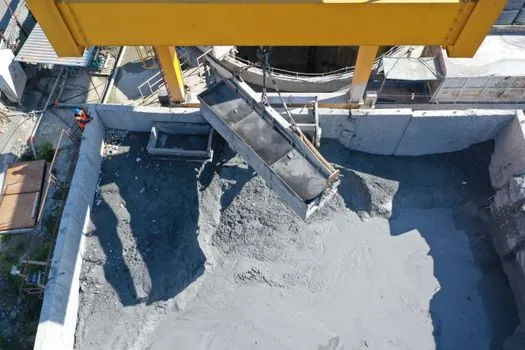
These four criteria should be weighted in this order for any new sourcing decision: chemistry window > form factor > cost > lead time. Reversing the order, i.e. buying on headline price, is the single most common cause of grade-mismatch claims in Chinese ferrochrome import contracts [S1][S5]. For plants already running a related powder-handling line, metal powder selection for oil and gas walks through how grade-window trade-offs apply to adjacent alloy powder streams.
Standards, Documentation, and What to Demand on the Mill Sheet
Chinese domestic sales standards require low-carbon ferrochrome to be supplied in block form, and define appearance rules for lump and powder grades that buyers should mirror in the purchase specification to avoid port-of-destination disputes [S1]. Beyond appearance, a complete mill sheet for export shipments should list Cr%, C%, Si%, P%, S%, and Fe balance, plus a sieve analysis for powder lots, and a reference to the GB or ISO standard under which the batch was sampled [S1][S5].
Quality assurance practice at the top tier of Chinese suppliers means multiple in-process inspections from raw-material selection through packaging, with batch-level certificates of analysis matched to container numbers; mid-tier suppliers may consolidate certificates per lot rather than per batch, so the contract should specify which granularity is binding [S4]. Independent third-party inspection at load port (SGS, BV, or Cotecna) is standard for first-time orders and recommended for any shipment above 100 t [S2][S4].
Use Cases, Limitations, and Common Failure Modes
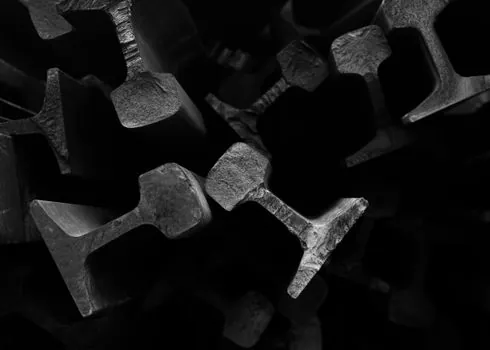
High-carbon ferrochrome powder (4-8% C) is the right pick for 304/316 stainless feedstock, carbon steel trim, and foundry alloy blocks where hardness matters more than corrosion margin; low-carbon powder (<0.15% C) is required for 321, 347, and stabilized grades plus welding consumables where chrome carbides would otherwise nucleate at grain boundaries [S5]. Medium-carbon (1-4% C) sits between the two for tool steel and intermediate alloy targets, and is the most common grade for buyers transitioning from high-carbon stock [S5].
Known failure modes in the China-to-overseas lane concentrate in three areas: chrome-ore supply tightness, which transmits directly to ferrochrome spot prices because China imports the majority of its chrome ore feed; container-loading moisture in powder grades that leads to caking and rejected lots at destination; and certificate-mismatch claims where the heat-analysis numbers on the mill sheet diverge from independent lab results on the same container [S2][S4][S6]. The first is a market risk to hedge, not a supplier issue; the second and third are spec-and-inspection issues that tighten with a clear purchase specification [S1][S5].
Who Should Source from China, and Who Should Not
China is the right source for stainless steel mills, foundry operators, and welding consumable makers that need 50-70% Cr alloys in high-carbon, medium-carbon, or low-carbon form at scale, with the cost advantage of integrated supply chains and competitive pricing on bulk orders [S3][S5][S6]. It is also the right source for buyers who can accept 25-40 day lead times on custom grades and who have port-side lab capability to verify Cr% and C% on arrival [S4].
China is the wrong source for buyers needing ultra-low-carbon (<0.02% C) or nitrogen-controlled ferrochrome for nuclear, aerospace, or super-duplex applications, where the dominant qualified supply sits outside the Chinese supplier base; and for buyers without in-house or third-party lab capability, because the domestic sales standard framework does not provide the same level of independent certification as some competing origins [S1][S3]. For plants sourcing adjacent process equipment alongside ferrochrome, diesel forklift supplier maps show how the same integrated-versus-specialty logic applies to materials-handling procurement.
Sourcing Workflow and Trackable Signals to Watch
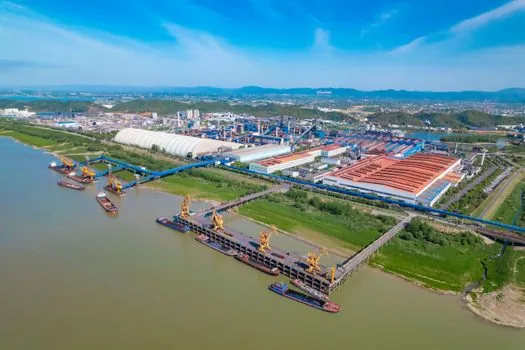
A defensible first-order workflow runs: (1) lock Cr% and C% window against end-use grade; (2) issue RFQ to two integrated mills and one specialty smelter with a fixed mill-sheet template; (3) require batch-level certificates of analysis and third-party load-port inspection; (4) book a single trial container before scaling to multi-thousand-tonne quarterly contracts; (5) keep a parallel qualified-source list to avoid single-supplier lock-in [S2][S4][S5].
Trackable signals to watch over the next two quarters: any tightening or relaxation of Chinese chrome-ore import licensing, which moves spot ferrochrome pricing within 4-8 weeks [S6]; changes in the GB standard for low-carbon ferrochrome appearance rules that would shift block-versus-lump requirements at port [S1]; and the publication of 2026 export-grade certifications from the top integrated mills, which historically set the reference chemistry window for the rest of the supplier base [S3][S4].
Spec-level background on the components involved: linear guide, crossed roller guide, and pressure transmitter.