
FIBC (Flexible Intermediate Bulk Container) bulk bags typically hold 500-2000 kg of dry flowable product in a woven polypropylene envelope, collapsing to roughly 5-10% of their filled volume when empty — a storage efficiency no rigid Gaylord box or steel drum can match [S1][S2].
The format is dominated by Chinese and UK suppliers running 75+ standard sizes, with U-Panel, baffle, and builder-bag geometries covering food, chemical, construction, and mining duty cycles [S2][S3][S4]. The trade-off sits in handling: empty bags need a controlled storage footprint, filled bags need specific forklift tine dimensions, and UN-tested variants add 8-15% cost versus non-rated equivalents.
Where FIBC Bulk Bags Win on Engineering Metrics
Reusable woven polypropylene body fabric (typically 160-230 g/m²) supports multi-trip service when the Safety Factor is set to 6:1 [S2].
Customisation depth is the second pillar: top spout, duffel top, top flap, bottom spout, full open bottom, and discharge cone options are stocked in 75+ size/style combinations by major distributors running 11+ US warehouses for freight cost control [S1]. Manufacturer ranges span 500 kg builder bags through 2000 kg industrial sacks, with 200 g/m² fabric specified for the heaviest 1000 kg/1102 lb basement-type builds [S3]. For cross-format comparison, see the FIBC type and classification spec map.
Where FIBC Bulk Bags Fail or Limit Operations
Moisture ingress is the dominant failure mode: standard woven PP without an inner liner allows water vapour transmission rates that damage hygroscopic products (cement, certain fertilisers, sugar), forcing a separate PE liner that adds 5-12% cost and complicates discharge [S3].
Single-trip fatigue is structural: a 5:1 Safety Factor (SF) bag rated 1000 kg is engineered for one-way logistics, and reusing it drops the effective working load limit below spec; only 6:1 SF bags are designed for multiple trips, and even those fail after typical 3-5 cycles depending on handling abuse [S2]. Forklift tine damage during fill or discharge is the most common cause of in-service failure — bags dropped on broken concrete or pierced by exposed tine welds lose load integrity without visible warning.
Bag Type vs. Duty Cycle: A Decision Comparison
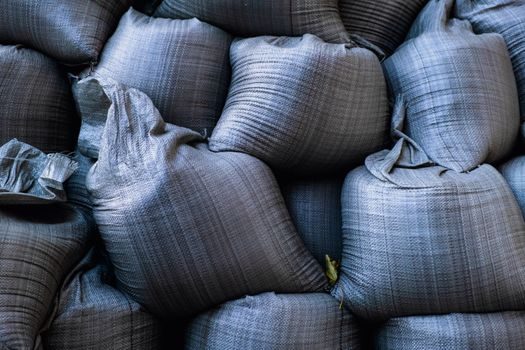
Three FIBC geometries cover roughly 90% of industrial orders, and the selection is governed by product density, stack height, and discharge method rather than price alone [S2][S3].
U-Panel FIBCs are the baseline: a square cross-section with two vertical seams, rated 500-1500 kg, used for free-flowing granular products (sand, grain, plastic pellets). Cost is lowest in the range.
Baffle FIBCs add internal corner baffles that maintain a cube shape under load, raising stack stability by roughly 20-30% and improving container/truck fill efficiency by 5-8% — at a 10-18% unit cost premium over U-Panel [S2].
Two-Row Builder Safety Bags use reinforced woven PP for construction aggregates (20 mm gravel, sharp stone), with 200 g/m² fabric, 1-tonne working load, and skirt-top or top-lift loops engineered for crane discharge on site [S3].
Standards, Certifications, and the Compliance Gate
UN-tested FIBCs are mandatory for hazardous materials under UN packaging group II and III solid classifications, and a valid UN certification mark (including the year code, packaging group, and gross mass) must be printed on the bag label or it is non-compliant for hazmat transport [S2].
Food-contact FIBCs require either BRCGS (Brand Reputation Compliance Global Standards) or equivalent food-safety certification, plus FDA-grade or EU 1935/2004-compliant inner liners; UK export-focused suppliers typically hold BRCGS and WCA (Waste Carriers Audit) accreditations as a baseline [S2]. For mining and chemical duty, the 5:1 vs. 6:1 Safety Factor selection (per ISO 21898 / FIBC standards family, the governing framework for flexible IBCs) decides whether the bag is single-trip or multi-trip rated.
Who FIBC Bulk Bags Are For — and Who Should Walk Away
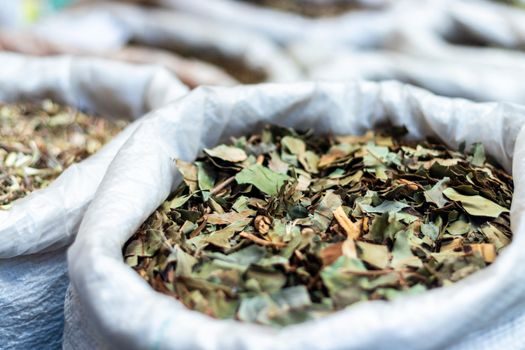
Spec FIBCs when shipping 500-2000 kg of dry, free-flowing or granular product with a defined hazard class (or no hazard at all), with forklift handling infrastructure already on site, and where empty-bag storage and recycling logistics are solved [S1][S2].
Avoid FIBCs when the product is liquid, paste, or cohesive powder that will not discharge cleanly through a bottom spout; when the shipping environment includes sharp rebar or open-pit abrasion the bag cannot survive; or when the order is below roughly 50 units/quarter where rigid Gaylord box economics (per [S1]'s 75% used-cost savings) win on tooling and tare weight recovery. For acidic chemicals, specify acid-proof coated bags explicitly — standard PP degrades under prolonged acid exposure [S3].
Selection Criteria a Process Engineer Should Lock Before RFQ
Working Load Limit (WLL), Safety Factor (5:1 single-trip or 6:1 multi-trip), fabric weight in g/m², top and bottom discharge type, liner specification (none / conductive / food-grade / barrier), and any required UN, BRCGS, or food-grade certification mark [S2][S3]. For volumetric decisions, an empty FIBC stack of 100 units occupies roughly 1.5-2.0 m³ of warehouse space versus 8-12 m³ for the equivalent rigid container fleet [S1].
Both are auditable on incoming-bag inspection without destructive testing.
The underlying component specifications are covered under bulk bag, bag filter, and pressure transmitter.