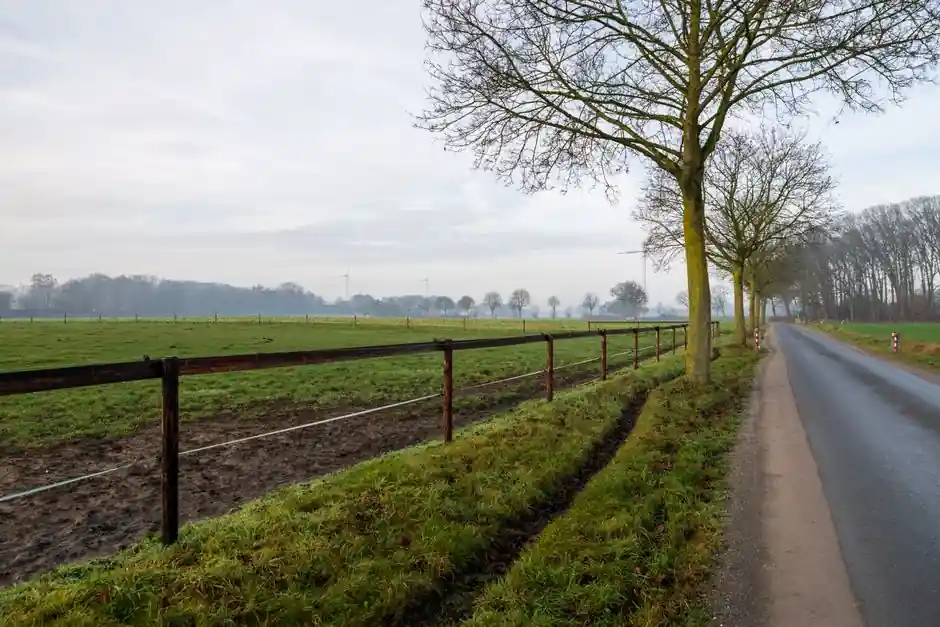
Fiber optic fence sensing provides passive, EMI/RFI-immune coverage, while electromagnetic cable systems use a powered signal field to detect fence disturbance.
Choose fiber optic for long perimeters, hazardous areas and sites with strong electrical interference; choose electromagnetic cable where a physical fence exists, shorter routing is practical, and electrical alarm integration justifies field electronics.
Decision Factors for Perimeter Sensor Selection
Fiber optic sensing sends light through a sensing cable and detects disturbances caused by climbing, cutting, digging or cable failure. A representative vibration-fiber host accepts single-zone or dual-zone configurations, provides RS485/network communications, reports vibration, fiber-break and anti-disassembly alarms, operates from DC 12 V 2 A, consumes 15 W, and has a stated operating range of -40°C to 50°C with relative humidity below 95% [S4].
Electromagnetic cable systems monitor changes in a signal transmitted through the fence cable. Their practical boundary is the usable cable run and the electrical environment of the site, and their performance depends on maintaining the detection field, grounding and controller connections. Unlike fiber sensing, the electromagnetic approach requires electrical energy and exposed sensing-cable infrastructure [S1][S4].
The selection criterion is therefore not sensor accuracy alone. Compare maximum perimeter length, exposed electrical equipment, local-area classification, integration requirements, installation access, repair method and total operating burden. Fiber optic is the stronger candidate where field power is undesirable; electromagnetic cable is more defensible where an existing fence cable can be instrumented and its alarm outputs connect directly to the security infrastructure.
Performance, Installation and Lifecycle Comparison
Fiber optic sensing can be deployed underground, along fence lines, and on rooftops to provide full three-dimensional perimeter coverage and continuous real-time intrusion detection [S3]. FiberPatrol FP1150 is specifically identified as suitable for sites sensitive to electromagnetic energy, with immunity to EMI and lightning and intrinsic safety as stated product characteristics [S7].
Electromagnetic cable offers faster local detection and straightforward integration with security systems. One pulse electronic-fence host can connect through RS485 to alarm systems, video surveillance, cameras and internet-based security infrastructure, while remote operation can use keyboards, software and a local-area network [S4]. The trade-off is a powered, electrically sensitive installation with field devices that require environmental protection.
A direct comparison shows the difference clearly:
Site Conditions and Threat Coverage
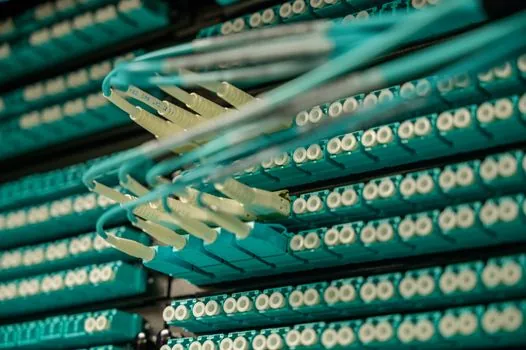
Use fiber optic sensing where the perimeter includes vegetation, changes in elevation, poor visibility or areas without a continuous physical fence. Fiber can be installed on fences, walls, rooftops or underground, while remaining functional without line of sight and under darkness or obstructed views [S3].
Use electromagnetic cable where a tangible fence is already present or will be installed as the physical barrier. The system is suited to sites with conventional perimeter geometry, including factories, substations, schools, warehouses, airports, prisons and military compounds [S4]. It also provides a deterrent effect because an intrusion can trigger an alarm and, where an active fence is selected, an electrical response [S4].
Fence-mounted and buried installations should not be treated as interchangeable. Fence-mounted sensors are better suited to visible perimeter fencing and regular traffic, while buried cables are generally more appropriate for wooded or uneven terrain; fence-mounted installation can be completed within 5 hours, compared with up to 10 hours for buried cable, and listed installation cost is $15–$25 versus $10–$20 per linear foot [S5]. These figures are vendor-published planning values rather than universal procurement benchmarks, but they show the labor and excavation trade-off.
Failure Modes and Maintenance Constraints
Fiber optic systems eliminate many field component failure modes because no powered electronics are exposed along the perimeter, yet they are not maintenance-free.
Electromagnetic cable failures are more likely to involve field power, controller interfaces, grounding, cable continuity or the surrounding detection field. Leaky coax, a different electromagnetic perimeter method, is affected when metal objects, water or snow interfere with signal propagation, but those specific environmental mechanisms should not be assigned automatically to every electronic fence cable architecture [S1][S2]. Maintenance practice should follow the actual signal method and manufacturer instructions.
Published installation and maintenance figures also need careful interpretation. One comparison lists quarterly inspection for fence-mounted sensors versus annual maintenance for buried cable, with approximate false-alarm rates of 10% and 15%, respectively [S5]. These values are site-specific planning estimates, not guaranteed acceptance criteria. A better specification records measured site nuisance events, cable position and depth, lightning or power exposure, repair access and the consequences of a missed alarm before selecting a technology.
Recommended Configurations by Application
Specify fiber optic sensing for a long critical perimeter spanning substations, power facilities, data centers, airports, pipelines or military installations. The no-field-power and EMI/RFI immunity arguments are strongest where electrical interference or hazardous-area constraints make distributed electronics undesirable [S3][S7]. A single or dual-zone architecture can be specified, with RS485 or network communications, vibration, fiber-break and anti-disassembly alarms, and a controller operating from -40°C to 50°C [S4].
Specify electromagnetic cable for a bounded site with a continuous fence, straightforward access to the cable route and an existing electrical security infrastructure. It is the practical option when a physical deterrent is required alongside intrusion detection and when direct controller integration is more important than passive field electronics [S4]. Do not select it solely for long-distance scalability or severe electromagnetic environments.
Fiber optic is not for teams unable to fund specialist installation and repair, while electromagnetic cable is not for sites that require optical immunity, minimal field electronics or hazardous-area compatibility that has not been verified. Before procurement, require a site trial that exercises the expected climbing, cutting, digging and cable-break events under representative traffic, vegetation and weather conditions.
Standards, Sourcing and Commissioning Checks
The comparison materials identify EM/RFI immunity, lightning immunity and intrinsic safety as product characteristics of the FiberPatrol FP1150 [S7], while the cited vibration-fiber host publishes DC12V2A power, 15 W consumption, -40°C to 50°C operation and humidity below 95% [S4]. These are the checkable specifications for an engineering inquiry, but product claims must be matched to the exact model, version and installation conditions.
Request the complete data sheet, certifications, environmental limits, zone count, communication protocol, alarm outputs, cable construction, installation accessories and warranty terms. For electromagnetic cable, request the signal-generation method, controller zoning, grounding arrangement, surge and lightning protection, power requirements and interface outputs. For fiber optic, request the maximum zone length, event-classification performance, splice or termination method, burial or fence installation limits and repair procedure.
Acceptance testing should verify deliberate intrusion events, fault reporting, loss of communications, power-failure behavior and restoration after repair. For buried fiber, record the achieved depth against the approximately 20 cm installation target; for electromagnetic systems, verify field coverage along the complete fence and at corners, gates and terminations. A fiber optic sensor specification is incomplete without those site-specific commissioning records.
The next procurement record should contain the surveyed perimeter length, terrain, fence type, electromagnetic background, environmental exposure, available communications and maintenance capability. Add a measured nuisance-event trial, an outage-response plan and a total-cost comparison covering controllers, trenching, field devices, cable repair and routine inspections.