
Macro synthetic polypropylene fiber at 40–60 mm length and 4–7 kg/m³ dosage is the most commonly specified reinforcement for new warehouse, distribution-center, and manufacturing-plant slabs in 2026, replacing welded wire mesh in most non-heavy-duty applications [S2].
Steel fiber at 20–40 kg/m³ remains the default for heavy industrial zones, mining floors, container yards, aircraft hangars, and military pavements, where post-crack residual strength, not corrosion resistance, drives the design [S2][S4]. Selection between these families, and the third option of microfibers, hinges on load class, joint spacing, slab thickness, and exposure chemistry rather than on a single "best" fiber.
Specifying Macro Synthetic Fiber: Length, Dosage, and Replacement of Mesh
Macro synthetic fibers for industrial floors are typically polypropylene, 40–60 mm long, dosed at 4–7 kg/m³, and are widely accepted as a substitute for welded wire mesh in distribution centers, logistics warehouses, manufacturing plants, heavy-duty slabs, port facilities, and aircraft hangars [S2]. The practical reason is post-crack behavior: fibers bridge shrinkage cracks and hold them hairline-thin rather than letting them open wide enough to chip forklift wheels or admit water and chemicals [S2].
Macro synthetic will not corrode, is lighter than steel fiber for the same dose by volume, and shows improved fatigue resistance under repetitive traffic; microfibers, by contrast, only minimize early-age cracking at low volume and are not a structural substitute [S2][S5]. For slabs-on-ground, ACI 360R Chapter 11 governs the design math, and flexural performance is typically characterized with ASTM C1609/C1609M beams reporting residual strength ratio Re3 [S5]. Specifiers writing performance-based notes should pair the dosage range with an Re3 target, not a fiber brand.
Steel Fiber Floors: Dosage, ASTM A820, and Where It Still Wins
Steel fiber dosage for ground-supported industrial slabs runs 20–40 kg/m³, with fibers required by ASTM A820 to have an average tensile strength of at least 345 MPa (50,000 psi), to bend 90° around a 3 mm rod without breaking, and to stay within 10% of specified length and diameter [S4]. Within ASTM C1116, steel-fiber-reinforced concrete is classified as Type I, while Types II, III, and IV cover glass, synthetic, and cellulose fibers respectively [S4].
For heavy industrial facilities, mining floors, container yards, military pavements, and heavy machine foundations, steel fiber delivers the highest post-crack residual strength of any fiber type and allows engineers to abandon welded mesh installation, cutting labor time and slab congestion [S2][S7]. The trade-off is corrosion: any exposed fiber at a joint or crack will rust, which is why many specifiers reserve steel for areas where impact and abrasion dominate over surface aesthetics or wash-down chemistry. Fiber dosing is always by mass, so any volume-based note on drawings must be converted to kg/m³ before it reaches the ready-mix supplier [S4].
Microfibers, Polyester, and Cellulose: When They Are the Right Call
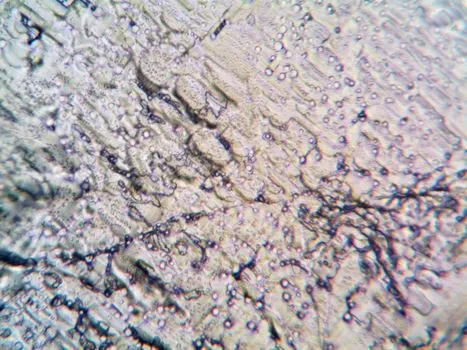
Microfibers, both polypropylene and polyester, are dosed at low volume and used to minimize early-age shrinkage cracking rather than to carry structural load, making them a fit where plastic shrinkage control is the only concern and traditional reinforcement handles flexure [S5]. Polyester fiber-reinforced concrete is a popular warehouse and industrial floor material specifically because of its superior resistance to cracks from plastic shrinkage, and it can also raise the mix toughness and even add modest structural capacity [S3].
Cellulose fibers help with curing and reduce permeability, which is useful in chemical-heavy or wet-process environments, while glass fibers boost mechanical strength and resist weathering in harsh exposures [S1]. The hard limit is dosage: high micro-fiber loads will increase surface area in the mix and reduce workability of fresh concrete, so the dose has to be balanced against placement and finishing needs [S8]. In practice, microfibers are often blended with macrofibers or with conventional rebar when both plastic-shrinkage control and post-crack toughness are on the spec sheet.
Selection Criteria: Load Class, Joints, Slab Thickness, and Chemistry
The fiber choice is driven by four engineering variables: load class and traffic type, desired joint spacing, target slab thickness, and chemical exposure. The table below lines up the main options against those criteria using dosage and length data drawn from current guide material. [S1]
Fiber type, decision criteria, and typical industrial floor application:
Fiber type / Typical length / Typical dosage / Best-fit load class / Corrosion behavior / Mesh replacement: Macro synthetic (polypropylene) / 40–60 mm / 4–7 kg/m³ / Warehouses, distribution centers, logistics, light-to-medium manufacturing / Non-corroding / Replaces welded wire mesh in most non-heavy slabs [S2]. Steel fiber / 25–60 mm (per ASTM A820) / 20–40 kg/m³ / Mining, container yards, heavy machine foundations, military pavements / Will corrode if exposed / Replaces mesh and partially rebar in heavy slabs [S2][S4]. Polyester macro / Similar to PP / Lower than steel by mass / Warehouse and industrial floors, overlays / Non-corroding / Often paired with mesh; controls plastic shrinkage [S3]. Microfibers (PP, polyester, cellulose) / 6–20 mm class / Low volume / Surface crack control only / Non-corroding / Not a structural replacement [S5][S8].
For a slab that will see VNA racking, heavy forklifts, and abrasion, steel at the upper end of the 20–40 kg/m³ range is the conservative pick. For a food or pharma slab where wash-down chemistry and zero rust staining are non-negotiable, macro synthetic at 4–7 kg/m³ is the dominant 2026 specification [S1][S2].
Failure Modes the Spec Has to Address

Industrial floors fail in four predictable ways that fiber choice has to address directly: wide shrinkage cracks that catch forklift wheels, joint-edge spalling under repeated traffic, surface fatigue and crazing in high-traffic aisles, and slab curling from differential drying between top and bottom [S2]. Fibers work on the post-crack side of the problem, they do not make uncracked concrete stronger, so they hold cracks closed after they form, redistribute stress at joints, and control the differential shrinkage that drives curling [S2][S5].
Two practical limits follow. First, fiber does not eliminate the need for proper joint design, subbase preparation, and curing; the slab still has to be designed per ACI 360R with the right subgrade modulus and thickness [S5]. Second, dosage alone is not a complete specification, the residual strength ratio Re3 from ASTM C1609 testing, the fiber geometry, the bond characteristics, and the ASTM A820 or equivalent compliance all have to be written into the contract document, otherwise the concrete plant can deliver the right mass of fiber with the wrong performance [S4][S5].
Standards, Specifications, and Documentation
The core standards a spec writer pulls in for fiber-reinforced industrial floors are ASTM A820 for steel fiber properties, ASTM C1116 for the FRC mix, and ASTM C1609/C1609M for flexural residual-strength characterization, with ACI 360R providing slab-on-ground design and ACI 544.4R providing the FRC design methodology [S4][S5]. In contract documents, fibers belong in MasterFormat Division 03 30 00 (Cast-in-place Reinforcing) or 03 24 00 (Fibrous Reinforcing), with a cross-reference from Division 03 30 00 where the ready-mix supplier actually looks, and dosage always stated in kg/m³ rather than by volume [S4].
For the synthetic side, the relevant technical literature in 2025-2026 is consistent on the 40–60 mm macro length and 4–7 kg/m³ dosage range for warehouse-class slabs, with polyester and polypropylene both used where plastic-shrinkage control and chemical resistance matter more than raw post-crack strength [S2][S3]. If the project also needs guidance on adjacent material choices, a useful cross-reference is this practical spec walkthrough of ASTM C578 Type IV XPS board for slab insulation and subbase detailing, and for post-tensioned industrial slabs the post-tensioning tendon stressing guidance is directly relevant where joint spacing and crack control are being optimized together with the fiber choice. The next signal worth tracking is whether ACI 544.4R updates its macro-synthetic dosage guidance beyond the current 4–7 kg/m³ band as more post-crack Re3 test data accumulates from 2025-2026 warehouse builds.
The underlying component specifications are covered under dry type transformer, concrete fiber, and cement concrete.