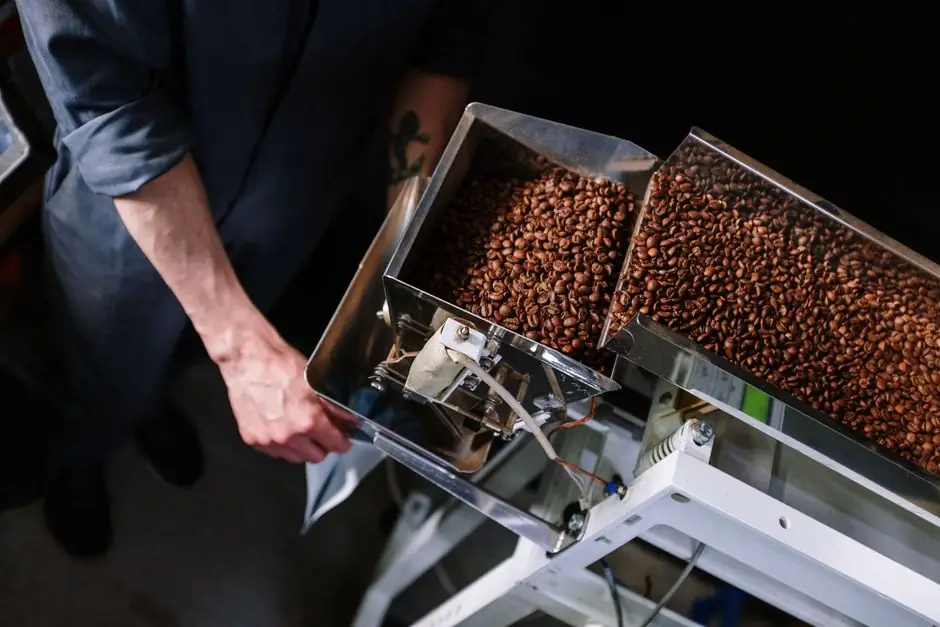
Liquid fillers (piston, gravity, overflow, peristaltic) dominate food and beverage catalogs in 2026, while volumetric cup and auger fillers cover powders, granules, and irregular solids; the dosing principle is set by product state, not by the equipment brand [S2].
Across recent supplier guides, a mid-volume European food line runs 30 to 120 bottles per minute on liquid fillers and 20 to 80 cycles per minute on solid fillers, with accuracy bands that differ by roughly an order of magnitude between the two families [S2].
Gate 1: Product State Decides Pump Type, Valve Logic and Sealing Method
Piston fillers are the default for viscous sauces, creams, and condiments at 30 to 60 bottles per minute, because a reciprocating piston draws and dispenses a fixed stroke volume that is repeatable regardless of head pressure [S1][S2].
Gravity and overflow fillers handle low-viscosity and foaming beverages; overflow units fill to a predetermined height and return excess product to the tank, so the labeled spec is level consistency (around ±1 mm) rather than mass accuracy [S1][S4].
Peristaltic fillers compress food-grade tubing with rotating rollers, which keeps shear-sensitive or sterile liquids isolated from pump internals and avoids cross-contamination between batches [S1].
Dry and powder products require a different logic: auger fillers dose by screw pitch and revolution count, while multi-head combination weighers on cup-and-vibratory feeders handle irregular solids like candy, nuts, and frozen foods at higher speeds [S2].
Cross-state mistakes are the most expensive spec error: a piston liquid filler cannot dose a free-flowing powder, and an auger cannot handle a shear-sensitive lotion without foaming, which is why the product-state call is the first hard gate in any filling machine selection project [S2].
Gate 2: Dosing Accuracy Is Mass, Volume or Count, Not One Number
Liquid volumetric piston fillers commonly hold ±0.5 to ±1.0% volume tolerance on a 100 to 1000 mL range, with servo-driven piston upgrades tightening that band to ±0.3% on premium beverage lines [S1][S2].
Gravity fillers run at lower mechanical complexity and are cost-effective for free-flowing liquids, but typical speeds cap near 60 bottles per minute per nozzle because the fill window is governed by gravity settle time [S1].
Solid gravimetric fillers using load-cell feedback on cup or auger systems routinely hit ±0.1 to ±0.3 g at 50 to 500 g fill weights, and combination weighers reach ±0.05 g for small snack or hardware SKUs [S2].
Two practical thresholds guide the choice: if the SKU sells by count and regulatory weight is not a label declaration, a multi-head weigher outperforms a load-cell auger on speed; if the SKU sells by net weight and is regulated (pharma, food, agrochemical), gravimetric load-cell feedback is the only defensible spec [S2].
For an integrated filling-weighing-scale line, calibration drift on the load cell, typically checked against a 1 g resolution master weight on a weekly cadence, sets the floor on achievable lot-to-lot variation [S2].
Gate 3: Contact-Material Compatibility and CIP Regime
Wetted parts on a 2026-spec filler default to SUS 304 or 316L stainless steel, with 316L mandated for dairy, beverage, and aggressive-chemical service where chloride pitting is a risk [S1][S2].
Seals and O-rings follow the product chemistry: EPDM for hot water and steam-cleaned dairy lines, typically rated from −40 °C to +150 °C, FKM/Viton for oils and solvents, PTFE for highly viscous or corrosive chemicals, and silicone for food and pharma where extractables and leachables are audited [S1][S2].
CIP (clean-in-place) capability is now standard on liquid lines rated above mid-volume throughput, because skid-mounted spray balls and stainless product paths eliminate the disassembly step that historically dominated cleaning labor on dairy and beverage lines [S1][S2].
The pump and nozzle metallurgy must be paired with the cleaning chemistry: a peristaltic filler that only needs tubing replacement sidesteps pump-body CIP, but it caps out on viscosity and particulate load, so the material choice locks in a throughput ceiling [S1].
Gate 4: Throughput, Footprint and Line Integration
Rotary fillers, where bottles index on star wheels under a rotating filling turret, reach up to 400 bottles per minute on mainstream carbonated soft drink (CSD) lines, but they require a larger footprint and tighter pitch control than linear machines [S1][S3].
Linear fillers move bottles in a straight line, which is easier to integrate with existing conveyors and rinser-capper-labeler skids, and is the typical geometry for 500 to 2000 BPH (bottles per hour) beverage startups [S1][S3].
Capacity planning should not be a peak BPH number: daily target, working hours, shift count, product changeovers, and factory expansion plans all shift the right size, and a startup typically runs more product changeovers per shift than an established 24/7 plant [S3].
Bottle format dictates the downstream equipment stack: PET versus glass versus aluminum cans each require matched rinsing, capping, and labeler modules, and multi-format changeover should be specified in the original tender rather than retrofitted later [S3][S5].
Beverage Sub-Types: CSD, Still Water, Juice and Dairy Each Want a Different Valve
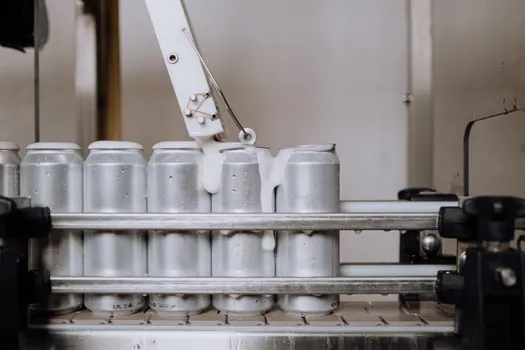
Carbonated soft drinks require counter-pressure filling valves that hold stable internal pressure and limit oxygen pickup; sparkling water runs 2.5 to 3.5 CO₂ volumes, flavored soft drinks 3.0 to 4.0 volumes, and high-carbonation sodas up to 4.5 volumes, so valve pressure class must match the upper end of the SKU mix [S5].
CSD lines are typically filled at 0 to 4 °C to preserve CO₂, and a product that cannot be cooled that low must use enhanced pressure filling, special anti-foam nozzles, or a high-precision degassing step before the filler [S5].
Still beverages route to normal-pressure gravity or overflow filling, while hot-fill juice lines run at 85 to 95 °C in bottle and need heat-resistant caps and a cooling tunnel downstream; the filling temperature is a process gate, not a setting [S3].
Dairy lines route to piston or peristaltic fillers with EPDM seals and full CIP, because the regulatory floor is bacterial count, not dosing tolerance, and any pneumatic leakage into the product path is a sanitation event [S2][S4].
Comparison: Four Main Filler Families on Spec-Critical Criteria
On viscosity range, piston fillers cover roughly 1,000 to 100,000 cP, gravity and overflow fillers sit at the low end near 1 to 1,000 cP, peristaltic fillers handle sterile and shear-sensitive service across a wide band, and auger fillers handle dry powders rather than liquids [S1][S2].
On accuracy, piston volumetric units deliver ±0.3 to ±1.0%, overflow and gravity units give ±1 mm level consistency, and gravimetric load-cell augers reach ±0.1 to ±0.3 g, which is the tightest band for food powders and granules [S1][S2].
On throughput, a single-nozzle gravity filler runs near 60 bottles per minute, a mid-volume rotary liquid line hits 30 to 120 bottles per minute, and high-end rotary CSD lines reach 400 bottles per minute, while combination weighers push solid speeds well above that on snacks and candy [S1][S2][S5].
On hygiene and CIP, peristaltic and CIP-equipped piston lines are the cleanest because the product path is smooth-bore stainless, gravity lines need a separate spray-ball retrofit, and auger lines must be designed for dry-clean or wash-down disassembly of the screw and hopper [S1][S2].
Who This Is For, and Where the Standard Builds Fall Short
This decision frame is for procurement and process engineers specifying a new filler or re-tendering an existing line, not for end-of-line secondary packaging; for coding and marking on filled containers, see the coding machine reference rather than the filler spec [S2].
It is not a fit for very low-volume or craft producers under roughly 10 bottles per minute, because a semi-automatic benchtop unit is more economical than a PLC-controlled multi-nozzle line at that throughput, and the CIP and servo-piston costs do not amortize below that scale [S1][S2].
Standard builds also fall short for products that mix two phases (oil with water, lotion with particulates over 3 mm), because piston valves trap particulates and overflow units miscount level; a pump filler with a lobe or progressive-cavity pump is the correct alternative, not a tuned version of the same machine [S4].
For plants that handle both still and carbonated SKUs, a dual-purpose rinser-filler-capper monoblock is commonly specified, but the valve set must be designed for the higher pressure class even on still-only days, so capex and maintenance are driven by the CSD SKU, not the average SKU [S3][S5].
Trackable Signals for the Next Tendering Cycle
Watch the CO₂ volume band on the highest-carbonation SKU at the next re-tender, because the counter-pressure valve class and the burst rating of the bottle format both move with that number, and a 0.5-volume upward shift can force a valve and cap re-spec [S5].
Track CIP cycle time on the dairy or beverage skid, because a 15 to 20% drop in cycle time on a 24/7 line is the same as a 15 to 20% throughput uplift, and the gap between current CIP time and the OEM-rated CIP time is the first audit point at the next service interval [S2][S4].
Re-check load-cell calibration on the filling-weighing-scale station against a 1 g master weight on a weekly cadence and log drift, because regulatory lots are only defensible when the calibration record is current, and drift above 0.1 g on a 100 g fill is the trigger for a cell service [S2].
Related analysis: RV Reducer Spec Map for Food Processing: Ratios, Materials and Washdown Sourcing (2026).