
Global copper demand tied to data center and grid buildouts is projected to rise 50% by 2040, with shortages already reshaping procurement across U.S. and European projects [S1][S7]. Wood Mackenzie and McKinsey analyses published in mid-2026 both flag aluminum as the principal substitute, but stop short of calling it a universal replacement [S7].
Operators running 100 kW+ per rack AI halls are now asking whether aluminum can carry the busways, feeders, and in-row busbars that copper has owned for two decades. The honest answer is that aluminum is already displacing copper in defined niches, and the boundary is set by current density, fire rating, and creep behavior at the termination, not by raw conductivity alone [S2][S4][S5].
Conductivity, Density, and the Sizing Penalty
Aluminum carries roughly 61% of the IACS conductivity of copper, so a copper-to-aluminum substitution at equal ampacity requires about a 1.6x cross-sectional area for the conductor and roughly double the cross-section for a busbar once temperature-rise limits are normalized [S2][S3]. That area penalty shrinks the moment the run length is measured in tens of meters, because aluminum at 2.70 g/cm³ weighs about 50% of copper's 8.96 g/cm³ for the same ampacity after upsizing [S2][S3].
For a 4,000 A bus duct on a 50 m vertical riser, the weight saving alone can reach 1,800 kg per phase, which directly cuts support steel, hoist time, and seismic bracing cost in a power distribution box lineup [S2]. Hydro and Three D Metals both treat this weight delta as the main driver behind aluminum extrusions entering the data hall, alongside the raw material price gap that has averaged 2.0-3.5x per pound in favor of aluminum through 2025 [S2][S3].
Where Aluminum Fits in 2026 Data Hall Designs
Aluminum bus pipe and aluminum-armored feeder cable are now common on the medium-voltage side of new U.S. hyperscale builds, with operators specifying AA-8030 series alloy for conductor strands and AA-6101-T6 for rigid busbar [S2][S6]. Fastmarkets confirms that data center and grid buildouts are pulling aluminum tonnage at a rate copper supply cannot match, and that the substitution is concentrating in long, low-current-density runs rather than in the server room itself [S6].
Inside the white space, copper still dominates the final feed from the power distribution box to the rack PDU, where termination density, 90°C conductor rating, and listing under UL 1072 or IEC 61537 drive the material choice [S4]. The S&P Global electrification report explicitly notes that copper's higher density, better fire performance, and proven termination behavior keep it preferred for in-facility power distribution, while aluminum is the default for utility-to-building runs and overhead busway on the campus perimeter [S4].
Material Comparison for Data Center Conductors
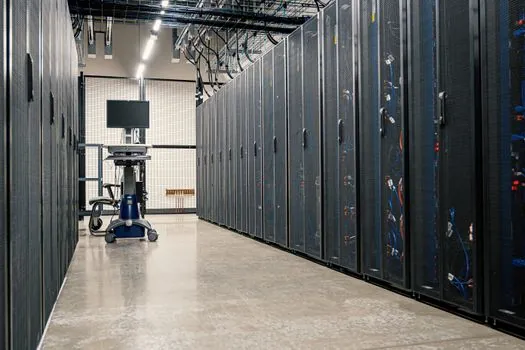
A practical 2026 spec comparison on four decision criteria lines up like this: on raw ampacity per unit area copper wins, on weight per ampere-meter aluminum wins by roughly 2:1, on raw material cost aluminum wins with a 2.0-3.5x multiplier against copper, and on termination reliability copper wins because aluminum's higher coefficient of thermal expansion and tendency for creep at bolted joints require bi-metallic lugs, anti-oxidant compound, and periodic re-torque [S2][S3][S4][S5].
That last point is the most common failure mode on aluminum feeders that get installed and forgotten: a loose joint runs hotter, oxidizes further, and drifts in resistance until the upstream breaker nuisance-trips or the insulation chars. Aviva Metals and Three D Metals both recommend aluminum only with documented torque procedures, AL-CU rated lugs, and infrared scans at the 6-month and 12-month commissioning gates [S2][S5].
Application Map: What Substitutes, What Does Not
Substitution is already standard on long feeder runs from the medium-voltage transformer to the main power distribution box, on overhead and underfloor busway where weight and heat dissipation matter more than termination density, and on extruded aluminum bus pipe used as a low-impedance tie between UPS output and switchgear [S2][S3][S6].
Copper remains the default on busways feeding the hot aisle containment, on busbars inside the rack PDU, and on any path carrying more than about 2,000 A in a compact footprint where the aluminum size penalty would not fit the planned power distribution box envelope [S4][S5]. Ground conductors and bonding jumpers in the same compartments are also still copper, because sizing aluminum to the same voltage-rise and fault-current limits compounds the cross-section problem [S2][S5].
Standards, Ratings, and What Specifiers Must Verify
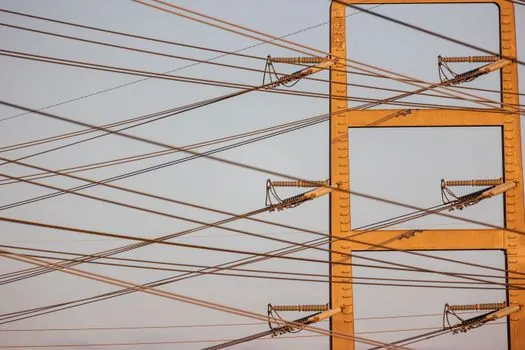
Any aluminum conductor entering a data center busway must be listed to UL 1072 for the assembly and to ASTM B231 or B836 for the stranded conductor itself, and the terminations must use AL-CU or bi-metallic lugs rated for the design fault current [S2][S3]. For European builds, IEC 61537 governs cable tray and busbar supports, while the harmonized EN 50575 and CPR Euroclass ratings govern the cable jacket reaction-to-fire class, and the actual ampacity calculation is run under IEC 60364-5-52 with the installation method declared [S2].
Hyperscale operators that have standardized on aluminum for utility feeders and bus pipe typically still spec copper from the secondary power distribution box downstream, because the listing path for compact busway above 1,600 A in copper is mature and the spares pool across the global fleet stays compatible. S&P's electrification brief notes the same split, with copper preferred inside the facility on fire-safety and density grounds, and aluminum on the campus grid [S4].
Cost, Lead Time, and Supply Signals
Copper supply tightness is the single biggest reason aluminum substitution is accelerating. The 2026 Thomasnet and Fastmarkets coverage of the AI buildout reports copper supply gaps driving multi-quarter price volatility, while aluminum extrusions from Hydro and other mills are running on shorter bookable lead times of 8-14 weeks versus 26-40 weeks for equivalent copper busbar on some 2026 allocations [S1][S3][S6].
For procurement teams, the practical 2026 path is to lock copper on in-rack and switchgear feeds, bid aluminum on utility feeders, bus pipe, and overhead busway, and track London Metal Exchange copper and aluminum spread alongside three concrete signals: UL 1072 listings on aluminum busway from the major OEMs, ASTM B836 stranded-conductor availability, and any new NEMA CC-1 or IEC 60865 short-circuit test reports published for AA-6101-T6 busbar at 100 kA peak [S1][S3][S6][S7]. The wider supply picture is covered separately in the S&P Global electrification brief, and field-side busway lead-time data is tracked on the Busway and Bus Duct Lead Times for 2026 Data Halls page, with offshore grid-link tonnage pressure documented in Cable-laying vessel shortage squeezes offshore grid link builds.
Detailed specification references: power distribution, and copper material.